
If you visit Kotohira and skip an udon class, you miss the town’s tastiest tradition. Just a few steps from the main approach to Kotohira Shrine and next door from Kotori Coworking & Hostel, the Nakano Udon School runs a lively workshop where you mix, knead, dance on your dough, then slurp the noodles you made. It is friendly, fast, budget‑wise, and great for solo travelers, friends, and teams sharing a table. Here is how it works and why it belongs on every Kotohira itinerary for digital nomads staying at Kotori.
Table of contents
- Udon, star in Kagawa prefecture
- Udon class : practical informations
- Udon class in Kotohira: an amazing experience
- Why doing an Udon making class in Kotohira
- Conclusion
- FAQ
Udon, the star in Kagawa prefecture
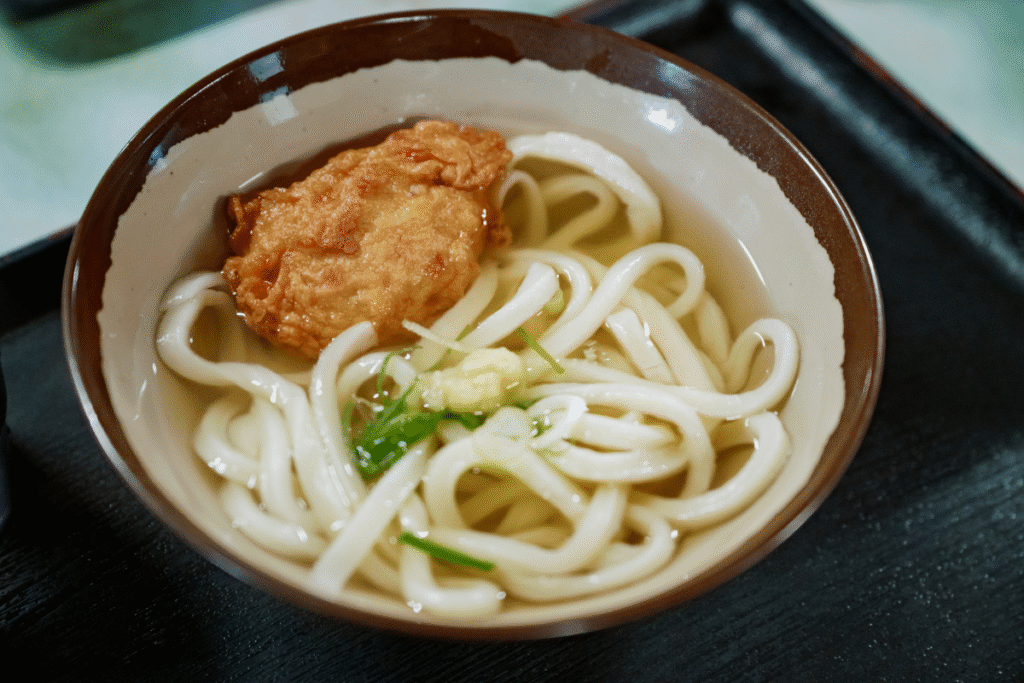
Kagawa is known across Japan for Sanuki udon, thick wheat noodles with a springy bite and clean, savory broths.
The region’s dry climate and limited rice paddies pushed farmers toward hardy wheat, while salt from the Seto Inland Sea and long‑running soy sauce breweries on nearby Shodoshima supplied the seasoning for clear broths. With inexpensive flour, abundant salt, and iriko‑based dashi easy to make at home, udon became everyday fuel for workers and pilgrims, so it turned into the staple.
Stories link the spread of udon in Shikoku to Kukai, also called Kobo Daishi. Legend says he learned noodle making in Tang China and promoted simple wheat noodles for pilgrims and temple kitchens after his return. Later generations of local makers refined the style known today. You will hear locals call Kagawa the Udon Prefecture. Across the prefecture there are dozens of specialty shops, seasonal broths, and a culture that celebrates simple, perfectly cooked noodles.
To go deeper, try the Udon Taxi, a bookable tour with local drivers who shuttle you between celebrated and hidden Sanuki udon shops. It is an easy add-on to a Kotohira stay, and Kotori staff can help arrange it.
Udon Making Class: how it works and practical information
Where: Nakano Udon School, Kotohira. The classroom and restaurant sit right in town, next door to Kotori and a short walk from the shrine approach.
Schedule: Daily classes with set start times. Aim to arrive 15 minutes early for check‑in.
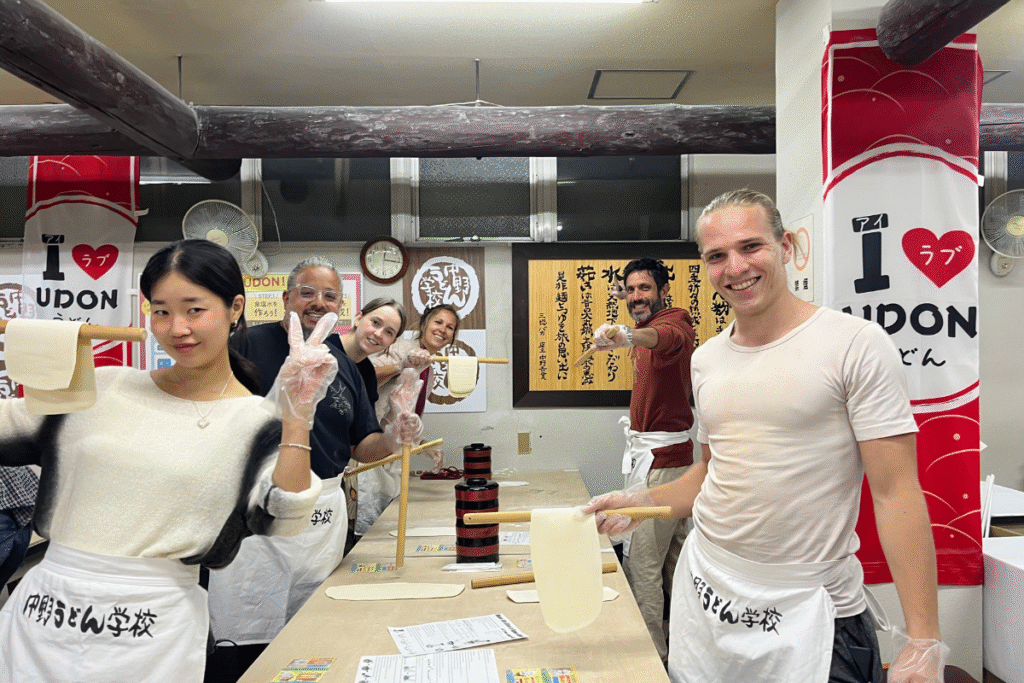
How to join: Reserve online in advance, especially in peak seasons. Same‑day walk‑ins are sometimes possible when seats remain. You can ask Kotori staff for help or try to create a group with other digital nomads for more fun.
Price: 1,760 yen per person. Bookings are usually for two or more people. Solo participation is sometimes accepted at a slightly different rate when space allows.
Duration: About 50 minutes for the hands‑on lesson. If you dine in, allow another 30 minutes to boil and eat your noodles with the group.
Add‑ons to eat with your udon: Tempura, rice balls, inari sushi, or chirashi are available for a small extra fee. You select these at check‑in.
Language: The instructors demonstrate with clear gestures and simple English and Japanese. Printed instructions are provided in Japanese and English.
What to bring: Nothing. Aprons and tools are provided. Remove shoes for the dancing step.
Contact: Phone reception in Kotohira. Opening hours cover the school and the on‑site restaurant.
Good to know: You can eat on site with your group or pack the noodles to take away in a sealed bag with house dipping sauce. Takeout keeps for a short time at room temperature. Parking is available nearby for a fee with discounts for participants.
Udon class: an amazing experience
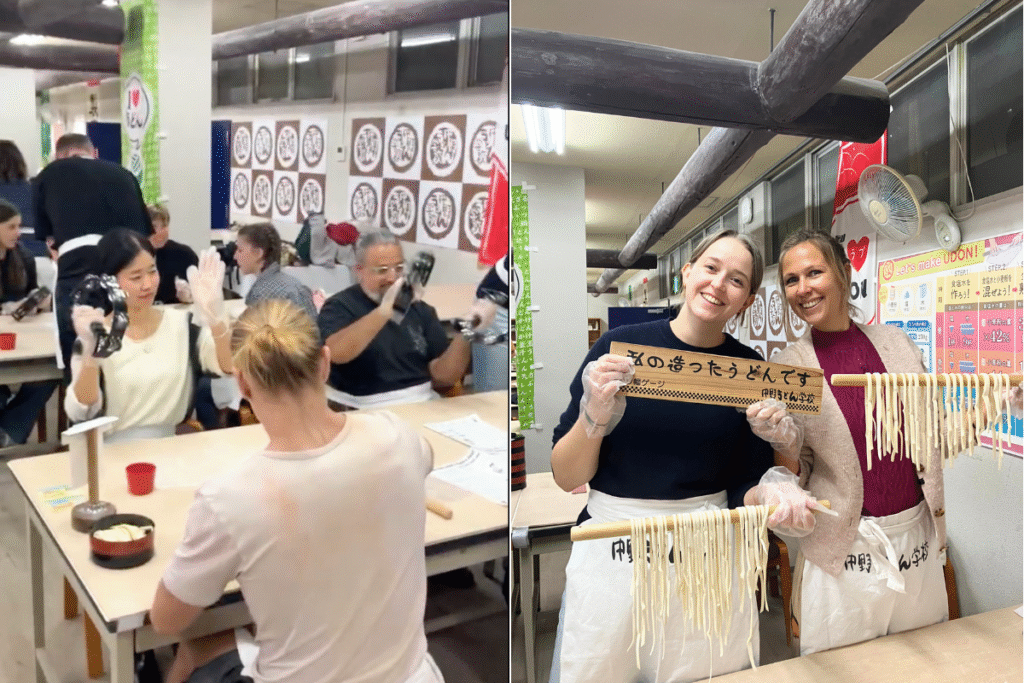
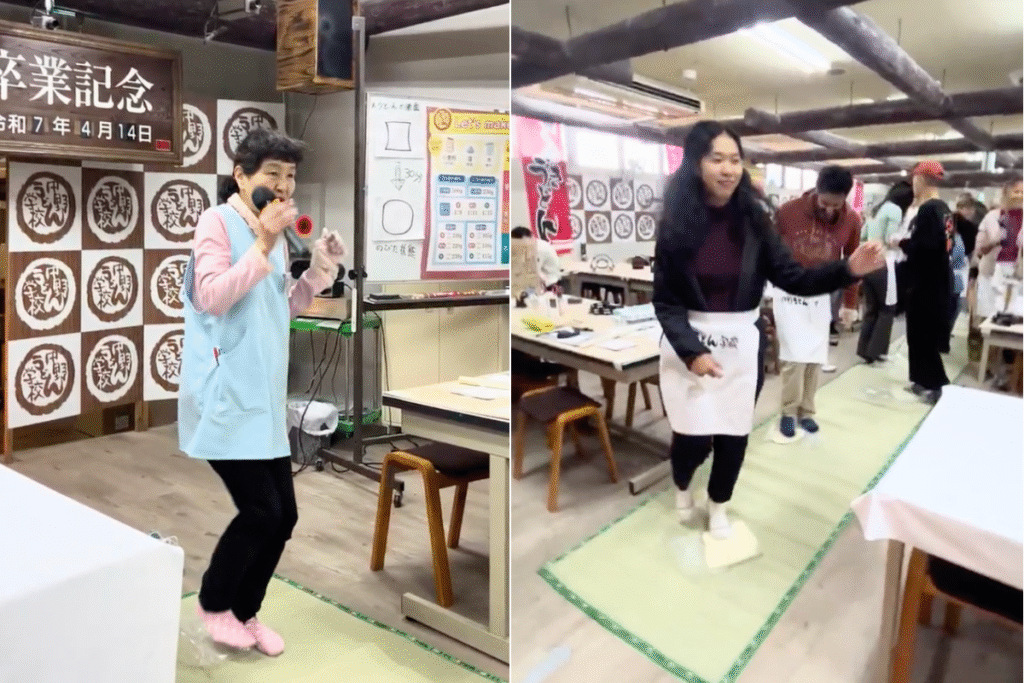
High energy from the first minute, the class has everyone smiling as you gather around long tables of six to eight. The lead instructor keeps a comfortable pace, guiding each stage so you move naturally from working on your own, to pairing with the person beside you, to lively all‑together moments. Get ready : the dancing and music part will be unforgettable !
Choose your toppings
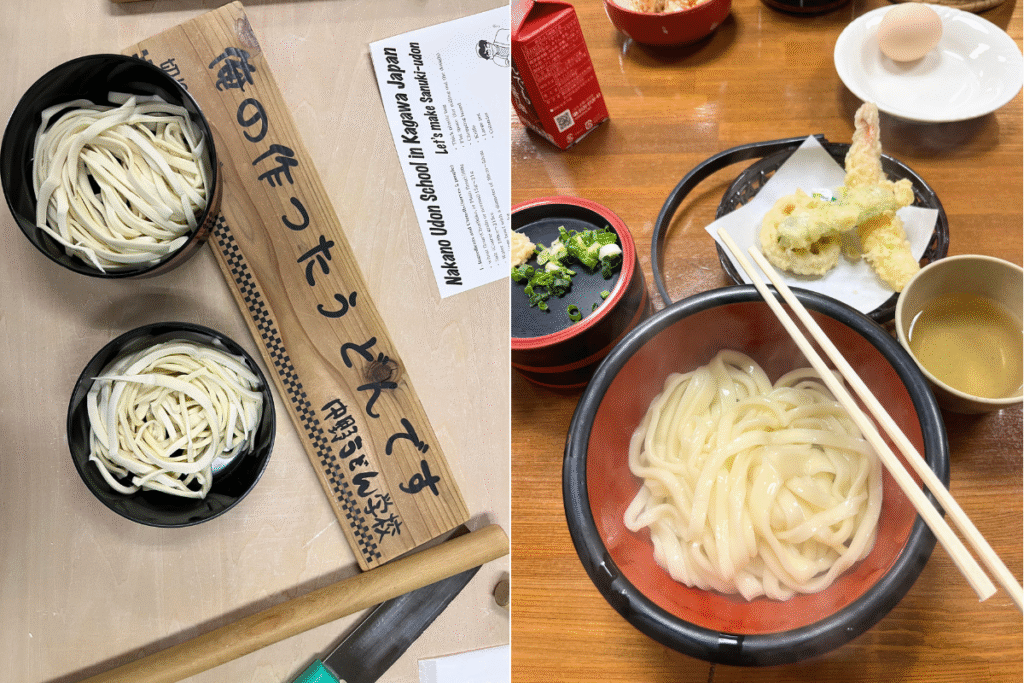
Before class starts you decide whether you will eat in or take away. If you plan to eat, choose any extra dishes you want. Tempura is a favorite alongside hot kama‑tama udon. Rice sides like onigiri, inari, or bright chirashi make a nice set.
Settle at the table and meet your tools
You will find a bowl, flour, salt water, and a sturdy rolling pin at each seat, along with a bilingual instruction sheet. Staff offer quick handwashing and set up.
First step: stretch, cut, and take a photo
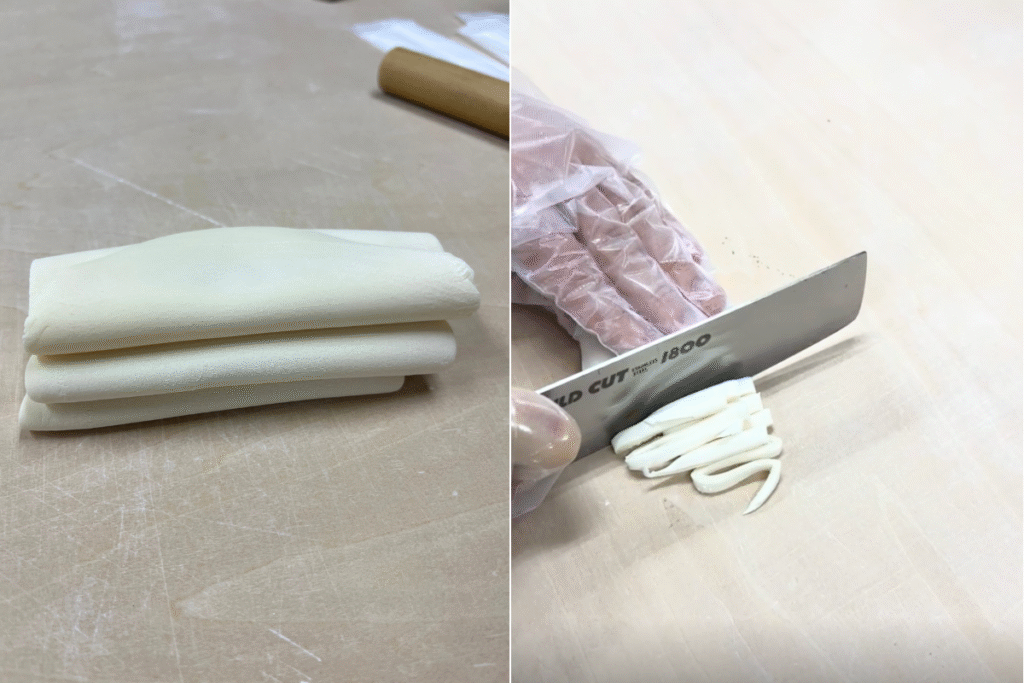
Each person receives a premade ball of rested dough to ensure the class flows smoothly. You roll it out, fold it, and then cut even strands about three to four millimeters wide. Hold up your fresh noodles for a celebratory photo.
Second step: mix, knead, and team up
Now you make dough from scratch. Combine flour and briny water, bring it together, and knead until it forms a smooth ball. From here the class switches into team mode.
The famous udon dance
To build that signature chew, the dough is sealed in a plastic bag, laid on a mat, and everyone takes turns stepping on it to music. Shoes off, rhythm on. It is silly, social, and the secret to great texture.
Time to eat or take away
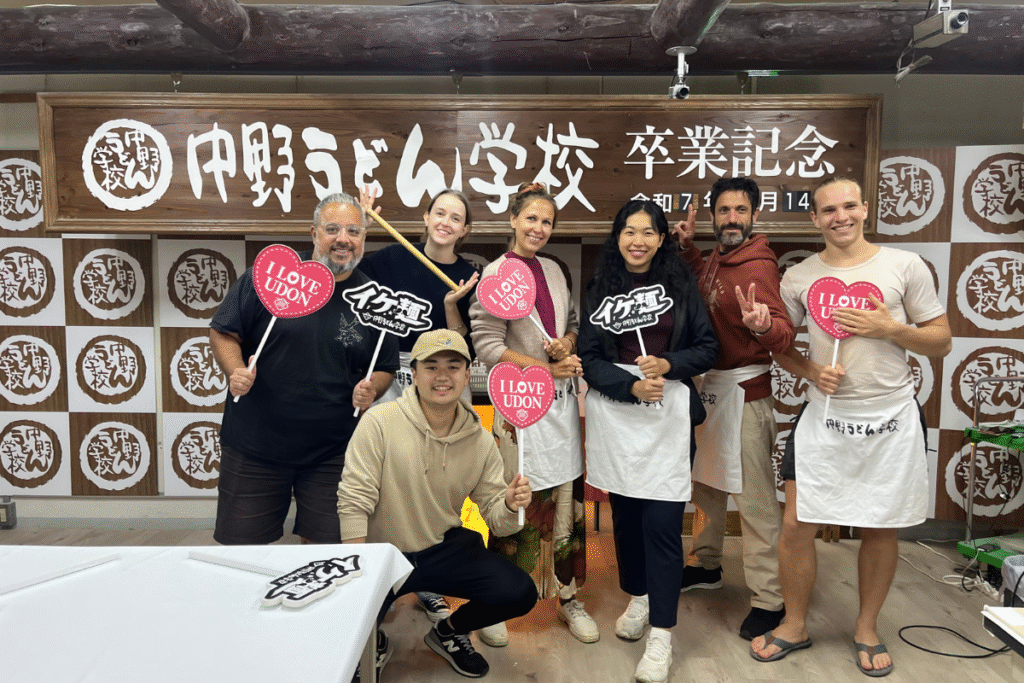
Class wraps with a mini graduation and often a souvenir fun picture. If you are dining in, the group carries noodles to the restaurant where a single pot boils batch by batch. Add your toppings and slurp together.
If you are taking away, your noodles are packed with house soup base in a labeled, sealed bag to enjoy later.
Why doing an udon class in Kotohira
Fun and memorable. The room buzzes with laughter and the dance breaks the ice in minutes.
It is pure Kagawa. Udon is the local specialty and learning to make it deepens every bowl you eat after.
Easy to repeat at home. Once you learn the simple flour and salt water method, you can make Sanuki‑style noodles in any kitchen. The class shows you every step.
You’re looking for more tips about Udon noodles and where to eat the best dishes of Kagawa prefecture? Ask Taijiro Kusunoki, the owner of Kotori and Udon taxi, also called Mr Udon!
Conclusion
The udon making class in Kotohira is a hands‑on way to taste Kagawa’s food culture and meet fellow travelers. It fits neatly between shrine steps and sunset, and in a digital nomad life it makes a perfect break from work. Book a slot, bring your appetite, and get ready to stomp, slice, and smile your way to a steaming bowl. So much fun!
Looking for more activities in Kotohira ? Check our article about what to do in Kotohira as a digital nomad.
FAQ
How long does the class take?
About 50 minutes for the workshop. Add around 30 minutes if you are eating in.
Can I join alone?
Usually bookings start from two participants. Solo visitors can sometimes join a scheduled slot at a different rate when seats are available.
What does it cost?
The standard fee is 1,760 yen per person for the making experience. Food sides are optional and cost a few hundred yen each.
Do I need to book?
Advance booking is recommended. Same‑day seats may open depending on the schedule.
Can I take the noodles away?
Yes. The staff can pack your noodles with dipping sauce in a sealed bag that keeps for a short time at room temperature.
What language is the class in?
Demonstrations are easy to follow with gestures, and printed directions are in Japanese and English.
About the author
Manon, is a digital nomad and content creator. She lives between time zones, works between getaways, and shares the beauty of this joyful mess.