
Kotohira is famous for Konpira-san, but it’s also an easy base for a real Henro day. If you’re a digital nomad staying at Kotori and you can’t disappear for weeks, you can still experience the rhythm of the Shikoku pilgrimage in a single day. What to expect? Early train, steady walking, temple quiet, a stamp book in your bag, and udon at the perfect moment.
The full Shikoku Henro is a circular route of 88 temples around the island, roughly 1,200 km if you walk it, and it usually takes well over a month on foot. But the good news is that it’s not an all-or-nothing journey. Many people do sections, use public transport between parts, or collect stamps over multiple trips.
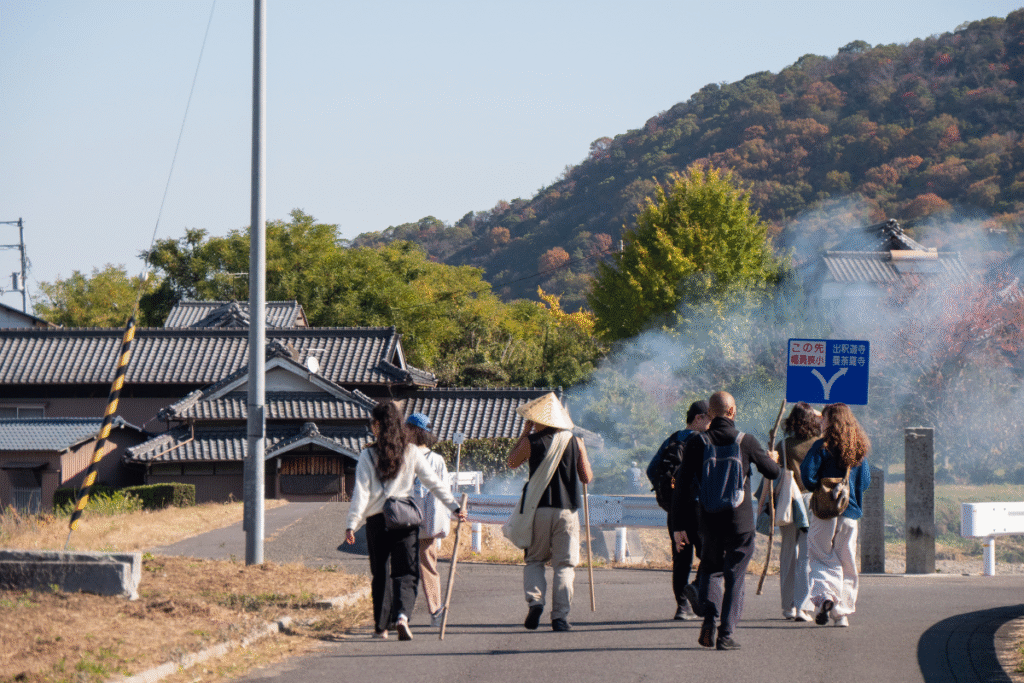
Table of Contents
- Presentation of Henro Shikoku pilgrimage
- 1 day pilgrimage: itinerary from Kotohira
- Practical information
- Conclusion
- FAQ
Presentation: what’s the Shikoku Henro pilgrimage?
Quick definition
The Shikoku Henro is a pilgrimage route linking 88 Buddhist temples associated with Kūkai (Kōbō Daishi), the monk credited with shaping the tradition and still treated as a spiritual companion on the road. If you walk the entire loop, it’s roughly 1,200 km, often described as a 40 to 60 day journey on foot depending on pace and detours.
An historical path
Ask five people who “created” the Shikoku pilgrimage and you’ll probably get a few different answers, and that’s actually part of its charm. Kūkai, also known as Kōbō Daishi, is at the heart of Henro stories. Many temples and local legends link him to prayers, miracles, and the spiritual idea that he’s still walking with pilgrims today. But the pilgrimage didn’t appear overnight as a fixed loop with a clean list of temples. What seems to have happened is a long evolution: early forms of pilgrimage and visits to sacred places in Shikoku show up in historical references around the 12th century, then the route gradually became more organized over the centuries. By the late 16th to 17th centuries, the circuit started to look much closer to the 88-temple pilgrimage people know now.
So when you walk it, you’re stepping into both a living tradition and a story that has been shaped over a very long time.
The pilgrimage today
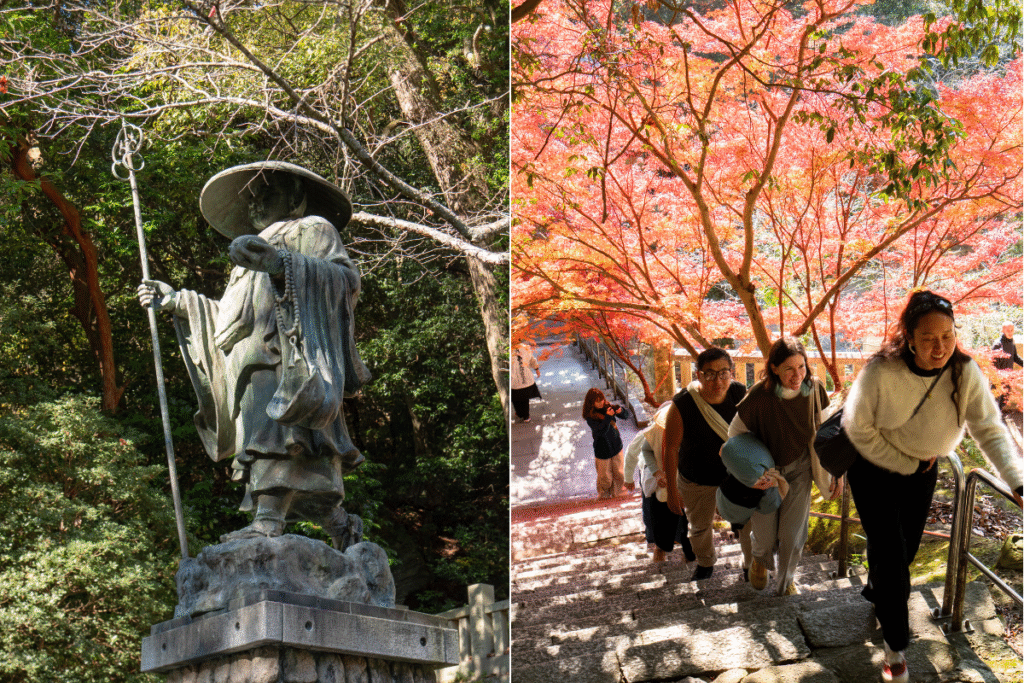
Modern Henro is popular, but not everyone walks. A commonly cited figure is around 150,000 pilgrims per year, with the majority using transport like bus, car, train, motorbike, or bicycle, and only a small percentage walking the whole thing.
The people you meet are varied: retirees on a long life goal, locals doing weekend sections, solo travelers looking for quiet, and plenty of first-timers who simply want to understand what this journey feels like for a day.
How the Shikoku pilgrimage day works
A classic temple visit on Henro includes:
- entering respectfully, washing hands if there’s a basin
- visiting the main hall and Daishi hall (many pilgrims follow a simple routine each time)
- collecting a temple seal and calligraphy in a nōkyōchō (stamp book) during the temple’s open hours, usually daytime
If you want to feel like you’re “doing it for real” even in one day, the stamp book is the secret. The pages fill with red seals and brush calligraphy, and it becomes a tangible record of your walk.
You want to walk longer on the Henro trail? Have a look on the 5 day pilgrimage article.
1 day Shikoku pilgrimage: itinerary
From Kotohira, you can realistically walk temples 71 to 75 in a single day.
Leaving Kotohira early morning
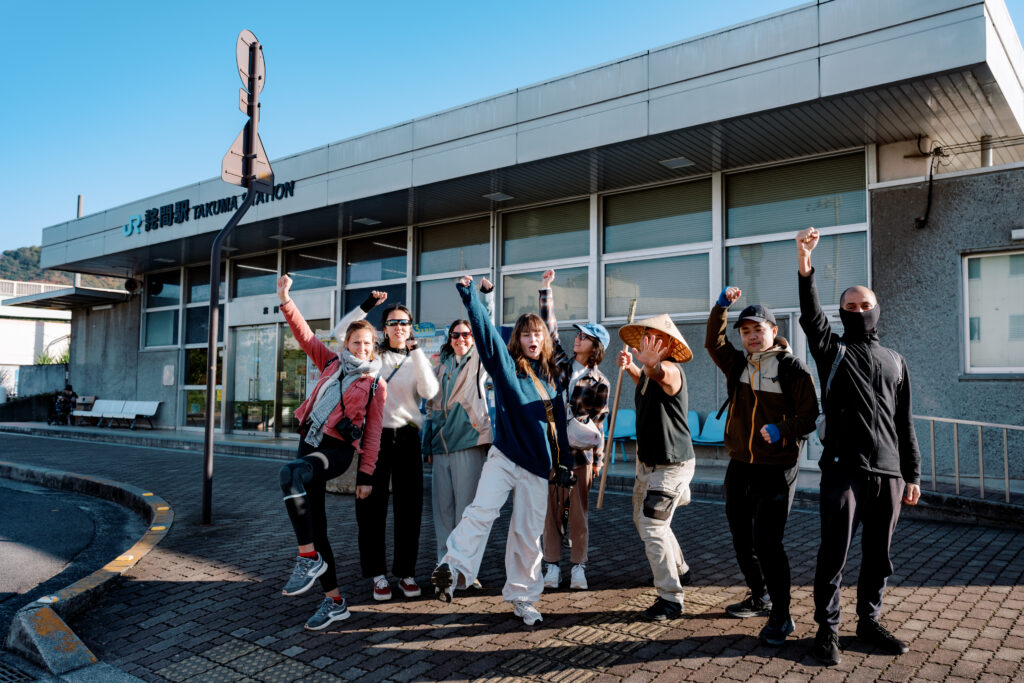
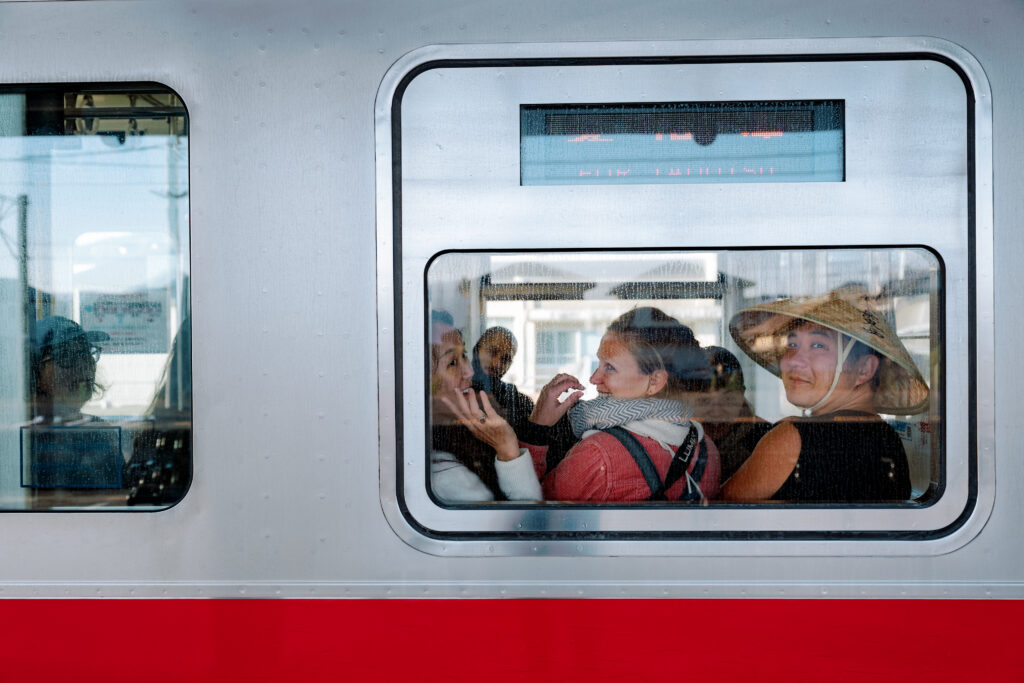
From Kotori, walk to Kotohira Station and take the train toward Takuma Station, typically with one transfer (often at Tadotsu). It’s straightforward, and the ride is short enough that it doesn’t eat your day. Keep an eye on the window, the scenery gets especially good on the Yosan Line stretches near the Seto Inland Sea.
N°71 Iyadani-ji (弥谷寺)
From the station area, you’ll walk toward the first temple of the day, which is already Temple 71 of the pilgrimage.
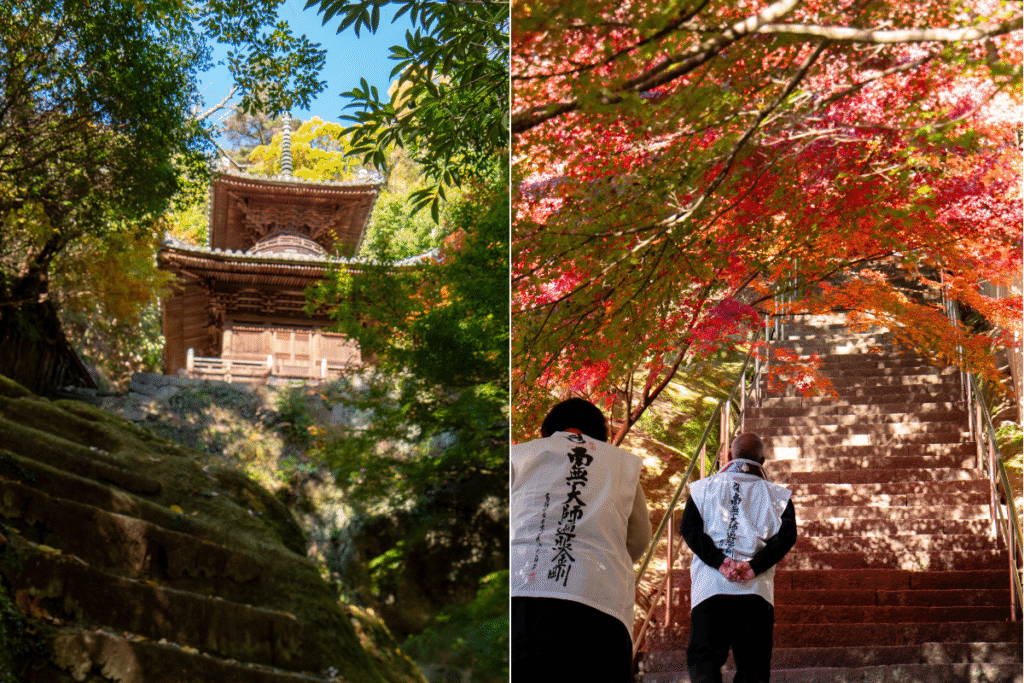
This approach is the least exciting part of the day: long roadside walking before you properly hit the greener atmosphere. Once you get close, it changes. Iyadani-ji sits on the slope of Mount Iyadani, surrounded by trees, and the final approach includes steps that make it feel like you’re leaving daily life behind.
What to notice at Iyadani-ji
- The way the buildings feel tucked into the mountain
- The calm, shaded precincts after the climb
- The overall “start of pilgrimage mode” feeling, which hits hard here because the location is so distinct
Take your time to enjoy the moment here. It’s the temple that sets the tone.
N°72 Mandara-ji (曼荼羅寺)
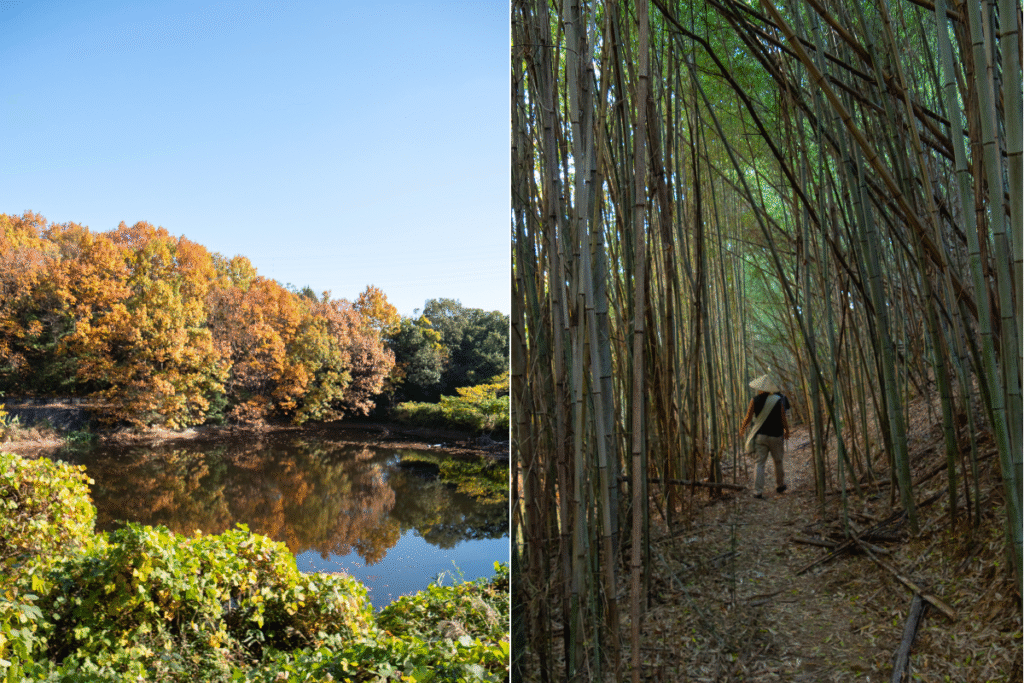
The walk from 71 to 72 is easily the most beautiful section of the day. This stretch at about 4.9 km and roughly 65 minutes on foot.
During this walking part, you’re in nature for a while, climbing through a quiet forest, then dipping into bamboo groves. There’s a peaceful moment around a pond with a classic building in the background that feels like a scene designed to slow you down. After that, you transition into a small town area with older houses and calm streets before arriving at the temple.
Mandara-ji is often described as one of the oldest temples on the pilgrimage, with deep ties to the Saeki family (connected to Kūkai’s background).
What to enjoy at Mandara-ji
- The sense of age and continuity, especially after walking through forest to reach it
- The contrast between the quiet approach and the temple grounds
N°73 Shusshaka-ji (出釈迦寺)
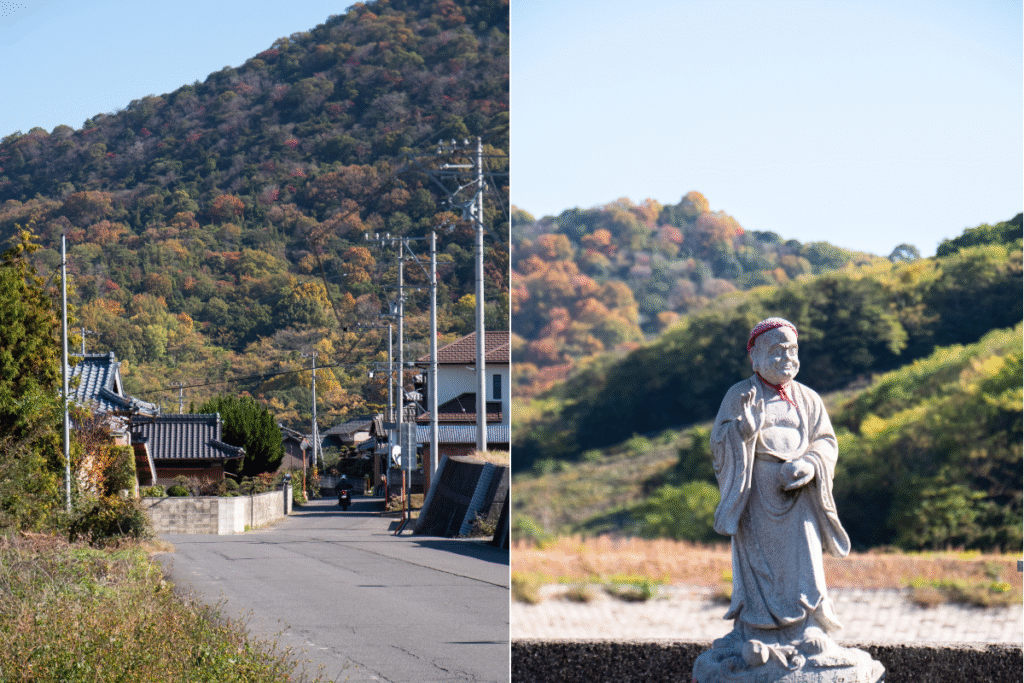
Temple 73 is only about a 10 minute walk from Mandara-ji, so it’s a nice “no stress” transition.
You’ll head toward another hill, crossing rice fields and open countryside. The climb up to the temple is a calm reset, and the view back over the valley is a reminder of how rural this part of Kagawa can feel, even though you’re never truly far from towns.
Legend of Shusshaka-ji
Shusshaka-ji is built around one of the best-known childhood legends of Kūkai (Kōbō Daishi). The story says that when he was seven, he climbed the mountain above the temple and made a vow: if his wish to devote his life to Buddhism was meant to happen, Shaka Nyorai would appear. If not, he’d throw himself from the cliff. He jumped, and a purple cloud appeared. Shaka Nyorai and a celestial maiden came down and saved him in mid-air.
Because of that story, there are three “don’t miss” spots here:
This is where you connect the legend to something you can actually see. The principal image is Shaka Nyorai, and tradition says it was carved by Kūkai. It’s flanked by Fudō Myōō and Kokūzō Bosatsu, which also links nicely to the temple’s other identity as Gumonjiin, a place connected with memory and study.
Continue a bit further…
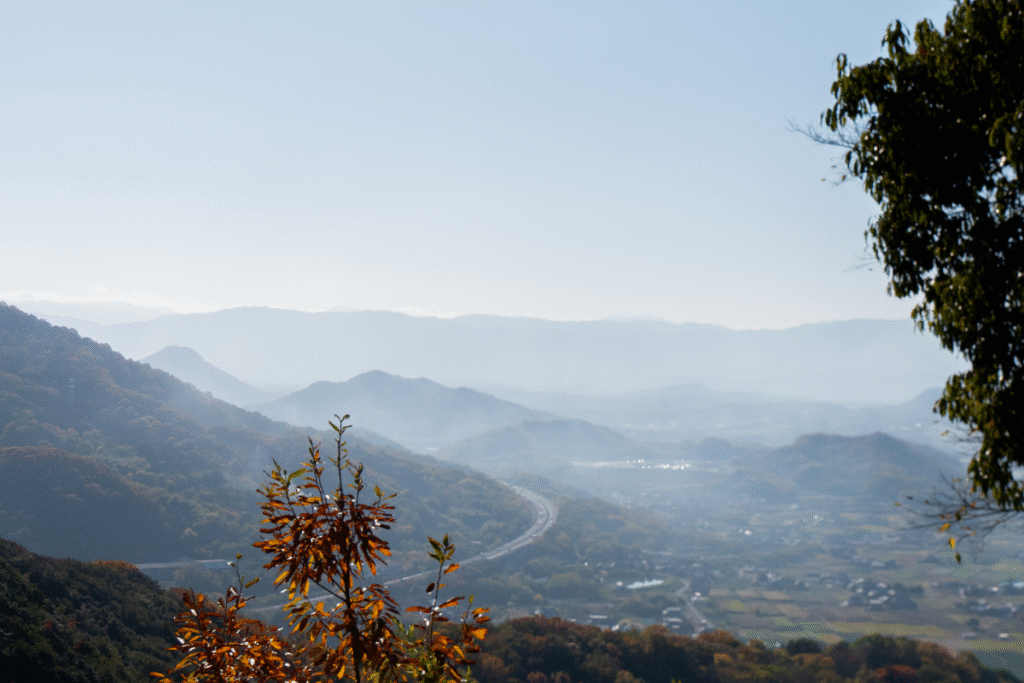
If you want to connect Shusshaka-ji to its famous cliff-jump legend, the key place is Shashingatake Zenjo, the inner temple (Okunoin) on the mountain. It’s about a 50 minute steep walk from the main grounds, but it’s the part that makes the day feel like a real pilgrimage. If you keep going a little farther, the cliff point linked to the jump is said to be about 50 meters beyond the inner temple, with a big drop and wide views over the Sanuki Plain and toward the Seto Inland Sea. And if you cannot do the climb that day, stop at Shashingatake Yohaijo on the temple grounds, a prayer spot made for people who do not have the time or energy to reach the inner temple.
N°74 Kōyama-ji (甲山寺)
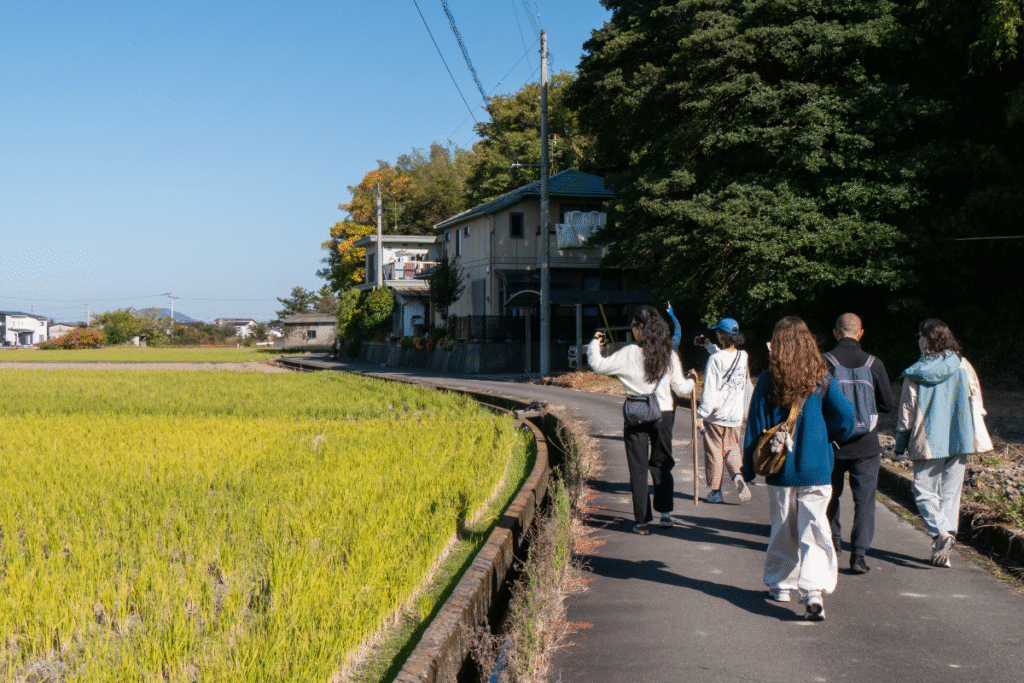
From 73 to 74, plan roughly 45 minutes of walking. It’s an easy stretch because it’s mostly flat, moving through rice fields and low-key countryside streets, which is exactly what you want at this point in the day.
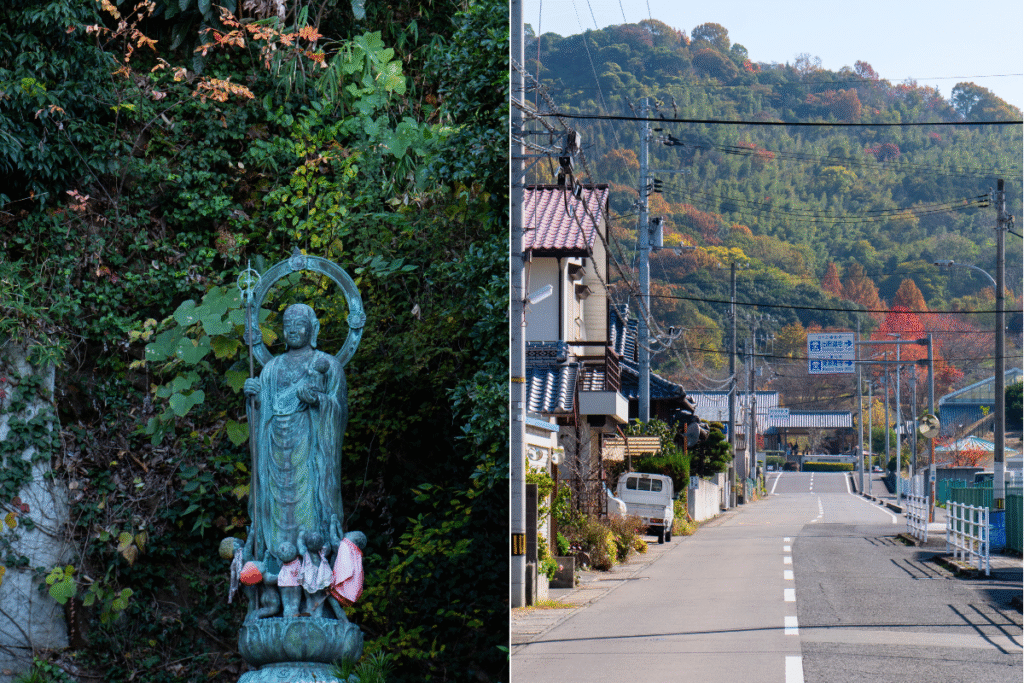
Kōyama-ji (Temple 74) is linked to Kūkai’s early life around Mount Kabuto, and the temple’s origin story is anchored in a real spot you can still visit today. Legend says a holy figure appeared from a cave and told him to build the temple here, so when you arrive, don’t rush off. Look for the Bishamonten cave beside the Daishi hall, since it’s considered the starting point of the temple and it’s the most distinctive detail on site. In the main hall, the principal image is Yakushi Nyorai, the healing Buddha, which gives Kōyama-ji a calmer, restorative mood. If you’ve got a minute, also check the Koyasu Jizō, linked with prayers for children, and keep an eye out for the little rabbit touches that earned it the nickname “rabbit temple”.
N°75 Zentsū-ji (善通寺)
Before the last temple, it’s lunch break time with udon. Entering Zentsūji city, you’ll find friendly, local noodle shops that fit perfectly into a pilgrimage day: quick, filling, and very Kagawa!
After lunch, walk to Zentsū-ji, Temple 75, one of the major sites of the entire pilgrimage and strongly linked with Kūkai.
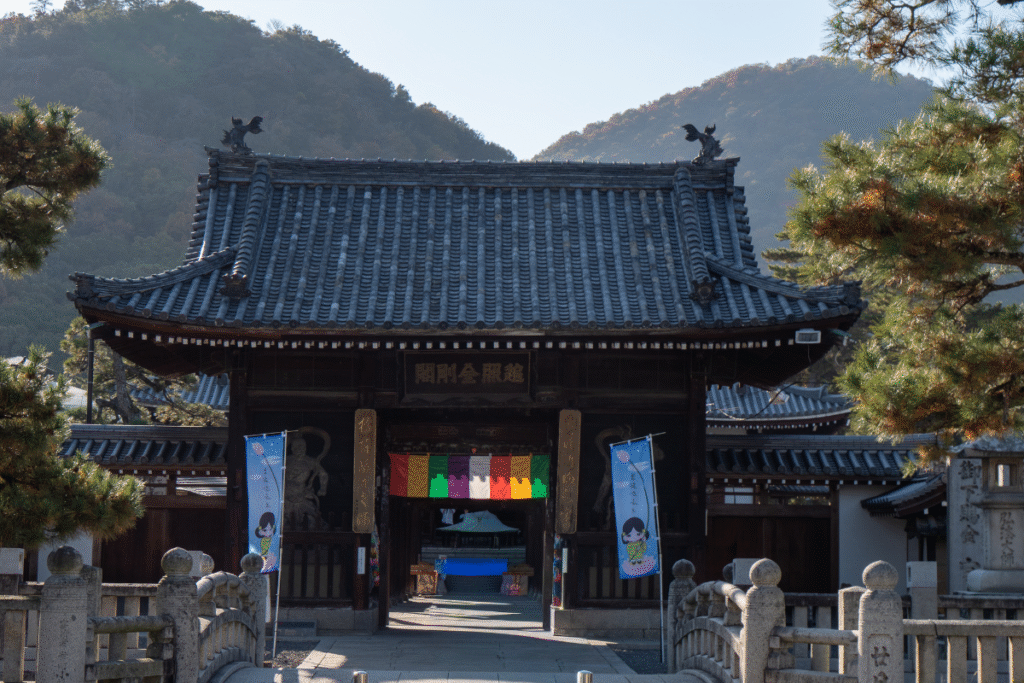
The grounds are huge, around 45,000 square meters, split into two main precinct areas. This is where your day shifts from “walking through countryside” to “arriving somewhere significant.” Give yourself time here to explore.
If you want to go deeper, we’ll link here to our full article about Zentsū-ji Temple.
This one day pilgrimage is almost over! It’s time to go back to Kotohira. Walk to Zentsu-ji train station to go straight to Kotohira station then walk back to Kotori Coworking & Hostel for some rest you deserve!
Practical information about Shikoku pilgrimage day
What to bring
- Comfortable walking shoes you trust for 20+ km
- Water (and a way to refill), plus snacks
- Cash for offerings, stamps, and lunch
- A light layer, because mornings can be cooler than you expect
- Your nōkyōchō stamp book (or buy one at a temple shop)
- Optional but fun: a small stack of osamefuda name slips if you want to follow the classic routine
Best seasons to do Shikoku pilgrimage day
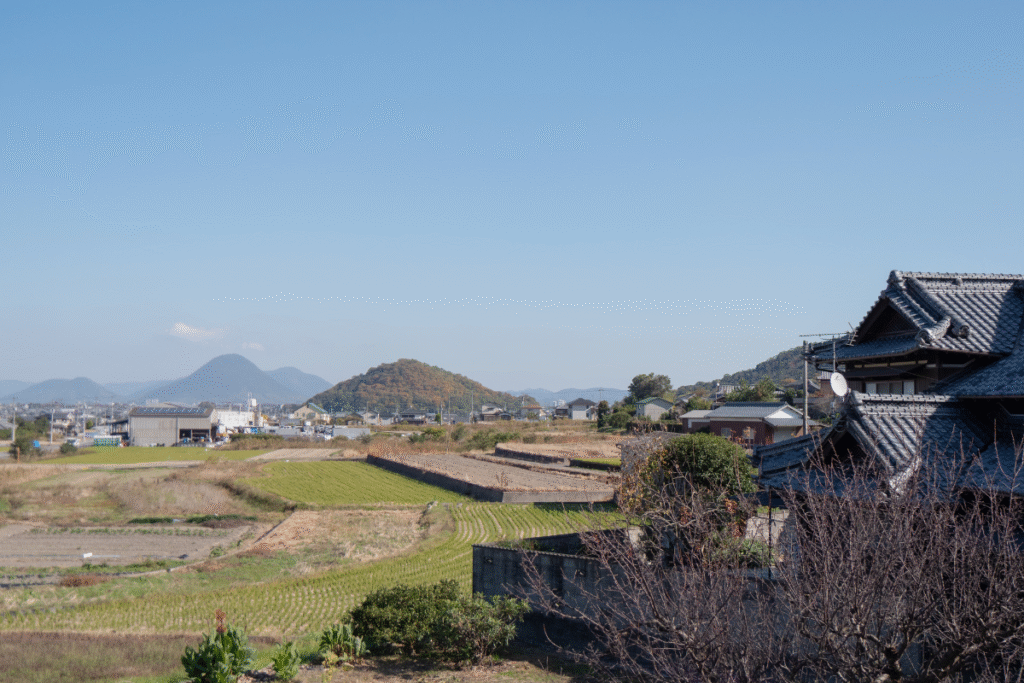
For walking comfort, spring and autumn are the sweet spots. You’ll avoid the heavy humidity of summer and the short daylight of winter, and your day will feel more enjoyable rather than like a survival challenge.
What to expect during the Shikoku pilgrimage day
- A mix of roadside walking and genuinely beautiful forest sections
- A few climbs (especially around Iyadani-ji), but nothing that requires technical hiking gear
- Temples are calm spaces
Conclusion
f you’re based in Kotohira and you’ve been curious about the Shikoku Henro, this route is a really satisfying way to start without taking a long break from work. Temples 71 to 75 give you a proper taste of pilgrimage life: you begin with a temple tucked into the mountain, you get that beautiful forest walk between temples, you cross quiet rice fields, and you finish at Zentsū-ji with the feeling of arriving somewhere truly important.
Even if it’s only one day, you’ll go back to Kotohira with that quiet Henro feeling in your body, like you’ve stepped into a tradition that’s been moving across Shikoku for centuries and you’ve carried it for a while with your own feet.
FAQ about this Shikoku pilgrimage day
Is this really doable in one day?
Yes, if you start early and you’re comfortable with a long walk. Pilgrim day notes for temples 71 to 75 often land around the low-to-mid 20 km range.
Do I need special Henro clothing?
Not at all. Some pilgrims wear the classic white outfit, but for a one day walk, normal hiking clothes are completely fine. The stamp book is the easiest way to feel connected to the tradition without buying a full set of gear.
Can I do it in the opposite direction?
You can, but this direction (71 to 75) fits nicely with logistics and the feeling of building toward Zentsū-ji as a finale.
What if I’m short on time?
You can shorten the day by focusing on fewer temples, or by using trains or taxis to skip the least interesting roadside sections. The pilgrimage is flexible by nature, and plenty of pilgrims mix walking with transport.
Can I find food or drinks on the way?
Not really, at least not in the early part of the walk. Between Takuma and the first temples, and again on the countryside sections between temples 71 to 74, you should expect very limited options for shops or vending machines.
About the author
Manon, is a digital nomad and content creator. She lives between time zones, works between getaways, and shares the beauty of this joyful mess.