
Kotohira-gu shrine is the heart of Kotohira and the reason many travelers fall in love with this little town in Kagawa. The climb starts on Omotesando, then winds through gates, lantern alleys, forest paths, and quiet courtyards until the shrine opens with sweeping views over the Sanuki plains. It is lively without feeling rushed, spiritual without being stern, and full of small discoveries if you take your time.
This guide walks you through the shrine step by step, points out the easy to miss corners, and adds practical tips for a smooth visit. Follow the loop from town to the main hall and beyond, or jump to the section you need.
Table of contents
- Short history of Kotohira-gu
- Going to the shrine step by steps
- Kotohira-gu main precincts
- Going further to Izutama Shrine
- Practical information
- Conclusion
- Kotohira-gu Shrine FAQ
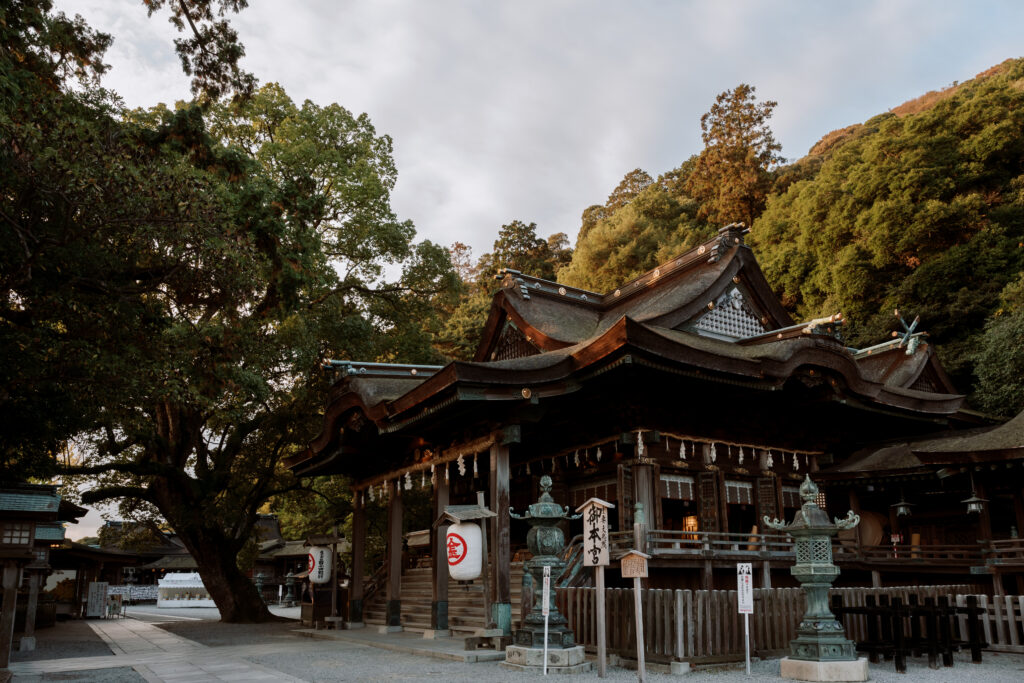
Short history of Kotohira-gu
Kotohira-gu, also known as Konpira-san, has long been a place of protection for sailors and travelers. The shrine stands on Mt. Zozu and enshrines Omononushi, a deity associated with the sea and safe journeys. Over the centuries the precincts expanded with gates, halls, and storehouses for treasures donated by worshipers. Pilgrims have climbed these steps for generations, which is why you still feel a calm sense of tradition as soon as you enter.
What to remember for your visit: Kotohira-gu is an active place of worship. Speak softly, step aside for rituals, and pause to notice the small wooden plaques, carved guardians, and the scent of cedar along the paths.
Going to the Kotohira-gu Shrine step by steps
Omotesando street
Your approach starts on Omotesando, the main slope lined with shops. This is where you can pick up a walking stick, try local sweets, and grab water for the climb. The first steps begin among storefronts and old wooden inns. Look out for small shrines tucked between shops and the traditional wooden signs that have welcomed pilgrims for a very long time.
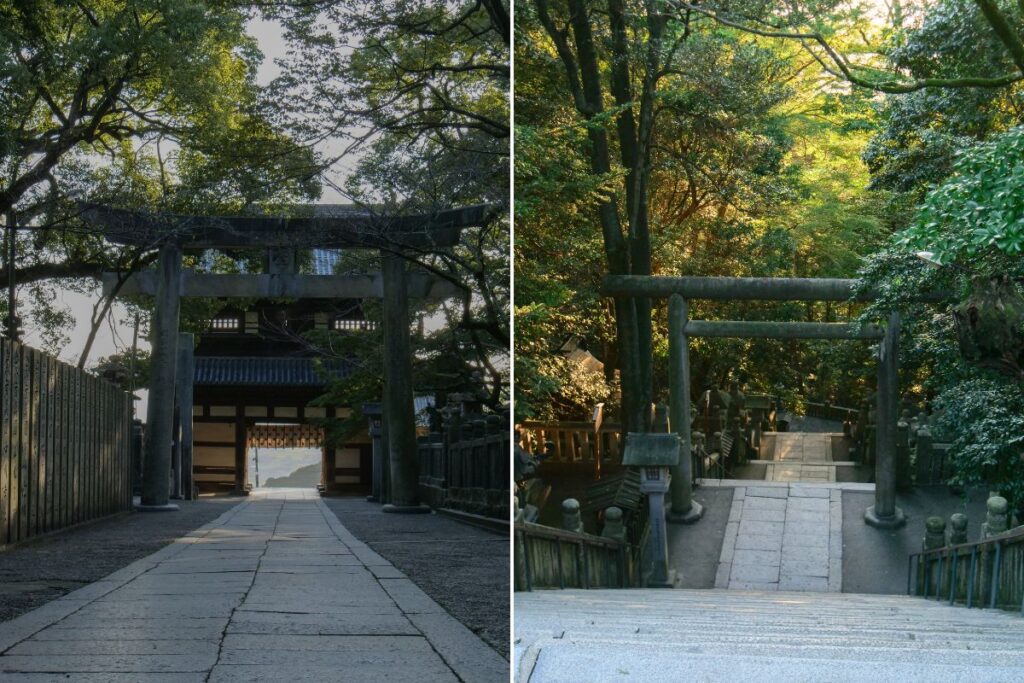
The main gate
The gate opens at 6 am with a drum. Passing through the gate marks the transition from town to sacred space. After this point, business is not allowed, except for five long standing families who help the shrine and are permitted to sell their traditional candies. It gets quiet here. Take a breath and slow your pace.
→ Want to know more about the 5 families and their traditional candies? Meet Ike San!
Torii and the long alley
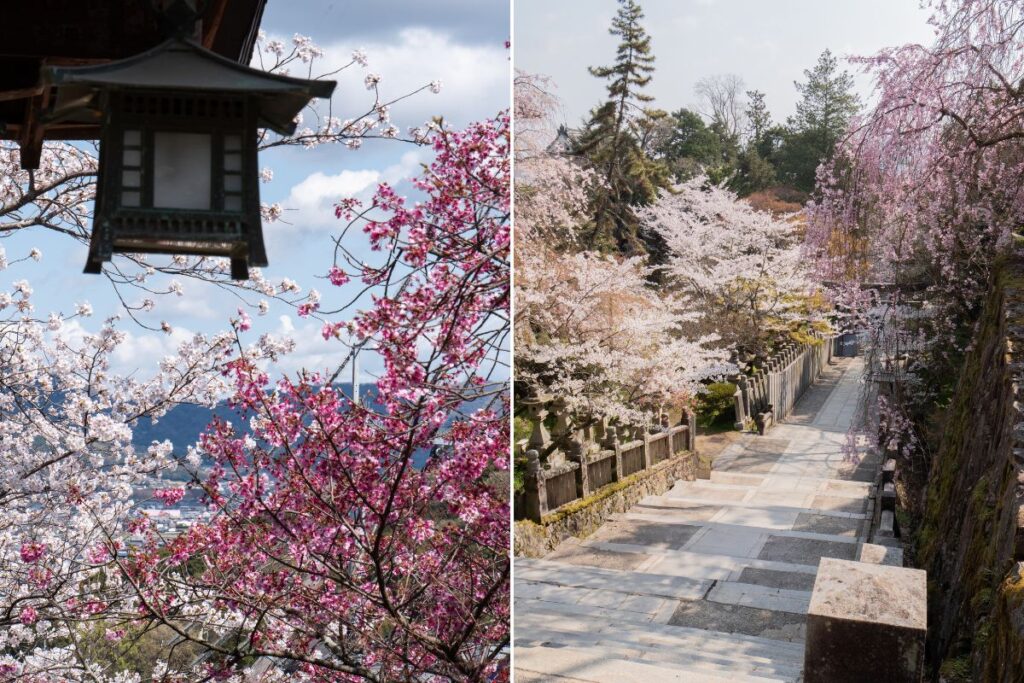
A tall torii frames a straight alley that feels especially beautiful in spring when cherry blossoms arc over the path. It is one of the most photographed places on the way to Kotohira-gu Shrine. If you are lucky or up early you can capture the alley with nobody in your frame. From this stretch you can also reach the Gallery of Kotohiragu Treasures. If you plan to visit the gallery, pair it with an early or late slot when the path is less busy.
First large space
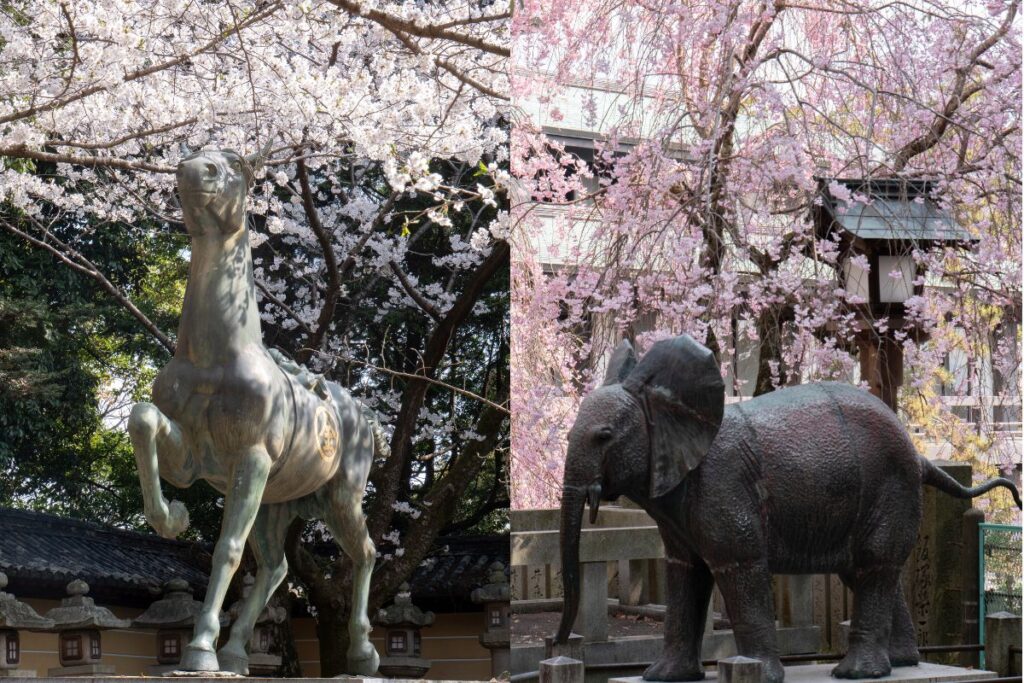
The path opens into a broad terrace with several statues. Spot the shrine’s real sacred horse, which lives here and only takes part in service during the Grand Shrine Festival in October. Notice the elephant sculpture that hints at Kotohira’s long ties to sea routes and distant lands. The small dog statue recalls the Konpira Inu legend, when dogs carried pilgrims’ offerings on their behalf. Finally, the helice propeller was dedicated as a prayer for safe voyages and prosperous shipping. On the right, a short path leads to the entrance of the Takahashi Yuichi Museum. It sits a little hidden among the trees, so watch for the sign.
Steps continue
Birdsong picks up as you climb. Many birds here are bold and will hop onto your hand if you offer food. Keep it gentle and brief. On your right is the entrance to Omote Shoin, a peaceful historic building within the Kotohira-gu Shrine complex. Step inside for painted screens, quiet tatami rooms, and a cool pause from the climb.
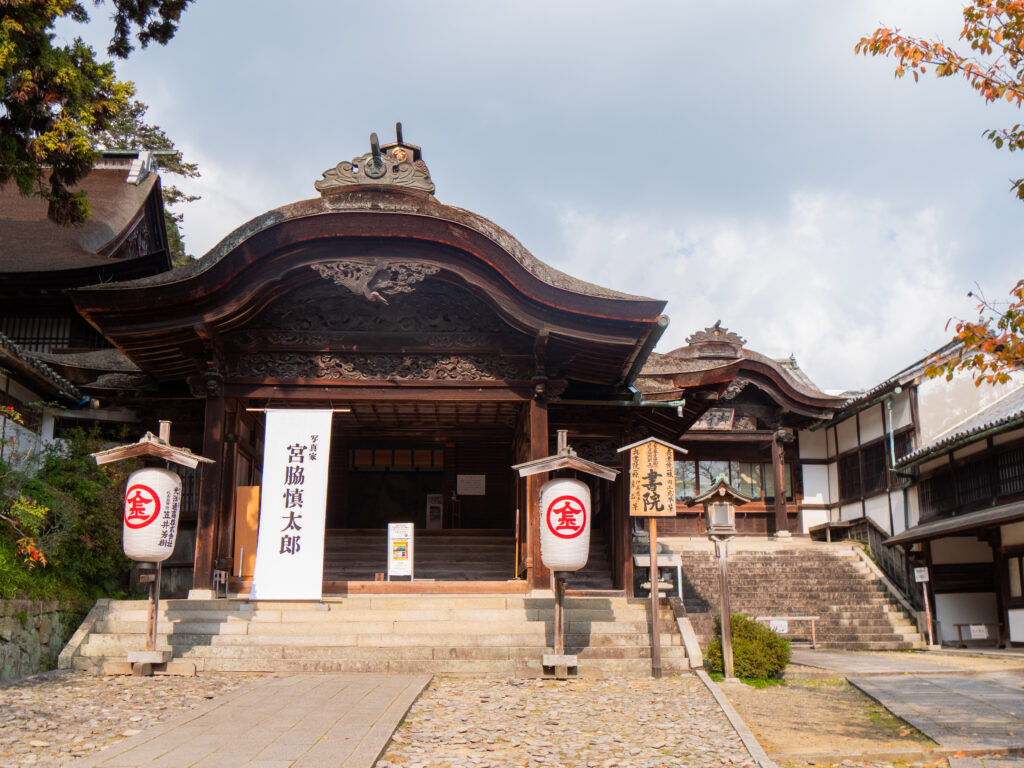
Haraedosha to Asahi-sha
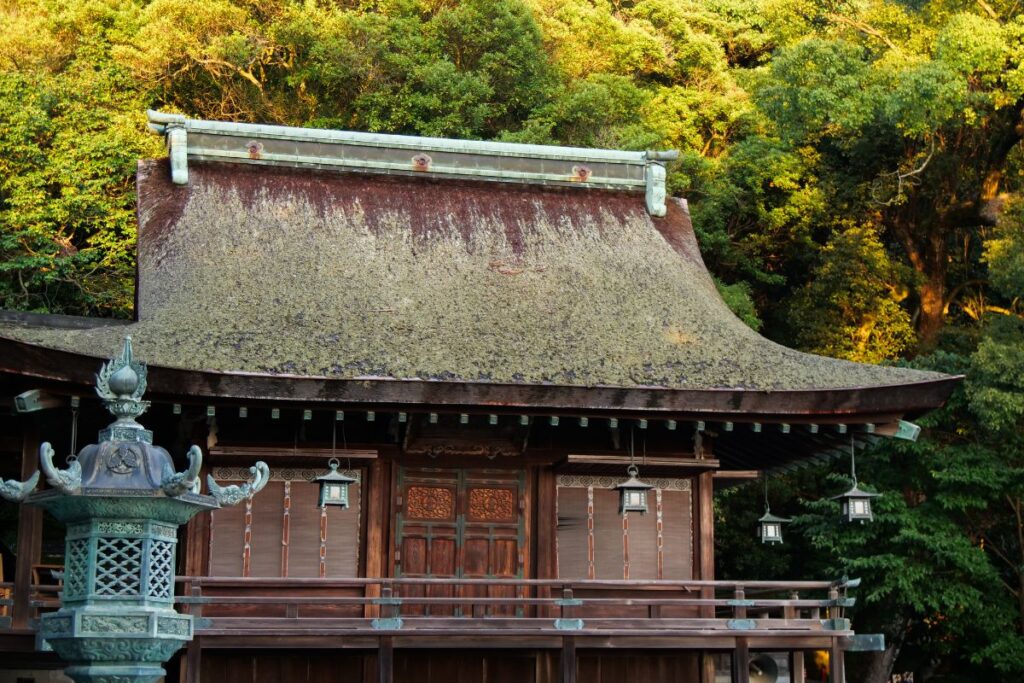
Continue past Haraedosha and its horse statue and arrive at Kotohira-gu Asahi-sha. This elegant structure has deep roots, built over decades in the late Edo period. It originally served as the Buddhist Golden Hall of Kotohira’s shrine temple complex. After the Meiji era separation of Shinto and Buddhism it was renamed Asahi-sha and adapted for Shinto worship, while retaining its lavish late Edo woodcarvings of clouds, people, animals, and flowers. Today it is designated as an Important Cultural Property of Japan and still anchors the lower precincts.
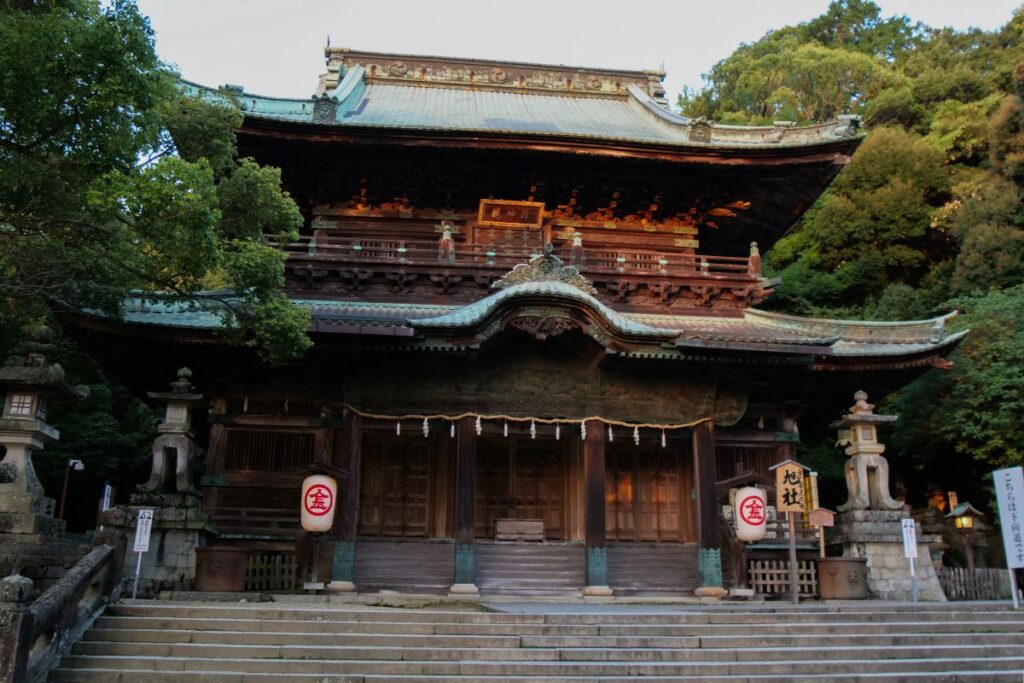
In front there is a basin where visitors place a 100 yen coin with a wish for good fortune. From here, a lantern covered alley with benches serves as a simple rest area. It is one of the most peaceful corners of the approach.
At this point the path splits into a loop. The right hand route continues upward to the main shrine. The other side is the return route from above.
Forest climb to the main hall
The final push weaves through the forest. You pass Mitoshi Shrine, several torii, rich green undergrowth, and a temizuya (purification basin) for rinsing hands. This section is the steepest. Pace yourself with short pauses and keep to the left so faster walkers can pass. The stairs end at the main precincts of Kotohira-gu shrine.
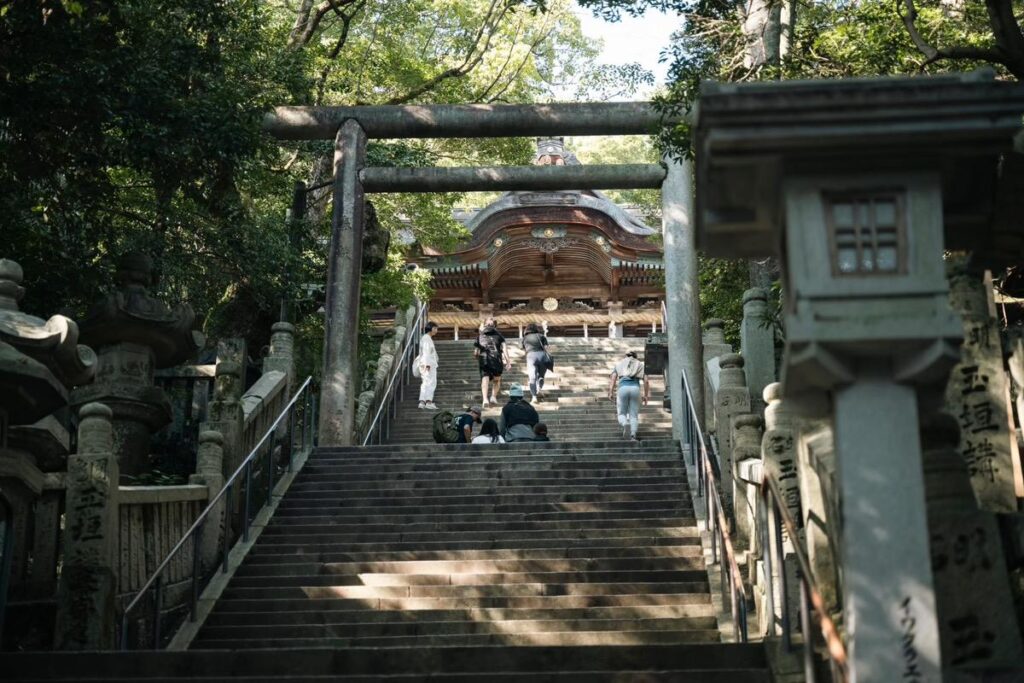
Kotohira-gu Shrine main precincts
The main area opens with stone courtyards and views. To the right there is a viewpoint over the Sanuki plain, and on clear days you can see the coastline and some of the islands. To the left you will find one of the best sunrise spots in Kotohira, a soft glow over the ridge and rooftops on clear mornings.
A long wooden footbridge crosses part of the grounds. The shrine’s mikoshi portable palanquin belongs here and rests in storage when not carried for the Festival. This is also the place to draw an omikuji fortune, usually 300 yen. You can pick up the small dog figurine linked to the shrine’s stories that comes with good or not so good luck, write a message on a wooden ema, and collect the special goshuin stamp for your book.
Going further to Izutama Shrine
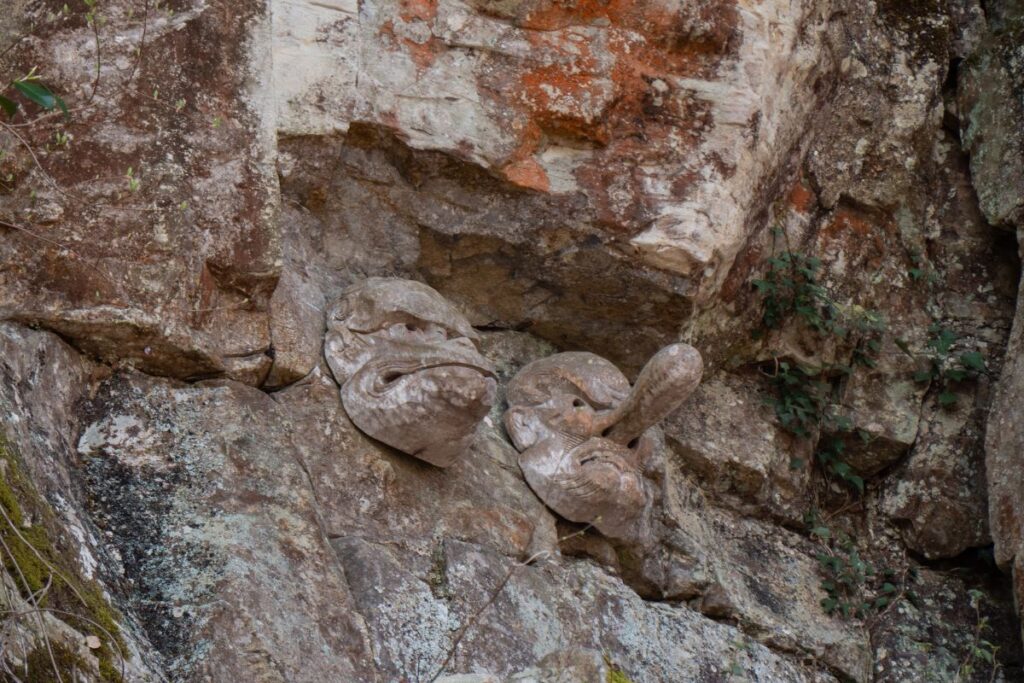
If you still have energy, continue higher to Izutama Shrine. The path is quieter and passes through thicker forest. It feels more remote, which is part of the charm. Izutama is known for a carving of two faces on the wall that seem to watch the path. Izutama itself is a small forest shrine with a simple wooden hall, a low altar, and a few stone lanterns. Along the approach you will find the carving of two faces on the rock wall: one serene, one stern. Locals read them as paired guardians watching the path, and some say they echo sun and moon or husband and wife.
This is the end of the route, so descend slowly via the return path from the main shrine back to the lower precincts. On the way, drop a 100 yen coin in the water for a wish, enjoy the calm and the beauty of this special place. Look for the Konpira dog statue; from there you can either return the same way you entered or wander the small forest paths and gardens, all of which lead back to Kotohira’s main street.
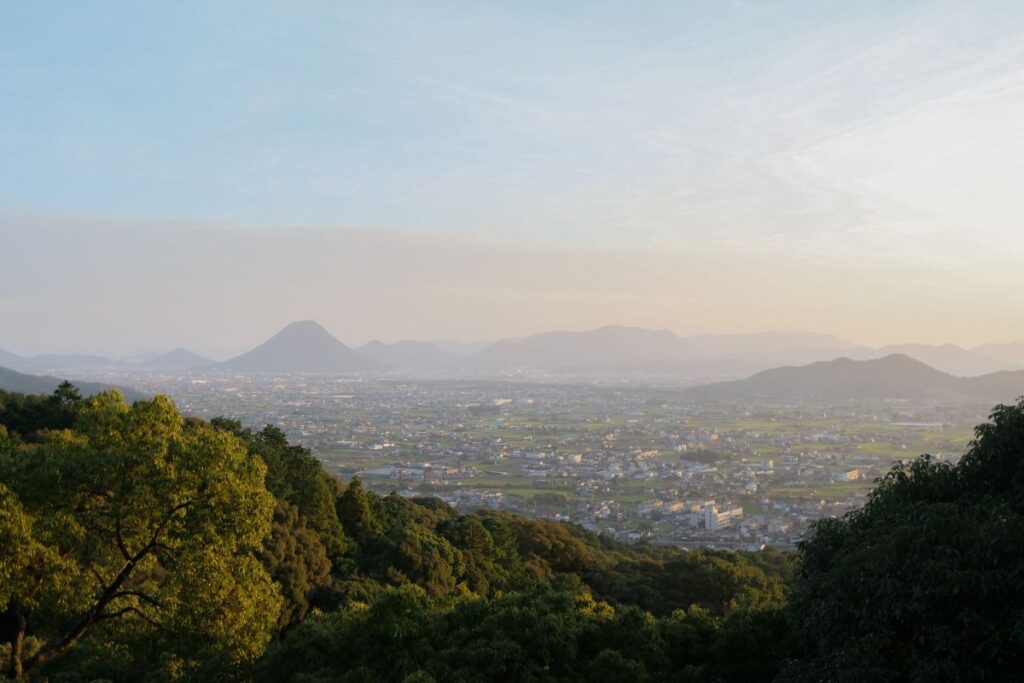
→ If you want to continue instead, retrace a few meters from Izutama Shrine. Find the sign for the hiking track to Okayama Campground, and follow it to a viewpoint that is stunning in clear weather.
Practical information
Opening times
The main gate opens at 6 am. Early morning offers a cooler, calmer climb. Weekends and holidays are busiest from mid morning to early afternoon.
How many steps
There are roughly 785 steps to the main precincts and 1,368 if you continue to the inner shrine. Shoes with grip are important. Take breaks at terraces and shaded benches.
Etiquette
At the temizuya (purification basin) rinse left hand, right hand, mouth, then the handle. Bow lightly before and after prayers. Keep food and drink away from the main halls. Photography is fine outdoors unless signs say otherwise.
Facilities
Restrooms appear at several terraces. Vending machines are near Omotesando and lower gates.
Seasonal highlights
Cherry blossoms usually peak in late March to early April. Autumn colors are often best in late November. Winter brings clear air and long views. Summer is lush and bright.
Stairs can be slippery after rain. Plan extra time in wet conditions and use the handrails on steeper sections.
→ More details about seasonal and weather in Kotohira.
Conclusion: Kotohira-gu Shrine
Climbing to Kotohira-gu feels less like sightseeing and more like a small pilgrimage. The steps make you slow down, the scent of cedar settles your thoughts, and the shrine rewards quiet attention. It is a peaceful place shaped by centuries of worship, where every gate and carving carries a story.
Go with intention. Pause at the temizuya, listen for the drum at the gate, and notice how lantern light touches stone. Reaching the top is not a workout or a checklist photo, it is a meaningful moment that stays with you long after you return to town.
If this walk opens your curiosity, learn more about Konpira pilgrims, the carvings at Asahi-sha, and the Konpira Inu legend. Read the plaques, explore museums, take time in the Shoin and treasure gallery or ask to the local community from Kotori Coworking & Hostel. The more you discover, the deeper Kotohira-gu shrine becomes.
Kotohira-gu Shrine FAQ
How long does the climb take?
Plan 60 to 90 minutes for a relaxed pace from Omotesando to the main precincts with short photo stops.
Can I visit early in the morning?
Yes. The gate opens at 6 am, which is one of the calmest times on the path.
Is there an entrance fee?
No. Walking the approach and main precincts is free.
Can I get a goshuin stamp?
Yes. Look for the counter in the main precincts. Bring your own book or purchase one on site.
When is the best season?
Each season offers some nice aspects. Spring brings blossoms and soft weather, autumn brings colors and crisp air. Winter mornings are clear. Summer is vibrant if you start early.
About the author
Manon, is a digital nomad and content creator. She lives between time zones, works between getaways, and shares the beauty of this joyful mess.