
A day trip to Iya Valley from Kotohira is one of the most rewarding ways to discover a different side of Shikoku — a place where dramatic gorges, forested slopes and riverside villages coexist with historic sights and well-maintained tourist routes. Just a short journey from town, the valley offers a mix of nature, culture and slow travel: vine bridges to cross, viewpoints to explore, and plenty of spots that are easy to reach even without a car.
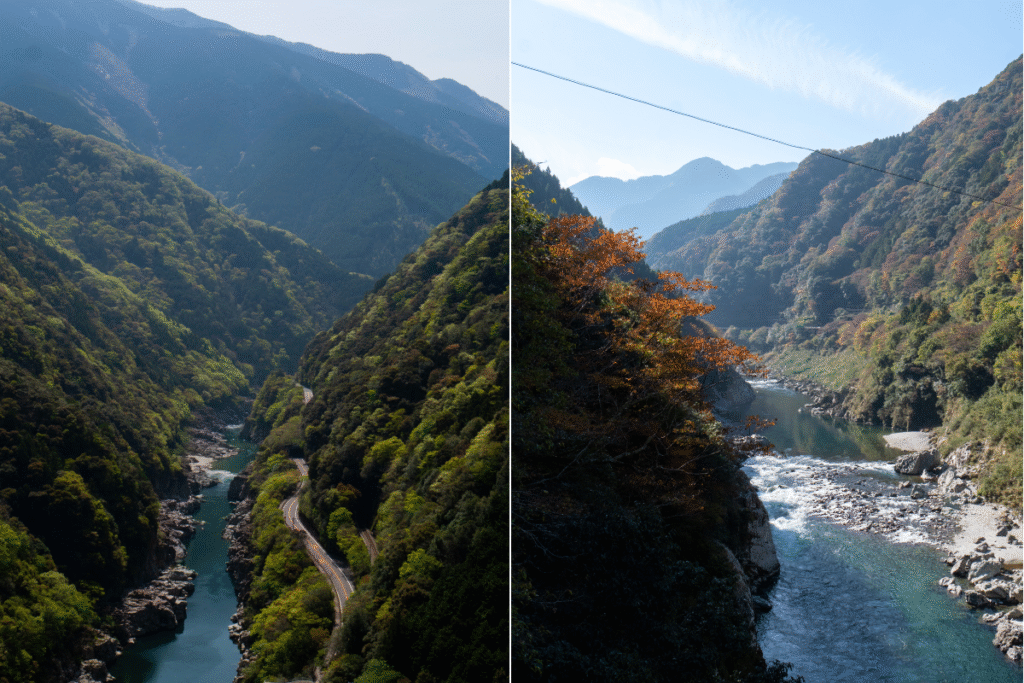
This guide brings together everything you need for a smooth and inspiring visit: the best stops, the full loop itinerary, and simple transport options ideal for travellers and digital nomads staying in Kotohira.
Table of Contents
- Presentation of Iya Valley
- Day trip to Iya Valley and best spots
- How to go to Iya Valley
- Conclusion
- FAQ – All you need to enjoy your trip to Iya Valley
Presentation of Iya Valley
Hidden deep in the mountains of western Tokushima, Iya Valley is one of Shikoku’s most dramatic natural landscapes. The Iya Valley is shaped by the clear, fast-flowing Yoshino River, one of Japan’s longest rivers. The force that carved the dramatic Oboke and Koboke gorges. Over millions of years, the river cut into the mountains to create narrow, V-shaped ravines lined with layered rock formations. A landscape that feels unique within Shikoku.
The area became famous for two reasons:
- Its striking geology: Oboke Gorge (“dangerous to walk”) and Koboke Gorge (“dangerous to step”) take their names from the steep cliffs that rise directly above the river. These formations attract geologists, photographers, and travellers looking for impressive natural scenery.
- Its vine bridges and mountain culture: Historically, communities in Iya were isolated deep in the mountains. To cross the river, villagers built bridges from woven vines. The most famous, the Iya Kazurabashi, is now a major cultural landmark and one of the region’s main attractions.
Today, the valley blends nature, small villages, ryokan, cafés, local museums and outdoor activities, making it an accessible and rewarding destination. It’s a perfect escape from Kotohira: close enough for a day trip (or half day trip by bus), yet wild enough to feel like you’ve travelled far.
Day trip and best spots
Below, you’ll find the perfect loop itinerary from Kotohira: viewpoints, river activities, historic bridges, and iconic stops. All easy to follow if you rent a car or rely on local public transport. Follow me step-by-step route to experience the essential sights of Iya Valley in one day!
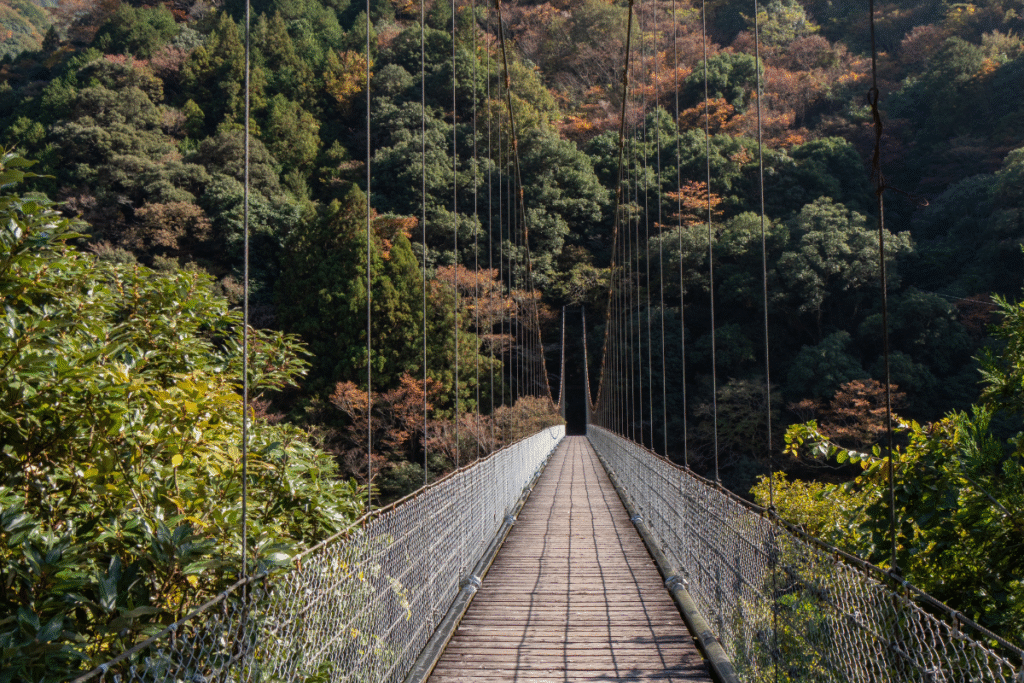
From Kotohira to Oboke
Driving time: around 40 minutes
Leaving Kotohira towards the mountains, the scenery quickly transforms. Forested ridges rise on both sides, and the Yoshino River appears below, winding through narrow gorges.
Key stops on the way:
- Koboke Observation Deck
A quick viewpoint over the dramatic rock formations of Koboke Gorge. A great introduction to the valley’s rugged geography. - Kunimasa Bridge
A modern bridge offering wide views of the river. Stop for photos of the emerald water and the sheer cliffs surrounding it.
The Iya Kazurabashi Vine Bridge has an entrance fee. This helps maintain the structure and supports safety inspections. The price is generally around ¥550 per person, and tickets are purchased on-site before crossing. The bridge is open daily, with hours that vary slightly by season.
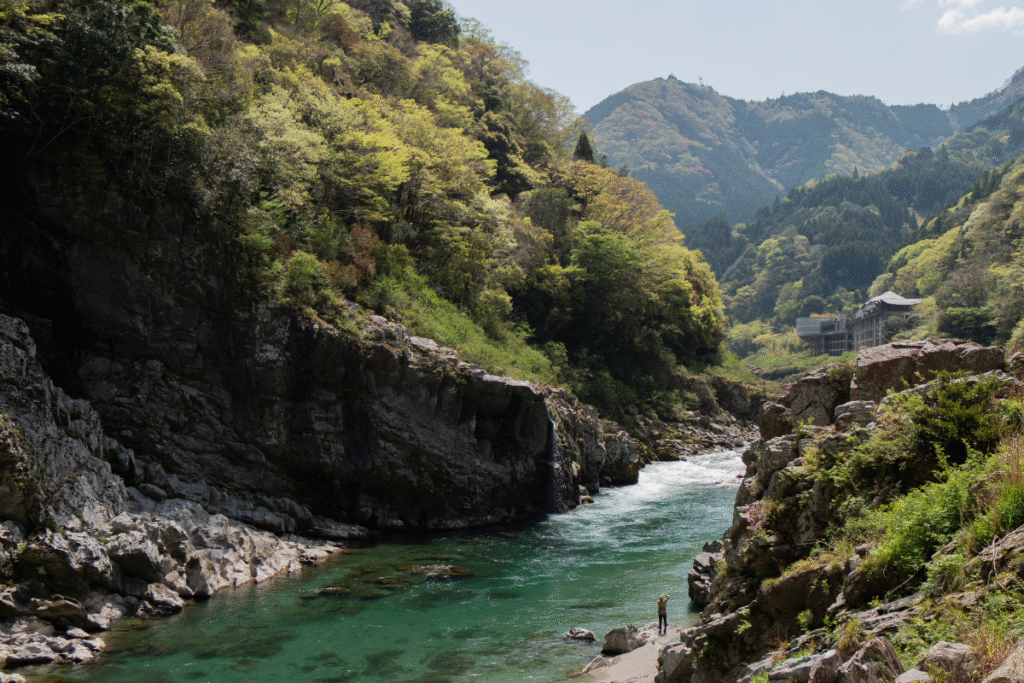
Oboke Gorge boat ride / rafting (seasonal)
Oboke Gorge is famous for its steep rock walls and crystal-clear river. Depending on the season, you can stop here for:
- Take a sightseeing boat (available most of the year)
A calm 30-minute cruise through the canyon. It’s a nice experience to see the gorge from the inside, and great even in cooler months. - Go rafting (mainly spring to autumn)
The Yoshino River is one of Japan’s top white-water rafting spots. Several adventure companies operate trips starting from Oboke.
Oboke is also a good place to grab snacks or lunch before continuing further into Iya. You can find some kombini, restaurants or cafe with great views over the river.
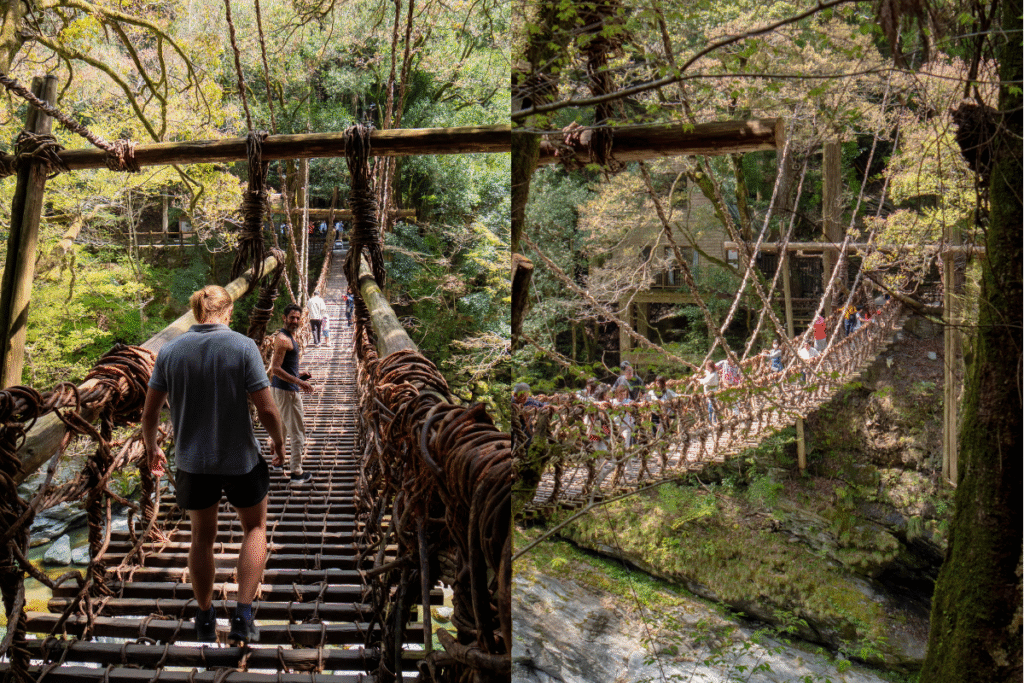
Iya Valley Vine Bridge (Kazurabashi)
One of the most iconic sights in all of Shikoku, the Iya Kazurabashi is a suspension bridge woven from vines stretched 45 meters across the river. Originally built centuries ago, these vine bridges were essential for villagers.
According to legend, members of the defeated Heike (Taira) clan fled into the deep mountains of Iya after losing the Battle of Yashima in 1185. Seeking refuge in this remote valley, they built vine bridges instead of wooden ones. The reason was strategic: if enemies approached, the vines could be quickly cut, isolating the valley and protecting the community.
No worries, you can still cross safely, the bridges today are reinforced for safety!
Walking the bridge
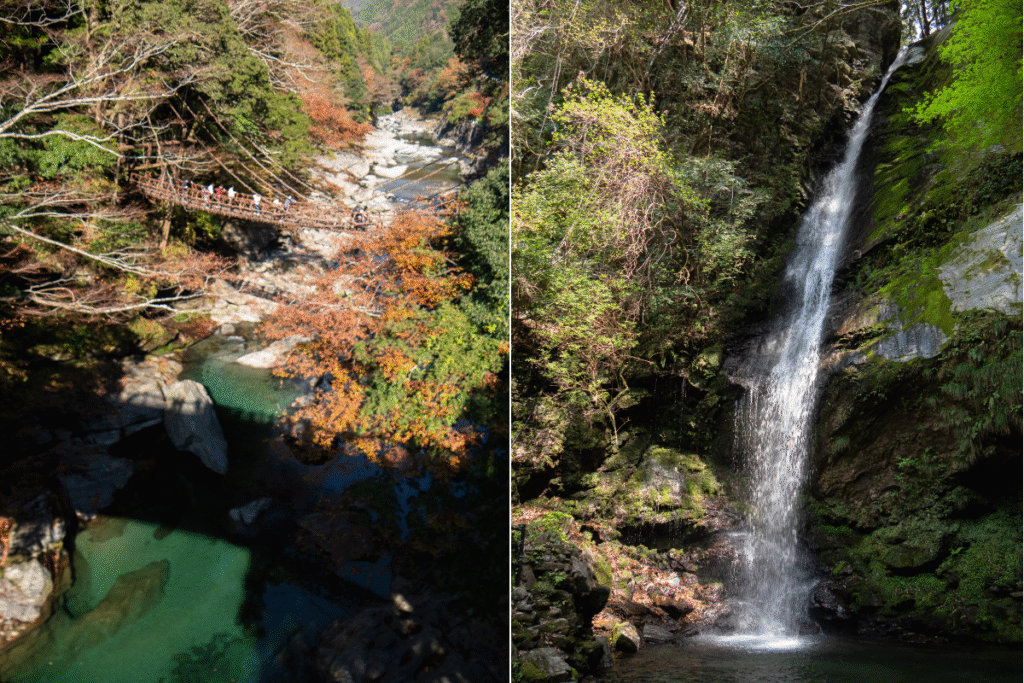
Walking across the vine bridge is part of the experience: the wooden planks are set with small gaps between them, so you can glimpse the river flowing beneath your feet. The bridge gently sways as you cross, adding a touch of movement that makes the walk feel a little adventurous yet completely safe.
Exploring the riverbank
A few steps after the bridge, a small waterfall appears between the trees: easy to reach, photogenic, and especially beautiful in the summer light or after rainfall. It’s a peaceful pause before continuing your journey deeper into Iya.
A short path leads you closer to the river. Here, the water has carved smooth white rocks into gentle curves, creating a beautiful place to pause and enjoy the scenery. You can walk down to the riverbank, dip your hands in the clear water, or even take a refreshing cold bath in summer. It’s a peaceful spot to rest, admire the shifting colors of the valley across the seasons, and look back at the vine bridge from a different angle.
Continue the Iya Valley Loop (by car only)
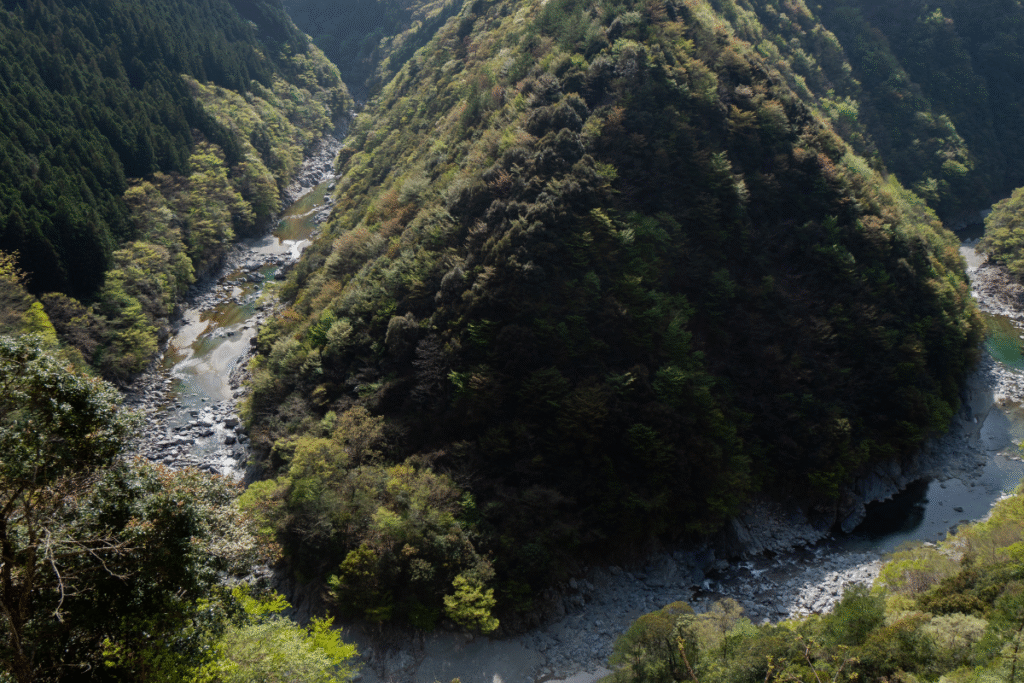
Once you’ve explored the area around the vine bridge, you return briefly along the same road until you reach the main Miyoshi route. From here, the road follows the Iya River upstream, leading you deeper into the valley. This last stretch is a narrow mountain road, but it’s also one of the most scenic parts of the drive, with regular places to stop and admire the steep cliffs and deep forests.
Need to know : This loop is only feasible if you rent a car (ask Kotori staff to book in advance!)
Essential stops:
- Iya Valley Observation Point: a panoramic view over a V-shaped gorge filled with cedar forests. Ideal for morning light.
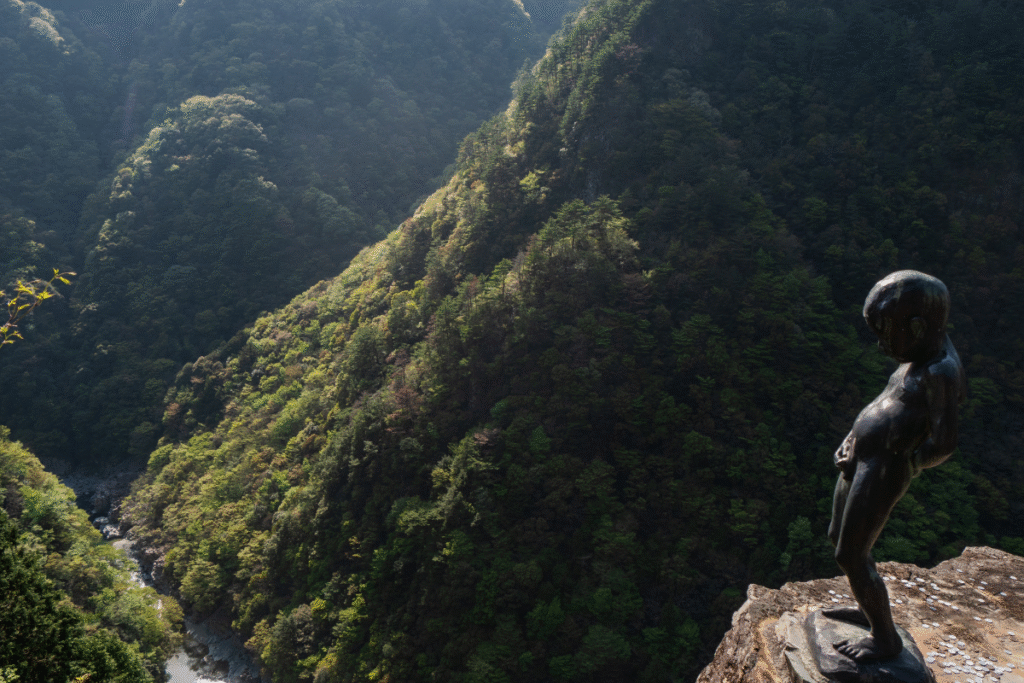
- The Peeing Boy Statue: perched dramatically on a cliff edge, this tiny statue is one of Iya’s quirky symbols.
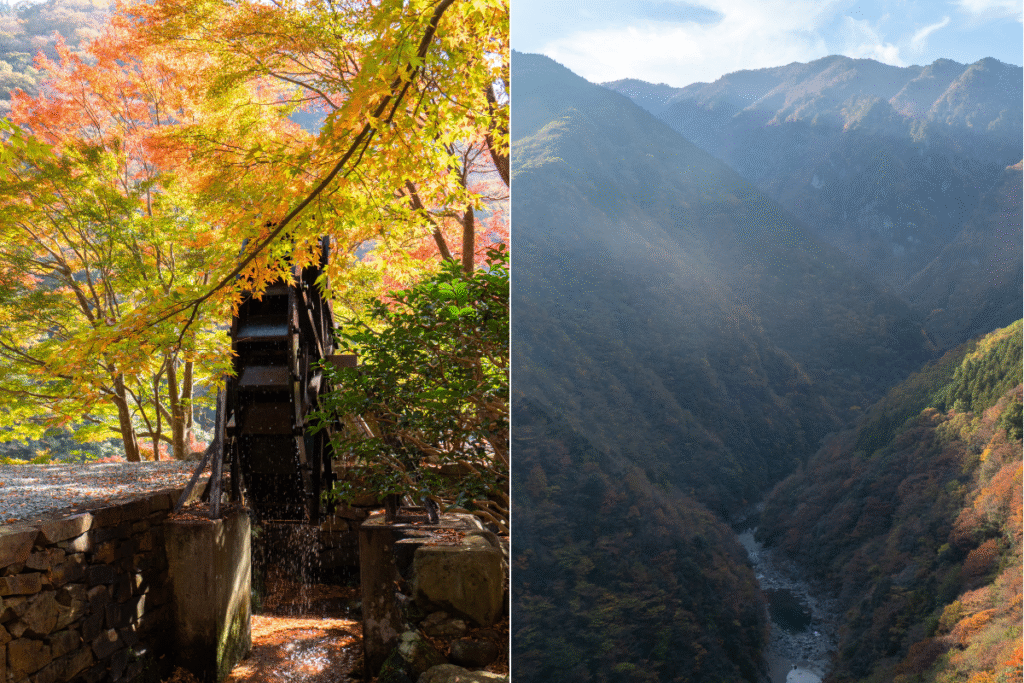
- Scenic roads & viewpoints: the whole loop is dotted with places to pull over, admire the cliffs, and breathe in the mountain air. Autumn foliage is especially spectacular.
This loop takes you back towards the main road, closing the circuit before returning toward Kotohira.
How to go to Iya Valley?
By car (rent from Kotori)
Renting a car is the most flexible option. It’s also the only way to complete the full loop efficiently. From Kotohira, it allows you to move at your own pace, explore hidden viewpoints, and enjoy spontaneous stops.
You can easily rent a car from Kotori Corking & Hostel. It’s always better to book in advance.
By bus: half day trip to Iya Valley
If you’re staying in Kotohira and don’t want to drive, the Iya Valley & Oboke Shuttle Bus is the simplest way to experience the highlights of the valley in just one morning. It connects Kotohira directly with Oboke Gorge and the famous Vine Bridge, making the trip stress-free and perfectly timed for sightseeing.
It runs once each morning and takes you directly to the two main sights: Oboke Gorge and the Iya Vine Bridge. Everything is timed for sightseeing, so you don’t need to worry about connections or navigation. It’s a half-day tour: you leave Kotohira in the morning and are back by early afternoon. i-Ideal for digital nomads who want to mix exploration and work.
Detailed itinerary
The journey begins at Konpira Sando-guchi at 8:20, with a second stop at JR Kotohira Station at 8:25. As the bus leaves town, the road starts to follow the Yoshino River, offering your first glimpse of the deep gorge you’ll explore later.
Around 9:25, the bus stops in Oboke, giving you time to enjoy the dramatic cliffs or take a short sightseeing boat ride if it fits your timing. After this break, the bus continues deeper into the valley and reaches the Iya Kazurabashi Vine Bridgeat 10:10.
Here you have almost an hour to walk the historic vine bridge, explore the small forest path to the river, relax by the sculpted white rocks along the water, or simply take in the views. At 11:05, the bus departs from the bridge and takes you back toward Kotohira, arriving around 12:40–12:45.
It’s an ideal choice for digital nomads or anyone who prefers a smooth, no-stress way to visit Iya Valley’s two most accessible highlights. you can ask Kotori staff to help you with the online booking procedure.
By train: a calm, scenic way to reach the valley
Taking the train is another easy option if you want a comfortable, no-rush start to your day. From JR Kotohira Station, the trains running along the JR Dosan Line gently follow the Yoshino River and pass through quiet mountain scenery on the way to Oboke Station, the gateway to the valley.
The ride takes 25–35 minutes, depending on the train, and the journey itself is part of the experience: steep forested slopes, flashes of turquoise water, and narrow gorges appearing outside the window. Once you arrive in Oboke, you’re already surrounded by the landscapes that make this region famous.
From the station, you can walk down to the Oboke Gorge boat pier (about 20 minutes). You can also continue your journey using local buses. These buses connect the station with the main sightseeing spots, including the Oboke Gorge boat pier, Koboke, and the Iya Kazurabashi Vine Bridge. Bus stops are located right outside the station, with timetables posted on-site, and most services run a few times per day. The schedule is not frequent, but it is reliable, making it a good option if you enjoy slow and organized travel.
Need to know: For local buses, pay directly on board (cash only).
Conclusion: Iya Valley, a beautiful day trip from Kotohira
A day trip to Iya Valley is one of the most rewarding experiences you can have while staying in Kotohira. The combination of steep gorges, clear rivers, vine bridges, and small mountain villages makes it a perfect escape if you enjoy scenic landscapes, nature walks, and photography. I went once in April and again in autumn, and each visit felt completely different: new colours, new light, and new perspectives on the valley.
Whether you choose the half-day shuttle bus, the slow-travel train + local bus option, or a full-day car loop, each way of getting there becomes part of the journey. The road, the river, and the viewpoints all offer their own moments to pause, look around, and take in this unique corner of Shikoku.
For travellers looking to add a touch of adventure and beauty to their time in Kotohira, Iya Valley is a must-see that I truly recommend.
FAQ – Day trip to Iya Valley from Kotohira
Is Iya Valley worth visiting from Kotohira?
Absolutely. It’s close enough for a comfortable day trip, yet offers scenery and experiences that feel completely different from town life.
Can I visit Iya Valley without a car?
Yes. The Oboke & Iya Shuttle Bus is the easiest half-day option, and trains to Oboke Station connect smoothly with local buses for a slower, scenic visit.
What can I see with the shuttle bus?
The bus focuses on the two main highlights: Oboke Gorge and the Iya Kazurabashi Vine Bridge, with well-timed stops for walking and exploring.
Do I need a full day for the loop?
If you’re driving, yes. The inner valley, viewpoints, and narrow roads are best enjoyed with plenty of time.
When is the best season to visit?
Spring and autumn offer the most striking colors, but the gorge and river remain beautiful year-round.
Is the vine bridge free?
No. The Iya Kazurabashi Vine Bridge has an entrance fee. This helps maintain the structure and supports safety inspections.The price is generally around ¥550–¥650 per person, and tickets are purchased on-site before crossing..
About the author
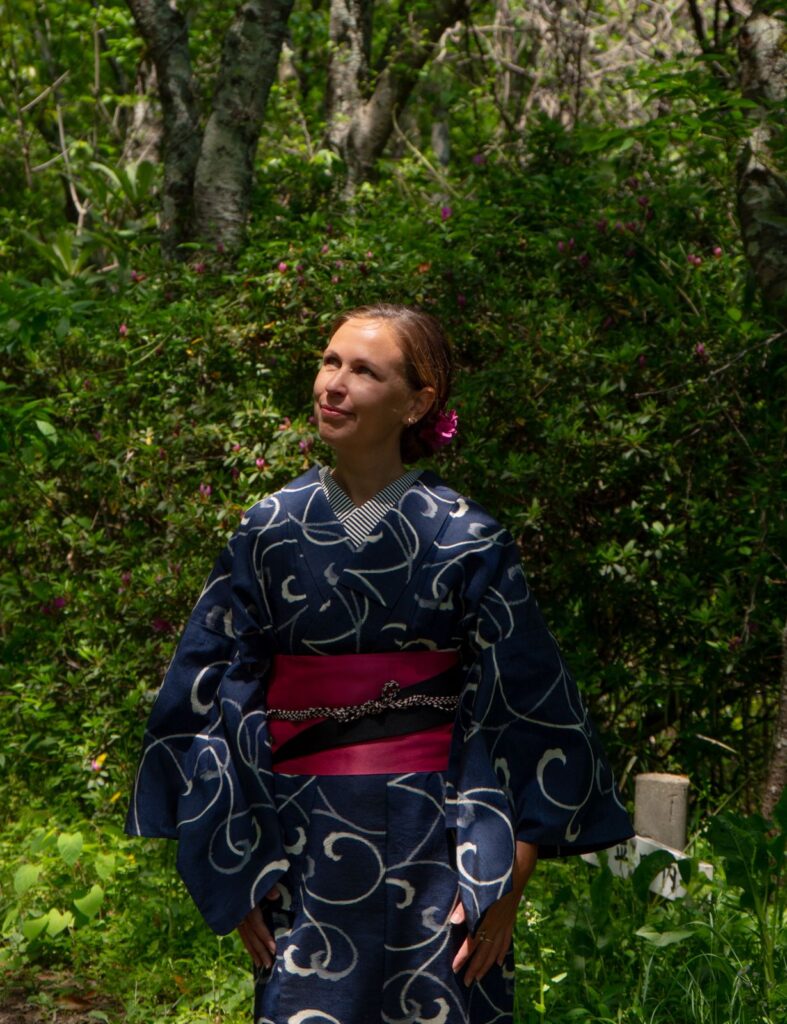
Manon, is a digital nomad and content creator. She lives between time zones, works between getaways, and shares the beauty of this joyful mess.