
A day trip to Naoshima from Kotohira is the easiest way to trade screens for sea air and world class art. Just across the Seto Inland Sea, the island links quiet beaches, contemporary museums by Tadao Ando, and village lanes where art lives inside traditional houses. This guide follows a simple route that fits one relaxed day and keeps logistics light for travellers based in Kotori Coworking & Hostel in Kotohira.
Table of Contents
- Presentation of Naoshima
- Day trip to Naoshima and best spots
- Getting around on the island
- How to go to Naoshima from Kotohira?
- Tips to plan a day at Naoshima island
- Conclusion
- FAQ
Presentation of Naoshima
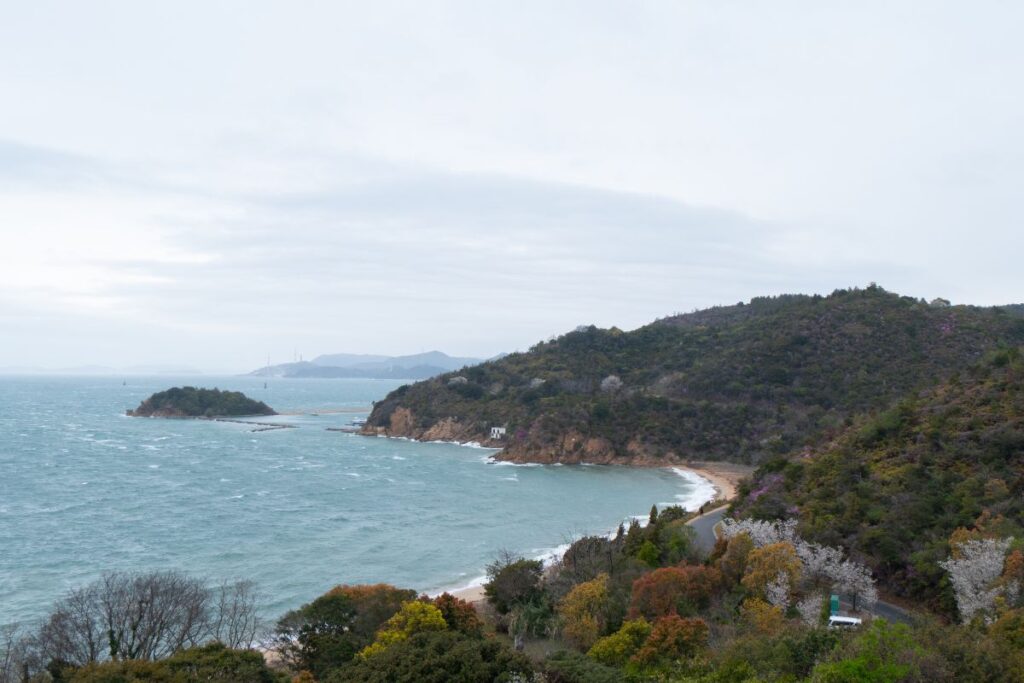
Set in the Seto Inland Sea between Kagawa and Okayama, Naoshima is a small island that has become one of Japan’s most distinctive cultural destinations. Once known mainly as a quiet fishing community, the island was reimagined from the late 1980s through a collaboration between the Benesse group and architect Tadao Ando. The idea was simple and radical at the same time: place art and architecture within everyday island life, protect the landscape, and invite visitors to experience both with unhurried attention. The result is Benesse Art Site Naoshima, a network of museums, outdoor works, and village based projects that has shaped the identity of the island.
Why Naoshima for a day trip from Kotohira?
The island became famous for three reasons:
- Its art and architecture of international stature. Chichu Art Museum is built mostly underground to preserve views of the sea and sky. Benesse House Museum places works inside galleries and along the shoreline. The Lee Ufan Museum and Ando Museum extend the story of minimal spaces, light, and texture that define the island’s approach.
- Its art woven into daily life. In Honmura, the Art House Project transforms traditional homes, a shrine, and old sites into installations. Walking between these spaces feels like moving through a living village where art sits on the same streets as shrines, gardens, and local cafés.
- Its coastal scenery and slow rhythm. Small beaches, low hills, and quiet lanes give the artworks a natural frame. The sea is never far away, and open air installations change subtly with weather and light.
Today, Naoshima blends fishing hamlets, pocket beaches, museums, guesthouses, and simple eateries. Ferries connect the island to Takamatsu in Kagawa, which makes it easy to reach without a car. It is a perfect escape from Kotohira for a nice day out of office in Kotori coworing & hostel!
Day trip to Naoshima and best spots
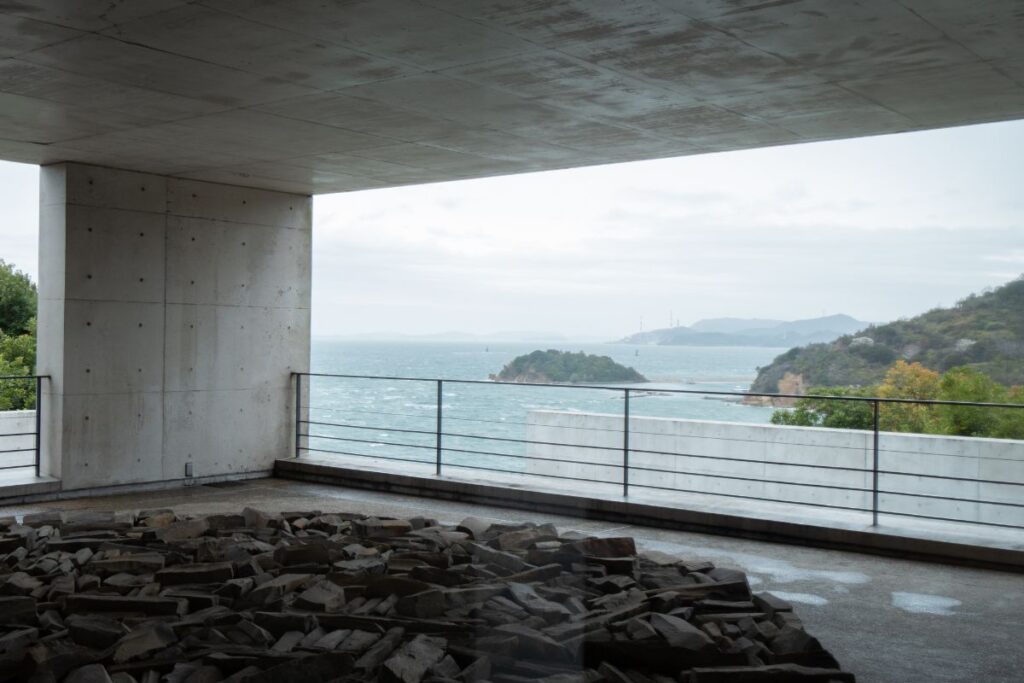
Chichu Art Museum
Chichu is Naoshima’s essential stop if you want to understand how art and architecture shaped the island. Designed by Tadao Ando and set mostly underground, it protects sea views while concentrating attention on a small group of major works. You come for three things done at the highest level: Monet’s Water Lilies seen only in natural light, James Turrell’s light and perception spaces, and Walter De Maria’s large site specific installation. The building guides you between open courtyards and carefully lit rooms, so the visit feels focused and unhurried.
Practical information
Reservation: Timed online ticket required. Slots are released in 15 minute steps and often sell out on weekends and holidays.
Hours: 10am to 5pm.. Last entry 4pm. Closed Mondays, open Monday on national holidays then closed the next day.
Admission: Weekdays ¥2,500 online, ¥2,800 on site. Weekends and holidays ¥2,700 online, ¥3,000 on site.
Tip: Book a late morning slot so you can connect ferries calmly and still have a full afternoon for Benesse and Honmura.
Café & Garden Chichu Garden
Just before you enter Chichu, a small garden recreates plants Monet grew in Giverny, from water lilies and irises to willows. It sets the mood for the Monet rooms and is worth a slow lap on the way in or out. Inside the museum you will also find a compact café for light meals. It is a simple, good quality stop between galleries and the Benesse coast and offer a beautiful view. Step outside on the terrace to enjoy the panorama over nature and the sea.
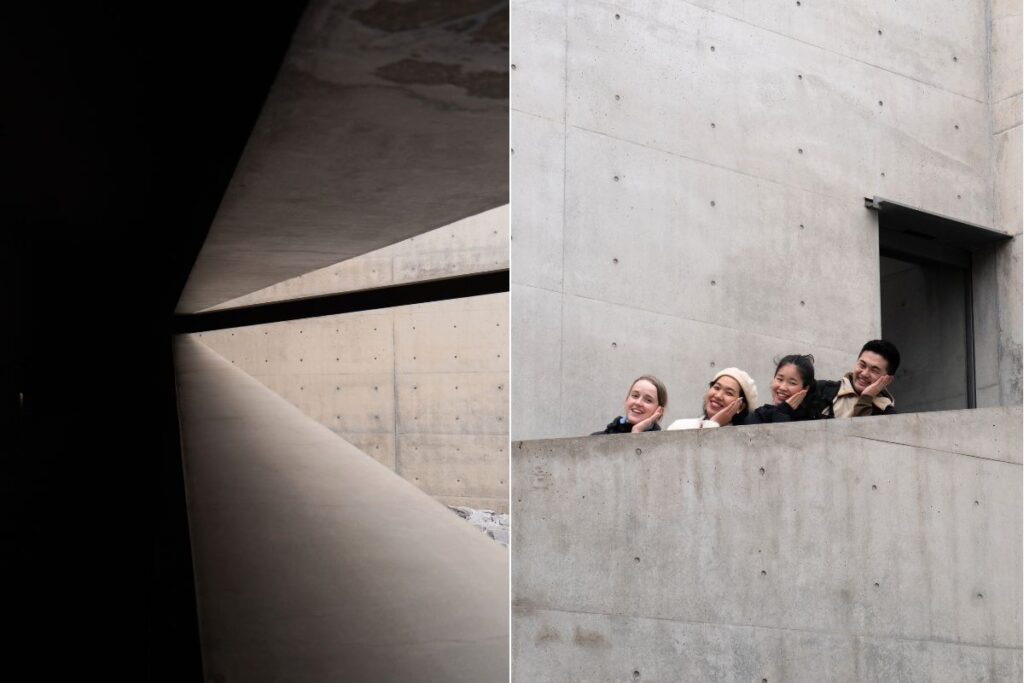
Benesse House Museum and area
Benesse House is the core contemporary art museum on Naoshima, designed by Tadao Ando to link galleries with the surrounding coast. Inside you move through concrete rooms that present a steady mix of Japanese and international artists, then step outside to find sculptures set against sea views. Two satellite spaces expand the visit. Seaside Gallery sits beside the shoreline and frames large installations with daylight and water. Valley Gallery lies a short walk inland in a sheltered hollow and hosts periodically changing projects such as Kusama’s Narcissus Garden, all included with the museum ticket. The result is a clear loop that pairs indoor viewing with short, easy walks in the landscape.
Practical information
Hours: 8am to 9pm. Last entry 8pm. Open year round. Check the calendar for any special notes.
Admission: Online purchase ¥1,300. On site purchase ¥1,500.
Valley Gallery: Open 9.30am to 4pm. Last entry 3.30pm
Tickets: No timed reservation for general entry. Buy online in advance or on site at the museum or Valley Gallery.
On site services. Museum shop 9am to 6pm Museum cafe and restaurant located inside the building.
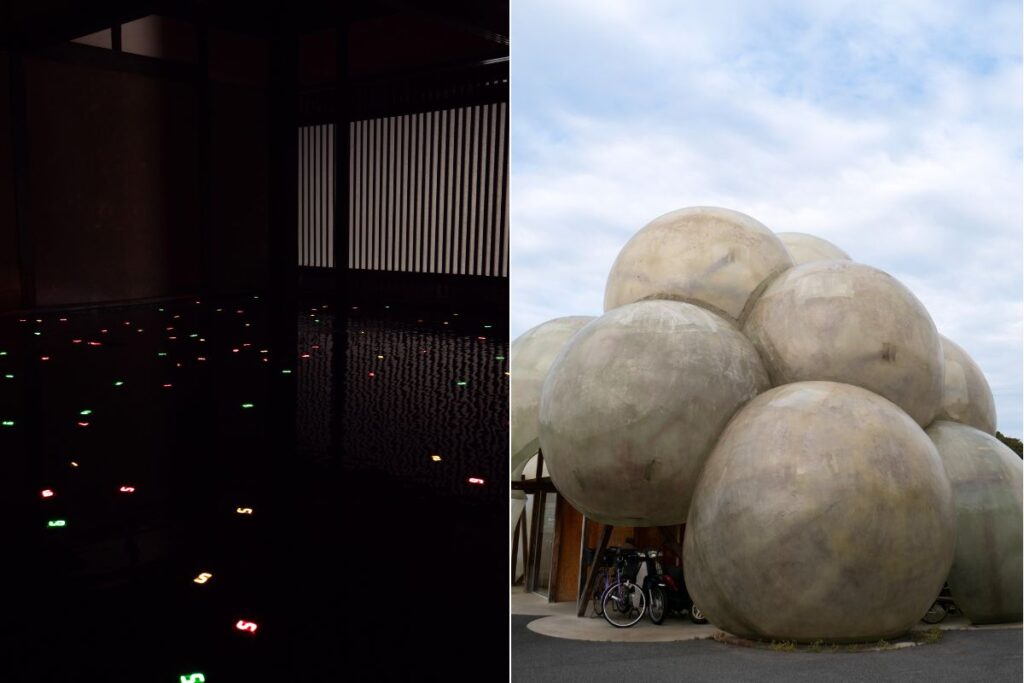
Art House Project in Honmura
The Art House Project is a walkable circuit in Honmura where former homes and local sites have been turned into individual artworks. As you wander the lanes you step into a few carefully reimagined spaces: a traditional house where a shallow pool turns light and ripples into the artwork, a small shrine that links an underground stone passage with a hilltop sanctuary, and a former home transformed into bold color and collage. One highlight is an immersive dark room work that unfolds slowly as your eyes adjust. The scale stays human, the pace unhurried, and cafés and side streets make natural pauses between visits.
Practical information
Tickets: Buy the multi site ticket in Honmura for the main houses. The dark room work has its own timed entry on the day. Kinza is a separate, one person experience that must be reserved in advance.
Hours: Generally open late morning to late afternoon with a short midday break. Closed Mondays, with the usual holiday make up pattern the following day.
Time needed: Plan 90 minutes to two hours for the core circuit.
Route tip: Start at Honmura Lounge & Archive to get tickets, check the day’s timings, and map an efficient order.
Yayoi Kusama’s pumpkins
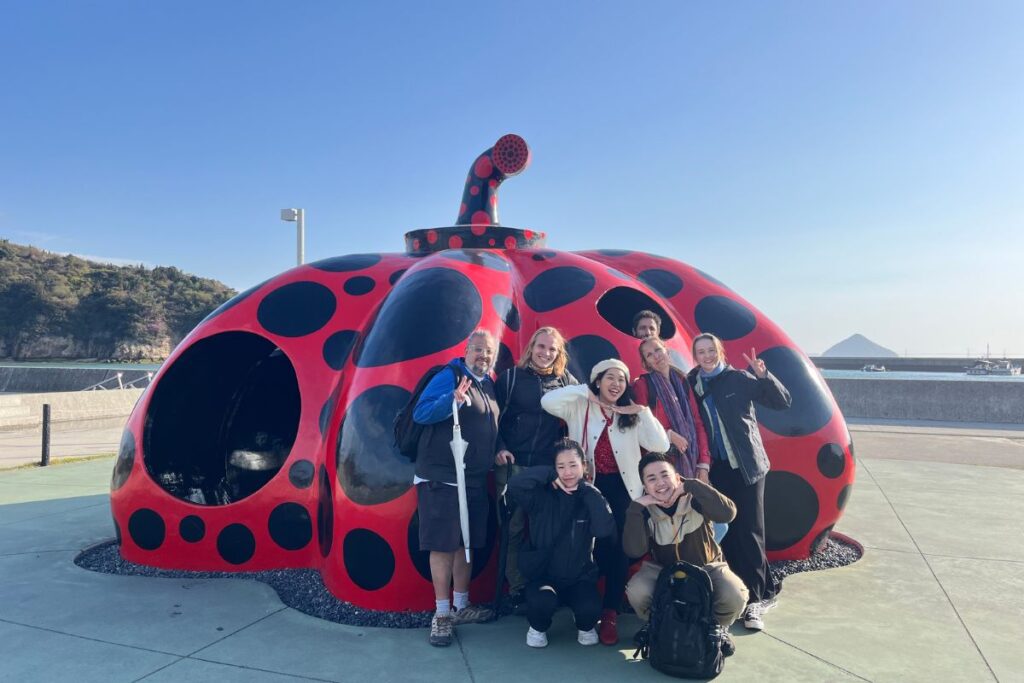
Two outdoor works mark the rhythm of a day on Naoshima. The Red Pumpkin sits right by Miyanoura Port and sets the tone the moment you arrive. The Yellow Pumpkin rests on a short pier along the Benesse coast and has become the island’s emblem. Both are quick, no fuss stops that fit naturally between museum visits. Tide, light, and weather change the view hour by hour, so they are worth a brief detour even if you have seen the photos a hundred times.
Practical information
Access: Red Pumpkin is beside the ferry terminal at Miyanoura. Yellow Pumpkin is along the Benesse shoreline, a short walk from Benesse House or an easy hop by bike or bus.
Cost and hours: Free, open air works with no tickets. The Yellow Pumpkin can be removed temporarily during rough weather.
Tip: If the Yellow Pumpkin is off view, walk the nearby coastal path for other outdoor pieces and wide sea views.
Ando Museum
A small but useful stop in Honmura that explains how Naoshima’s art plan came together. Inside a restored wooden house, Tadao Ando inserts crisp concrete volumes to show drawings, models, and photos of the island projects, from early ideas to the museums you visit the same day. It is a clear, 30 to 45 minute visit that adds context before or after the Art House Project and helps you read the architecture across the island more confidently.
Practical information
Hours: 10am to 1pm 2pm to 4.30pm. Last entry 4pm.
Closed Mondays. Open Monday on national holidays, then closed the next day.
Admission: ¥600 online or ¥700 on site.
Tickets: No timed reservation needed; buy online in advance or at the entrance.
Tip: Pair it with the Art House Project to minimize backtracking around Honmura.
Getting around on the island
Bicycle and e-bike rentals
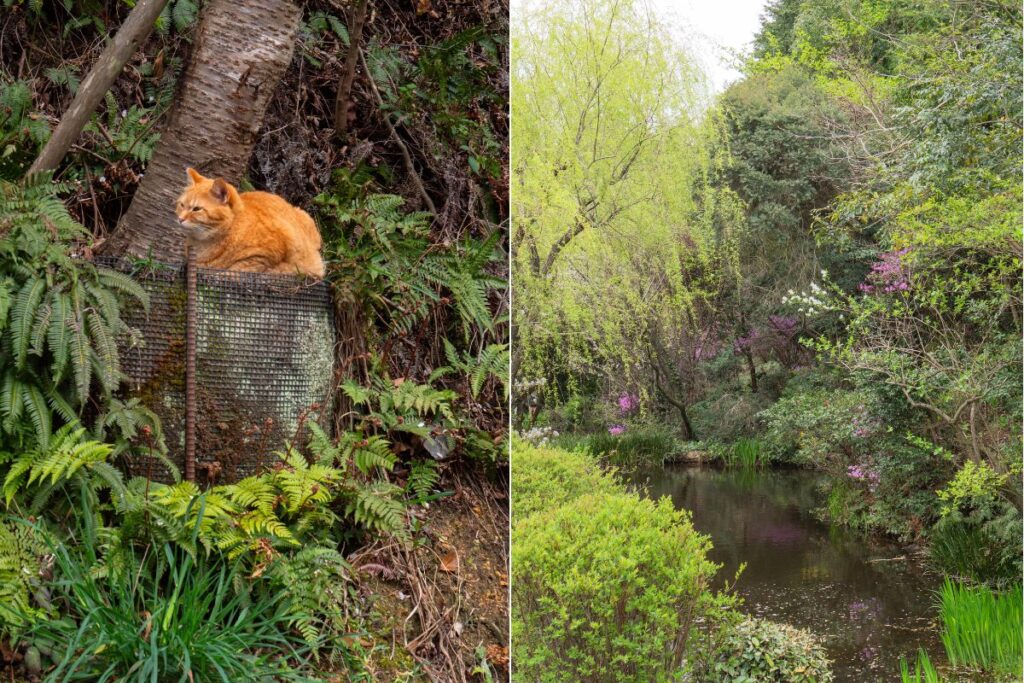
Naoshima is small but hilly, which makes a bicycle the best balance of freedom and time. An e-bike takes the sting out of the climb to Chichu and keeps the Benesse coastline and Honmura comfortably within reach. Rental shops cluster around Miyanoura and Honmura, with simple contracts, baskets, and helmets. Pick up your bike as soon as you arrive from the ferry and ride the coast between visits.
Practical information
Reserve in busy seasons or arrive early near the port.
Test the brakes and battery level before you leave.
Return times are usually tied to shop hours, so keep an eye on your last ferry.
Bus routes and walking notes
The island bus links Miyanoura, Benesse area, Chichu and Honmura on a short loop. Services are reliable but not constant, so it helps to note the next departure as you arrive at each stop. Walking works well along the coast and inside Honmura, where distances are short and there is shade on narrow lanes.
Practical information
Fare per ride: Adults ¥100, Children 5–12 ¥50. Pay in coins when you get off.
Museum area shuttle: free bus between Tsutsuji-so, Benesse House Museum, Lee Ufan Museum, and Chichu.
Check the return bus and ferry times before your last museum.
If timing is tight, combine a downhill walk with a quick bus hop uphill.
How to go to Naoshima from Kotohira
Route options and timing
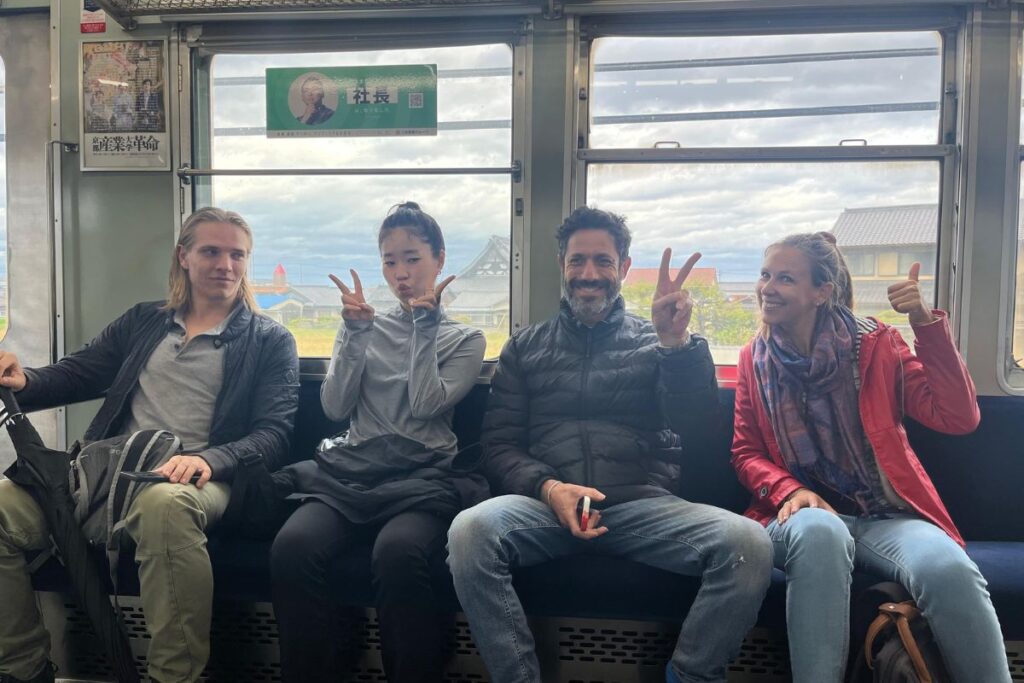
From Kotohira the cleanest route is via Takamatsu. Take the JR Dosan Line from JR Kotohira Station to Takamatsu Station. Walk about 15 minutes to Takamatsu Port. From the port, sail to Miyanoura on Naoshima by ferry or high speed boat. A few services stop at Honmura, but Miyanoura has the most frequent departures. Plan your day around the last return boat to Takamatsu.
Practical information
Build your museum plan around boat times.
Weather can affect crossings, especially in strong winds.
Tickets are purchased at the terminal; allow a few extra minutes on weekends and holidays.
Ferry basics and tickets
Ferries have open decks and plenty of space. High speed boats cost more and save time. Seating is unreserved. Ports are compact and well signposted, so transfers are easy even on a first visit.
Practical information
Buy tickets at the counter just before boarding.
Keep your return in mind when choosing the last stop of the day.
Tips to plan a day at Naoshima island
Organize the day trip
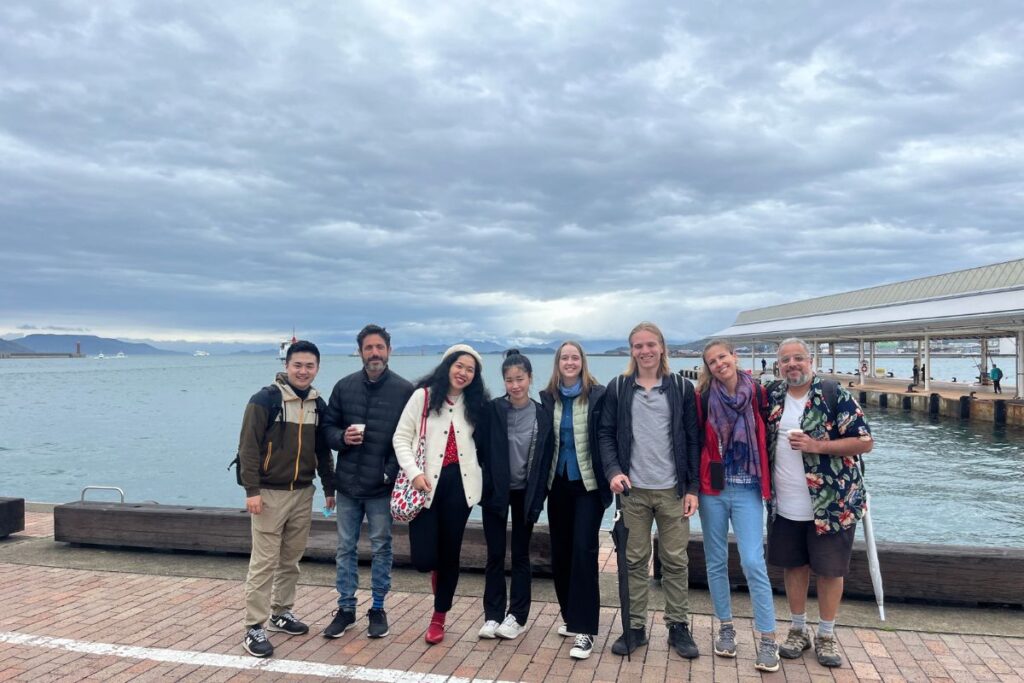
Naoshima works year round, with spring and autumn bringing soft light and easy temperatures. Summer is bright and lively on the coast. Winter is quiet and contemplative. A smooth day plan looks like this. Morning arrival at Miyanoura, pick up a bike or catch the bus, then a late morning entry at Chichu. After lunch, walk or ride the Benesse coastline and visit Benesse House Museum. Finish in Honmura for the Art House Project, a coffee, and a slow loop through the village before your evening boat.
Food and coffee stops
You will find simple cafés at Miyanoura, along the Benesse shoreline, and inside Honmura. Expect set lunches, curry, pasta, and coffee stands. Popular spots fill at noon, so eating slightly early or late keeps the day moving. Many small places are cash only, and menus can be seasonal, which is part of the island’s charm.
Practical information
Carry some cash and a reusable water bottle.
If your Chichu slot spans lunch, plan a light meal before or after at the museum area or near Benesse.
Honmura is best for an afternoon coffee between houses.
What to pack & tips
Comfortable shoes, a light windproof layer, sunglasses, and a small daypack are enough. Bring a portable charger and keep museum rules in mind, as photography is restricted in many interiors. If you choose a bike, an e-bike saves time on hills and lets you keep a relaxed pace.
Conclusion
Naoshima brings together clear, well run museums and an easy island loop that suits a single day from Kotohira. With one timed booking at Chichu, a simple plan for Benesse and Honmura, and flexible ferry connections, you get a full reset of sea air, architecture, and contemporary art without complicated logistics.
Naoshima is a great surprise: wide sea views and strong, memorable artworks. For an art lover like me, it is a day trip from Kotohira that is as relaxing as it is instructive. I loved riding an e-bike between museums and slowing down on foot between outdoor pieces. Both ways let the island unfold at a calm pace and make the route feel simple and clear.
More than anything, Naoshima shows how art and architecture can renew a place while keeping its charm and history alive.
FAQ
Can I see the main sights in one day?
Yes. Anchor the day with Chichu, add Benesse House and its coastal works, then finish in Honmura.
Do I need a reservation for every museum?
No. Only Chichu needs a timed online ticket. Others can be arranged on site, with one Art House piece using a same-day time slot and Kinza requiring advance booking.
Is cycling necessary?
No. Buses link all major sites. An e-bike simply gives you more freedom on hills and cuts waiting time.
How long is the journey from Kotohira to Naoshima?
Plan on about 1h30 to 2h one way, depending on the boat you take. The train from JR Kotohira to Takamatsu is about 54 minutes, trains run roughly hourly. From Takamatsu Station it is a 5 to 10 minute walk to the port. The boat to Naoshima takes about 50 to 60 minutes by ferry or about 30 minutes by high speed boat. With smooth connections, the fastest combo is around 1 hour 30 minutes; with the regular ferry it is closer to 1 hour 50 minutes to 2 hours.
Who is Ando?
Tadao Ando is a Japanese architect known for minimalist concrete buildings that use light, shadow, and simple geometry. On Naoshima he designed Chichu Art Museum, Benesse House Museum, Lee Ufan Museum, the Ando Museum, and several site elements, shaping how art and landscape connect.
What artworks should I not miss in Naoshima?
Start with Chichu Art Museum for Monet’s Water Lilies, James Turrell’s light works, and Walter De Maria’s installation. Add the coastal outdoor pieces around Benesse House, the immersive dark room work in Honmura, and the Red and Yellow Pumpkins by Yayoi Kusama when the Yellow Pumpkin is on view.
How to use buses on the island? Are they free?
Naoshima has two types of buses. The town bus is public and pay per ride at about ¥100. Pay in cash when you get off. The museum area shuttle is free and links Tsutsuji so, Benesse House Museum, Lee Ufan Museum, and Chichu, but it does not cover the whole island.
About the author
Manon, is a digital nomad and content creator. She lives between time zones, works between getaways, and shares the beauty of this joyful mess.