
Ritsurin Garden is an easy and beautiful escape from Kotohira, a Japanese style garden at the entrance of Takamatsu, the largest city in Kagawa. The moment you walk through the gate the noise drops away and the scene opens to water, pines, and low wooden bridges set against Mt. Shiun. Paths are simple to follow and every turn frames a new view. It feels calm without being remote, which is why it works so well for a short visit during a stay at Kotori, in Kotohira.
Getting here is straightforward by train and the garden is compact enough that you can enjoy the essentials in 60 to 120 minutes. If you like places where history, craft, and a slower pace meet, this is a reliable choice for a half day out from Kotohira. You want to know more about Ritsurin Garden? Here is a guide focuses on the essentials so you can make the most of your time.
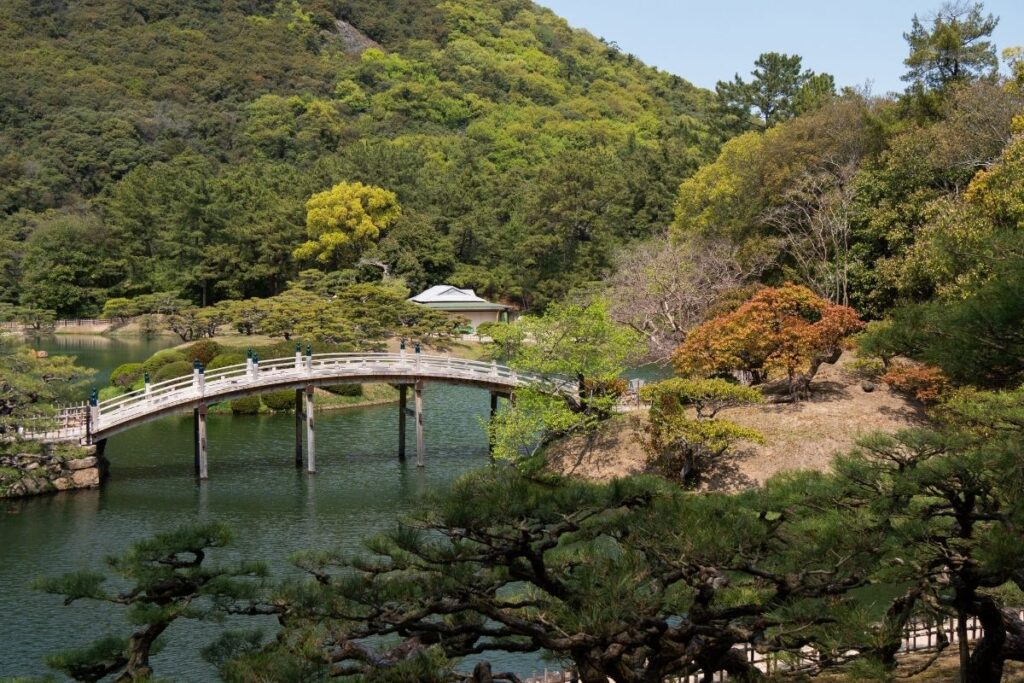
Table of Contents
- Why visit Ritsurin Garden
- Getting there from Kotohira
- Entry, opening hours, and quick orientation
- Highlights you shouldn’t miss
- Tea houses and museums
- Seasonal tips
- FAQ
- Conclusion
Why visit Ritsurin Garden
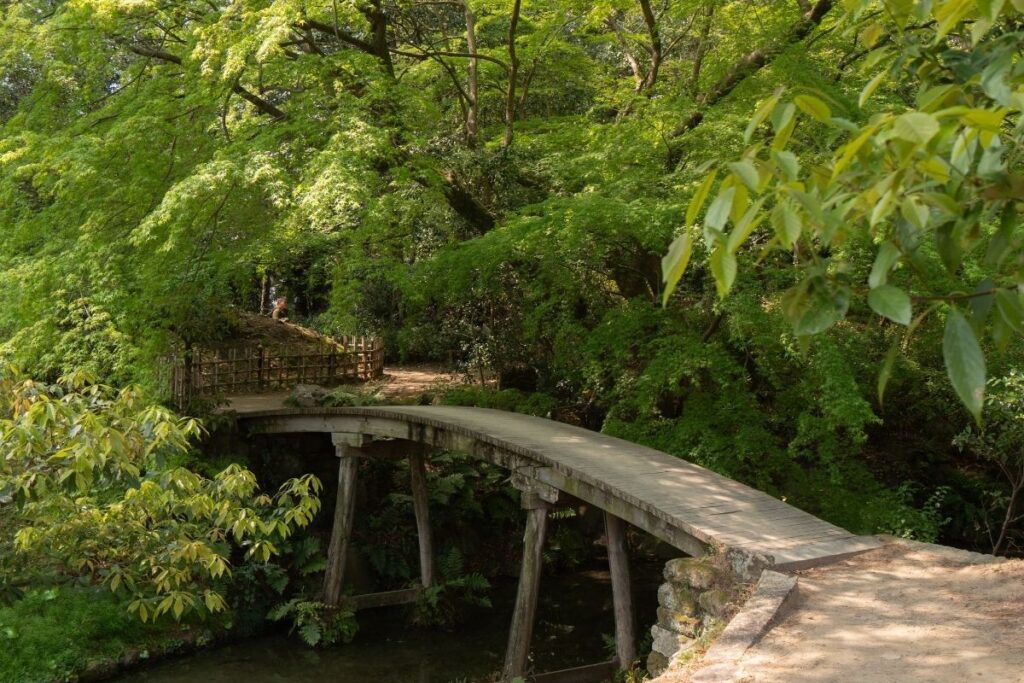
Ritsurin Garden is one of Shikoku’s finest green spaces, a historic strolling garden laid out over centuries at the foot of Mt. Shiun. The design brings together six ponds, sculpted hills, and precise pine pruning to create views that change step by step. You can feel the care in the details. Bridges are set to frame the water, teahouses sit low by the shore, and the mountain anchors the background.
The story adds depth to the walk. The first layouts began in the early 1600s, then the lords of the Takamatsu domain expanded and refined the grounds through the 1700s. After the feudal era ended, the garden opened to the public and has been loved for its calm paths and seasonal color ever since.
Ritsurin’s strolling-pond design spreads over about 16.2 hectares of flat garden, with roughly 75 hectares when you include Mt. Shiun as the borrowed backdrop. It is the largest of Japan’s cultural-property gardens.
It is a good match for a simple day out from Kotohira. In one visit you can sit for matcha in a teahouse, take a short boat ride for water level perspectives, climb a small hill for a wide panorama, and wander quieter corners where the only sounds are wind and water. It is an easy pick if you want calm that shifts with the seasons, from spring sakura and fresh greens to autumn maples and crisp winter light.
Getting there from Kotohira
Train options and sample times
The easiest way to go to Ritsurin Garden from Kotohira is to take the Kotoden Kotohira Line directly from Kotoden-Kotohira Station to Ritsurin-Koen Station. The ride is about 55–60 minutes and trains run throughout the day. Then, from Ritsurin-Koen Station, it is about a 10 minute walk to the garden’s main entrance.
JR alternative: From JR Kotohira ride to JR Takamatsu, then one stop on the JR Kotoku Line to JR Ritsurin-Koen-Kitaguchi Station, a 3 minute walk to the North Gate. This route can be similar in total time, depending on connections.
Tickets, IC cards, and platforms
At Kotoden-Kotohira, buy a paper ticket or tap an IC card, then board a Kotohira Line train bound for Takamatsu-Chikkō and get off at Ritsurin-Koen. If you prefer paper, ask for a round-trip ticket (ōfuku) at the station window. It is a simple way to cover both legs without queuing again.
For JR, buy a ticket or tap in at JR Kotohira, transfer at JR Takamatsu, then ride one stop to Ritsurin-Koen-Kitaguchi. Station signage is clear in Japanese and English.
Entry, opening hours, and quick orientation
Ritsurin Garden is open daily, with longer hours in spring and summer and shorter hours in late autumn and winter. Admission is free 2 days per year, on January 1 and March 16.
Hours by month:
- Dec, Jan: 7:00–17:00
- Feb: 7:00–17:30
- Mar: 6:30–18:00
- Apr, May, Sep: 5:30–18:30
- Jun–Aug: 5:30–19:00
- Oct: 6:00–17:30
- Nov: 6:30–17:00.
If you arrive by JR, the North Gate is closest. From Kotoden, the main East Gate is a short walk. You can pick up a free map at the entrance. Then, start with a loop of the South Garden, then add the North Garden if you have time.
Plan 60–120 minutes for a relaxed visit.
Admission is 500 yen for adults, and you can pay at the gate.
Highlights you shouldn’t miss in Ritsurin Garden
Pines
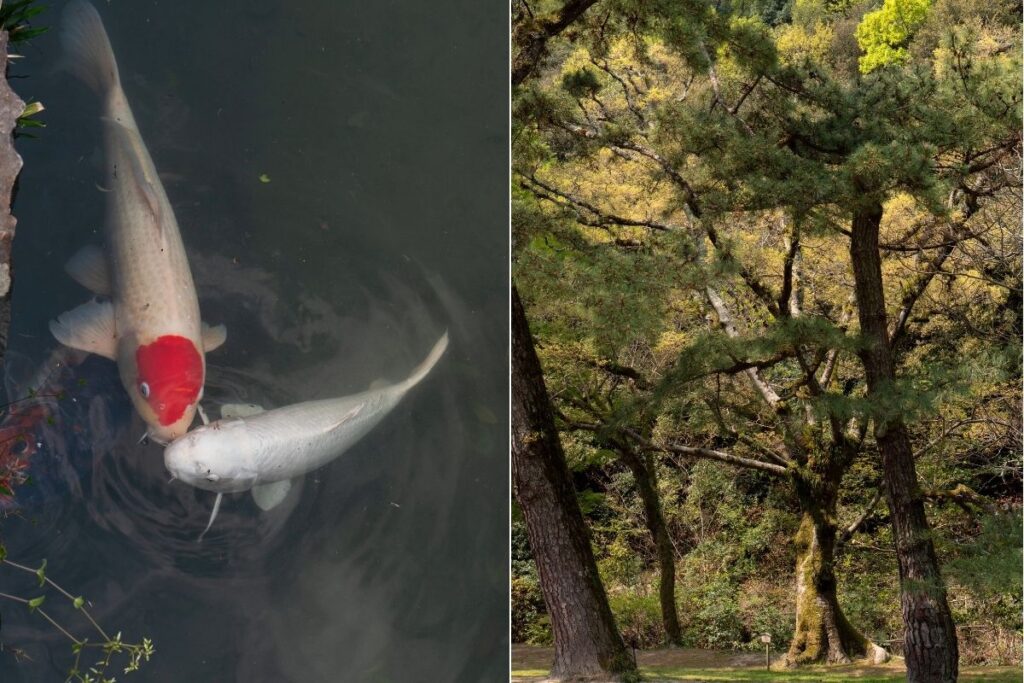
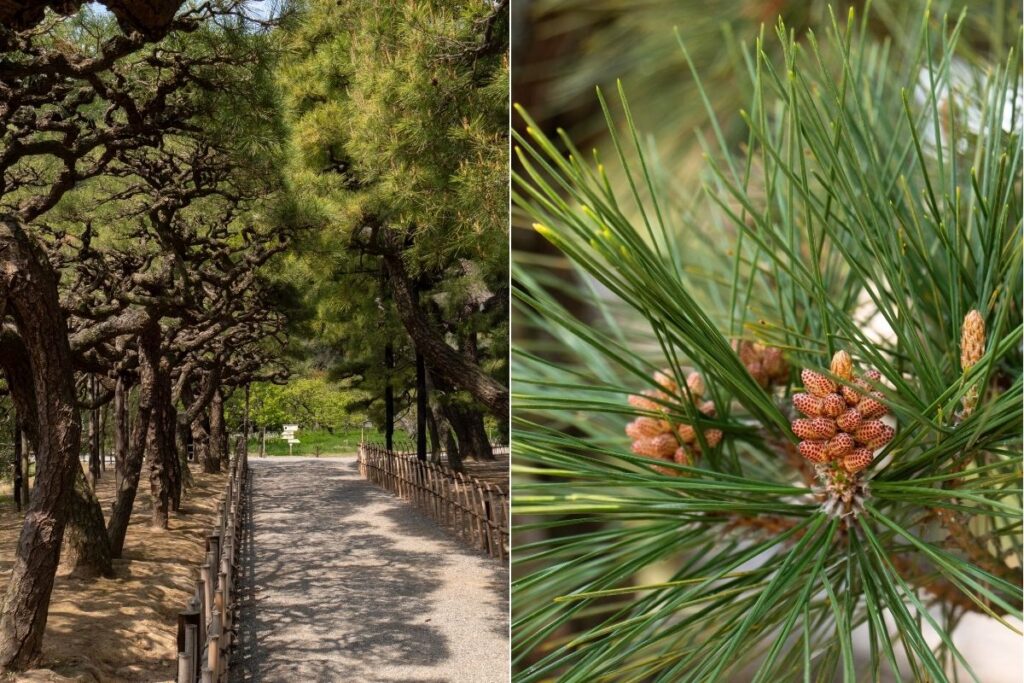
Ritsurin is a garden of pines. There are about 1,400 trees in total and roughly 1,000 are intensively cared for. Several were hand-planted during visits by royalty. In the North Garden you will find five commemorative pines from Emperor Showa, Prince Yasuhito Chichibu, Prince Nobuhito Takamatsu, Edward VIII, and Princess Tomiko of Kitashirakawa. On the south side of Kikugetsu-tei there is a pine planted by Emperor Taisho. These trees sit alongside centuries of pruning work that shapes the garden’s silhouette.
Stones
Look for the character pieces around the ponds and on the islands. An old anecdote says that during a period of harsh sun, townspeople brought wood and stones to the garden and received food in return under Lord Matsudaira Yoritsune. Two famous stones from that time are the “Returning Lion”, whose shape looks back over its shoulder and the “Peony Stone”, which resembles a peony bloom.
Stone settings also tell stories. The early Muromachi-period site called Shofuda uses 110 stones at the center, 15 on the east side and 17 on the west. Out on Nanko sits the island “Sengi,” modeled on the Chinese legend of the immortal isles. Taken together, these placements echo the steep, ink-painting mountains that inspired daimyo gardens.
Hirai Peak
Hiraiho, also called Hirai Peak, is said to be shaped in the image of Mt. Fuji and it is the best viewpoint in the park. Near the top, a band of silicified wood stones suggests Fuji’s snow and also helps hold the slope. From here you have the classic scene: Engetsukyo arched across the water, Kikugetsu-tei on the far shore, and Mt. Shiun steady in the background.
Neagari Goyomatsu
This exposed-root five-needle pine stands about eight meters tall with a trunk roughly three and a half meters around. According to garden records, it began as a potted bonsai gifted by Tokugawa Shogun Ienari in 1833 and was planted in the ground by Matsudaira Yorihiro, the ninth lord of Takamatsu. It is the only five-needle pine of its size in Ritsurin and a clear link between bonsai practice and full-scale garden trees.
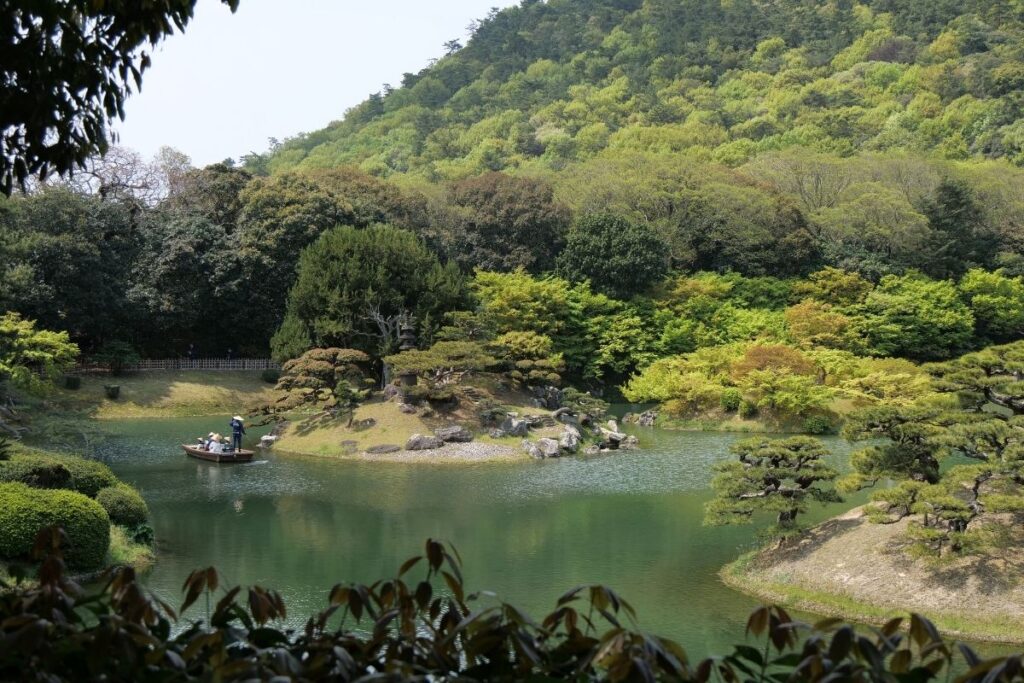
Taking the boat
The garden’s wasen boats leave from a small pier on the South Pond, next to Kikugetsu-tei. Buy your ticket inside the garden and wait at the pier; staff will call the next departure. The ride lasts about 30 minutes and keeps close to the water, so bridges, stone groupings, and pine silhouettes appear in calm reflections. It is an easy way to see the garden as it was meant to be read from water level, and it gives you photo angles you will not get from the paths.
Map for orientation
Use the on-site map boards to locate these highlights quickly; the North and South Garden circuits and gates are clearly marked on the official map.
Tea houses and museum
Ritsurin offers calm indoor pauses, from classic teahouses by the water to small museum rooms that add context. Use them as short breaks between paths: sip matcha with a view, then step inside for a quick look at Kagawa craft and history.
Kikugetsu-tei teahouse
Built in the late 17th century and named for a Tang poem about scooping water and catching the moon, Kikugetsu-tei is a sukiya-zukuri pavilion with openings on all sides so you can step in from any direction. When you sit on the low floor, it feels as if you could reach out from a boat and touch the lake. Successive lords loved this “ochaya,” and you can still enjoy matcha or sencha with a sweet here.
Seasonal fresh sweets are limited and first come, first served.
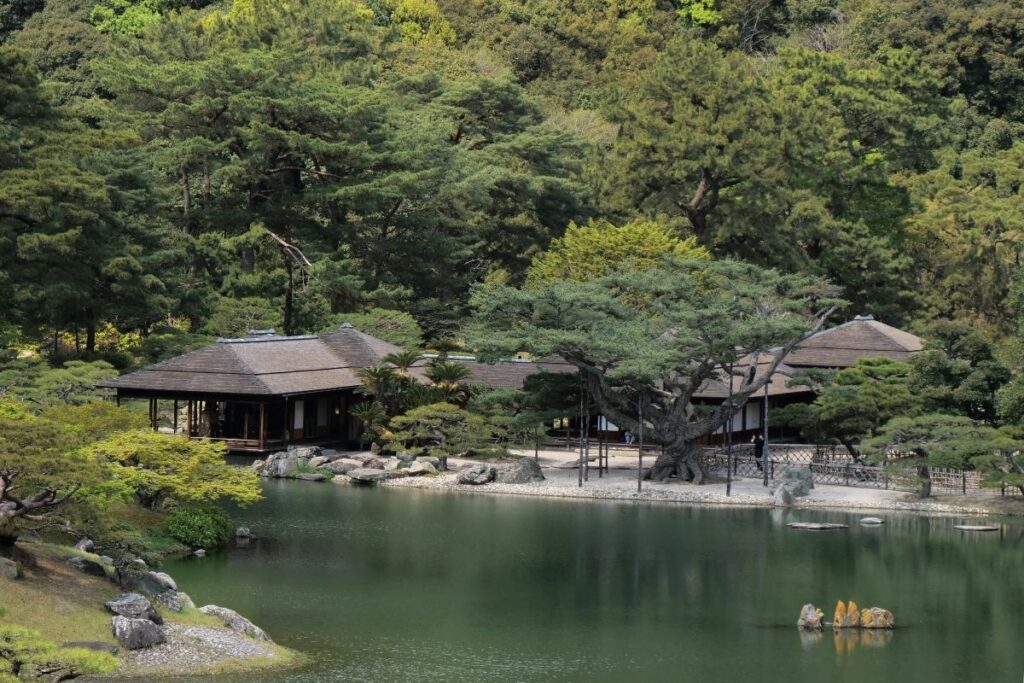
Kyu Higurashi-tei teahouse
This precious early Edo tea room preserves the style of a daimyo tea space from around 1700. It reflects Ritsurin’s historic link with the Mushakōji Senke school. The Takamatsu domain invited its first head as tea instructor, and the relationship continued across generations. Walk around the exterior to appreciate its quieter proportions and the way openings frame the garden.
Sanuki Folk Craft Museum
Ritsurin’s on-site Folk Craft Museum presents about 90 carefully selected pieces from a collection of roughly 3,800 items, including Kagawa lacquerware, ceramics, tools, and local toys. The complex includes the New Folk Art Museum, the Tile Hall, and the former museum building. Exhibits rotate, special shows are held, and there is a rest area. The courtyard was designed under the supervision of landscape designer Kinsaku Nakane, with additional works like a wooden lantern by sculptor Masayuki Nagare.
Opening hours follow the garden’s schedule, there are no closed days, and entry is free once you are inside Ritsurin.
Seasonal tips
In cherry blossom season, head to the South Pond and the approaches to Engetsukyo for classic petals-over-water views. You will also find smaller blossom spots in the North Garden where paths open onto lawns. Earlier in the year, the plums bloom and bring the first color after winter.
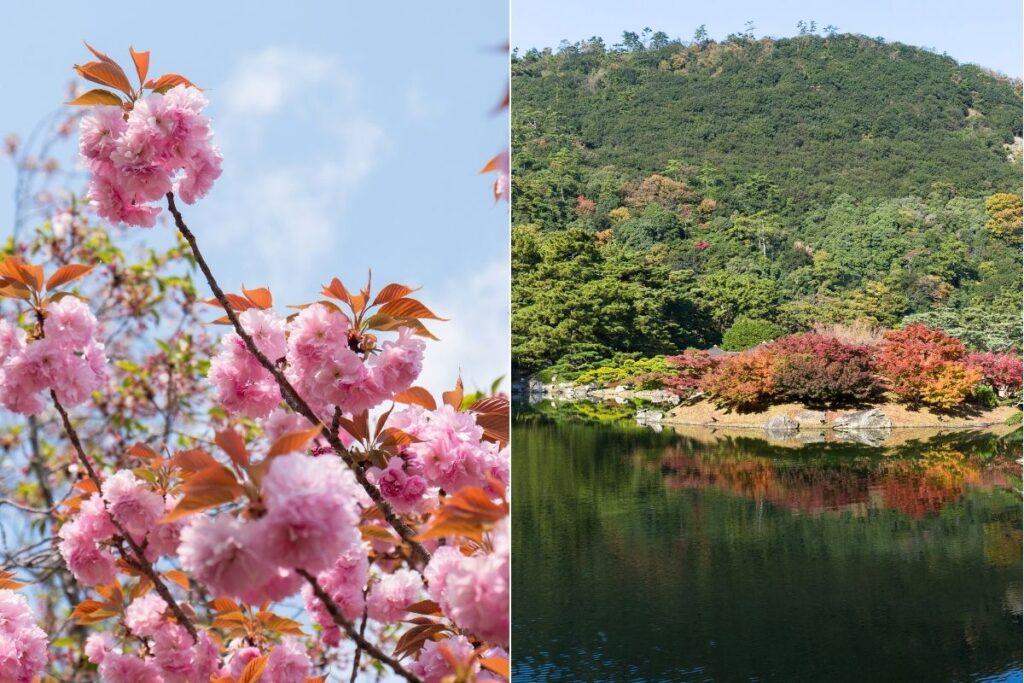
Late spring adds azaleas and fresh pine growth. Summer settles into deep greens and clear reflections, with lotus and iris in selected beds. In autumn, maples around the hills and pond edges turn red and gold, a beautiful contrast with the dark pines.
Time of day
Morning light is soft on the ponds and pines, and paths are usually calmer. Late afternoon brings longer shadows and warm tones, especially good from Hirai Peak looking toward Engetsukyo and Kikugetsu-tei.
Weather notes
After rain, the garden feels fresh and the reflections are at their best. In summer, heat builds by midday, so aim for earlier or later hours and take breaks in the teahouses or shaded benches. Follow the walking route in the shade.
In winter, bring a layer; the clear air makes views crisp but temperatures can be low near the water.
Light-ups and late visits
During peak cherry blossom and autumn color periods, the garden sometimes opens in the evening with illuminations. If dates line up, it is worth a second visit after dark for reflections and quieter paths. Check the schedule before you go.
Conclusion
Ritsurin Garden is a simple, beautiful outing from Kotohira. You can walk calm paths around the ponds, see careful pine work up close, and pause for tea with views that feel timeless. The garden is large enough to feel like a real escape, yet compact enough that you can enjoy the highlights without rushing.
If you are staying at Kotori, this makes an easy half day. Ride in, follow the main circuits, add a boat or a museum stop if you feel like it, then head back with clear photos and a quiet head. Ritsurin rewards slow steps and returns in every season, from early plum and cherry to autumn color and crisp winter light.
I truly appreciated my morning in Ritsurin Garden, with the last few days of cherry blossom and lush green.
> Discover more about Kotohira highlights.
FAQ – Visit Ritsurin Garden
How long should I plan to visit Ritsurin Garden?
60 to 90 minutes for the essentials. Two hours if you want tea, a boat ride, and a slower loop.
Which station is closest to Risturin Garden from Kotohira?
For JR, Ritsurin-Koen-Kitaguchi is about 3 minutes to the North Gate. For Kotoden, Ritsurin-Koen Station is about 10 minutes to the main entrance.
Can I pay the entry fee by card?
Yes. Adult admission is 500 yen and card or IC payment is accepted at the gate.
Are there maps in English in Ritsurin Garden?
Yes. Pick up a free multilingual map at any entrance.
Do I need reservations for tea or the boat?
No. Buy tea sets and boat tickets inside the garden on the day. At peak times there may be a short wait.
About the author
Manon, is a digital nomad and content creator. She lives between time zones, works between getaways, and shares the beauty of this joyful mess.