
Kabuki theatre in Kotohira is a must for your stay at Kotori. Kanamaruza, also called the Former Konpira Grand Theatre, is Japan’s oldest working playhouse. It’s a rare place where you can walk the tatami, duck under the stage, and see how everything still runs by hand. Tours operate most of the year, and in spring the whole town turns out for the famous festival.
Table of Contents
- Presentation of Kotohira Kabuki Theatre
- Visit the Kabuki
- April Festival
- What is a Kabuki show like
- Practical info for your visit
- Conclusion
- Kabuki Theatre – FAQ
Presentation of Kotohira Kabuki Theatre
Kanamaruza was built in 1835 in the late Edo period. It served pilgrims who came to Kotohiragu Shrine and wanted entertainment in town. The theatre is a compact wooden building with tatami seating. It keeps a classic hanamichi, the walkway that cuts through the audience to the stage.
Everything inside is manual. The revolving stage turns by hand. Trapdoors lift and drop by rope and lever. Props fly using wooden rigs. The theatre is an Important Cultural Property and is widely known as the oldest Japanese performing theatre still in existence. The charm is how intact it feels. Nothing here is digital. You see craft and people at work.
Why a Kabuki theatre in Kotohira
Kotohira grew as a pilgrimage town for Kotohiragu Shrine. Travelers came in all seasons, and they wanted things to do when the weather turned. Before 1835, temporary playhouses were set up several times a year to entertain these pilgrims. Kanamaruza was then built as a permanent theatre so performances could run reliably, even on rainy days. The hall has a proper roof and skylights, restored to its Edo look, so both stage and audience are protected from the elements. This all-weather design is not universal in Kabuki; many traditional stages were open air or only partly covered.
Visit the Kabuki
Follow me in the Kabuki theatre of Kotohira. This is how the visit flows when you step inside Kanamaruza.
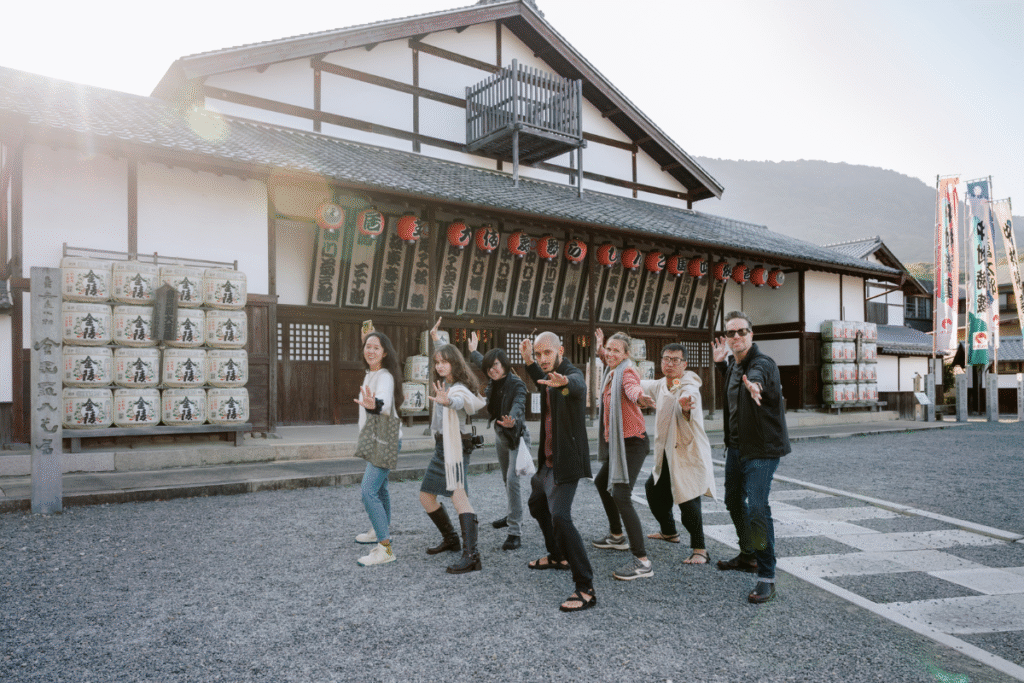
Entrance courtyard
You first enter a small courtyard. Look up at the tall banners with performer names. These flags list actors who have played here in past festivals, or the current cast if you visit during the festival. Near the door you will notice stacked sake barrels. They signal support from local brewers and patrons. The façade is low, wooden, and simple. Lanterns and worn boards tell you the place is old and loved.
There are two doorways. One is very small, so visitors bow to enter (you will enter this way). The other was the former VIP entrance, taller and straight, used so high status guests did not need to bow.
First steps inside the Kabuki
Shoes off in the entrance hallway. The floor is dark wood and quiet. Ahead is a black curtain. Slide it aside and you enter the main hall on the hanamichi. It’s a raised runway that cuts through the audience from right to left, straight to the stage. A third of the way along sits the suppon, a square lift. Actors can rise from here like spirits or ninja. Look left and you will see a second, narrower runway. This is the kari-hanamichi. It crosses the seats from the left of the stage. When both runways are in use, the action surrounds you!
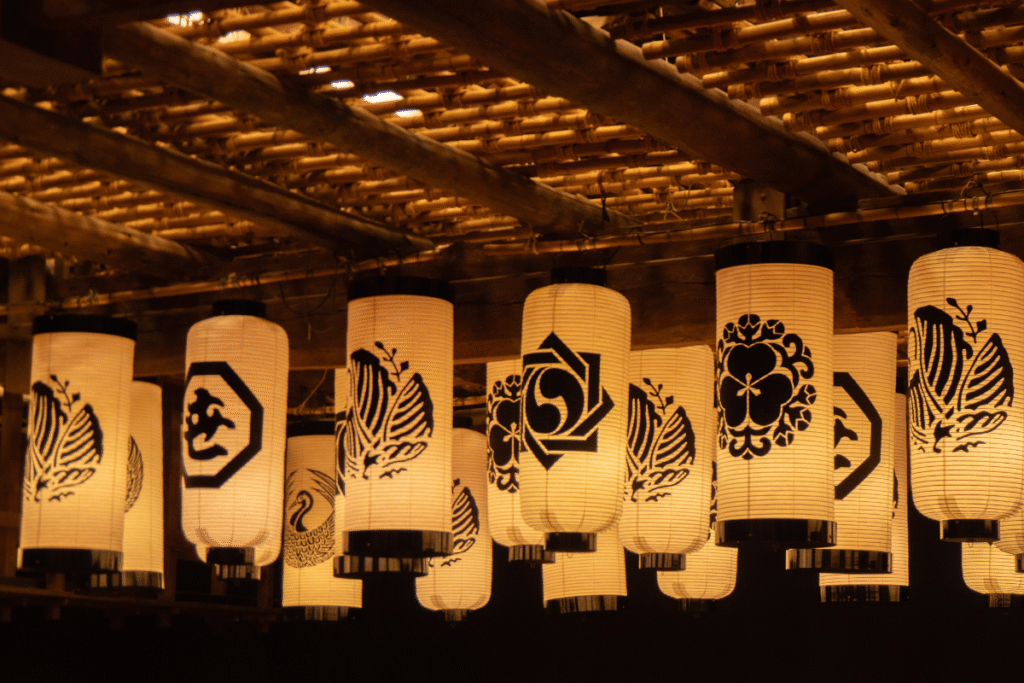
Above, paper lanterns hang in a row. These are kaomise-chochin. They display actor names in place of show cards. Higher still are akari-mado, skylights that adjust the brightness in the hall.
Look up to the ceiling. You will notice the budo-dana, a lattice roof made from hundreds of bamboo poles. It can even scatter cherry blossom during scenes.
One more feature sits to the side of the stage. Kakesuji is the rig used for stage flights. It lets an actor rise and “fly” in full view. All of this is manual. Wood, rope, levers, and people make the magic happen.
On stage
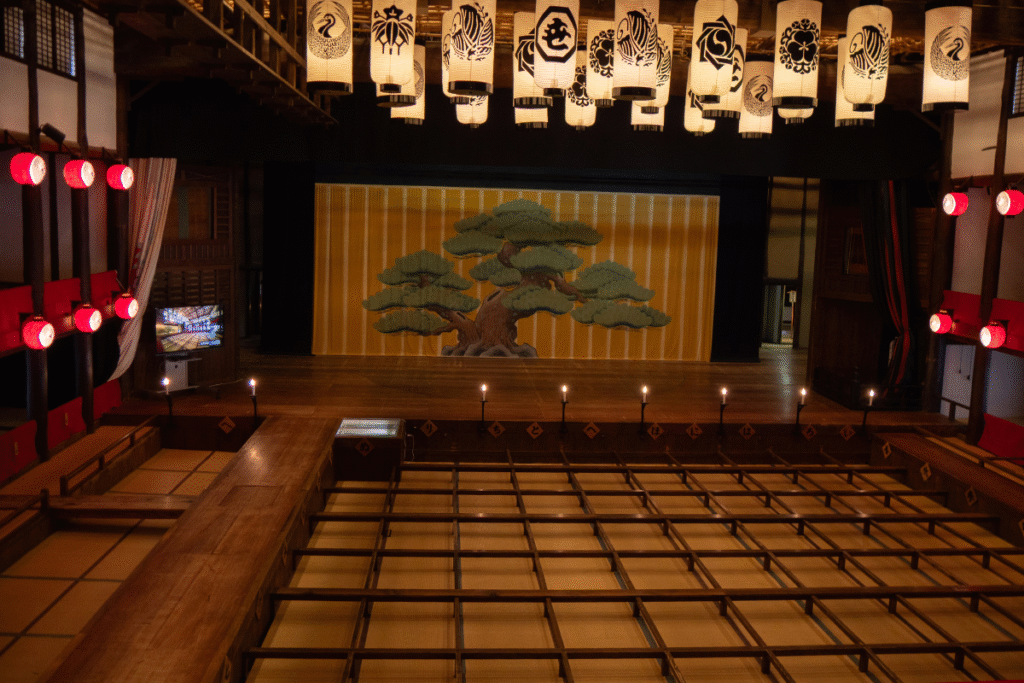
On stage the center is the mawari-butai, a round revolving platform. Inside it is the seri, a sinking lift. Actors appear and vanish between the stage and the space below.
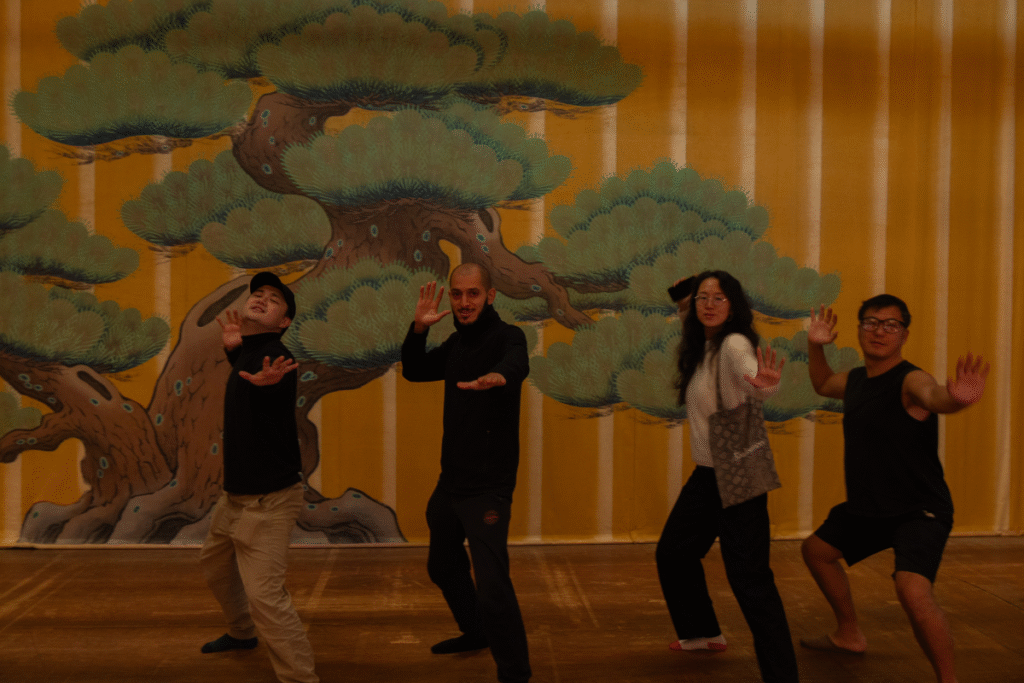
Face the backdrop. The painted pine tree anchors the scene. It is the classic Kabuki image. Along the front edge you may notice low footlights. They add a warm glow during some programs.
From here you can feel how the Kanamaruza stage was built for speed, surprise, and a close bond with the audience.
Behind the scene of Kabuki theatre
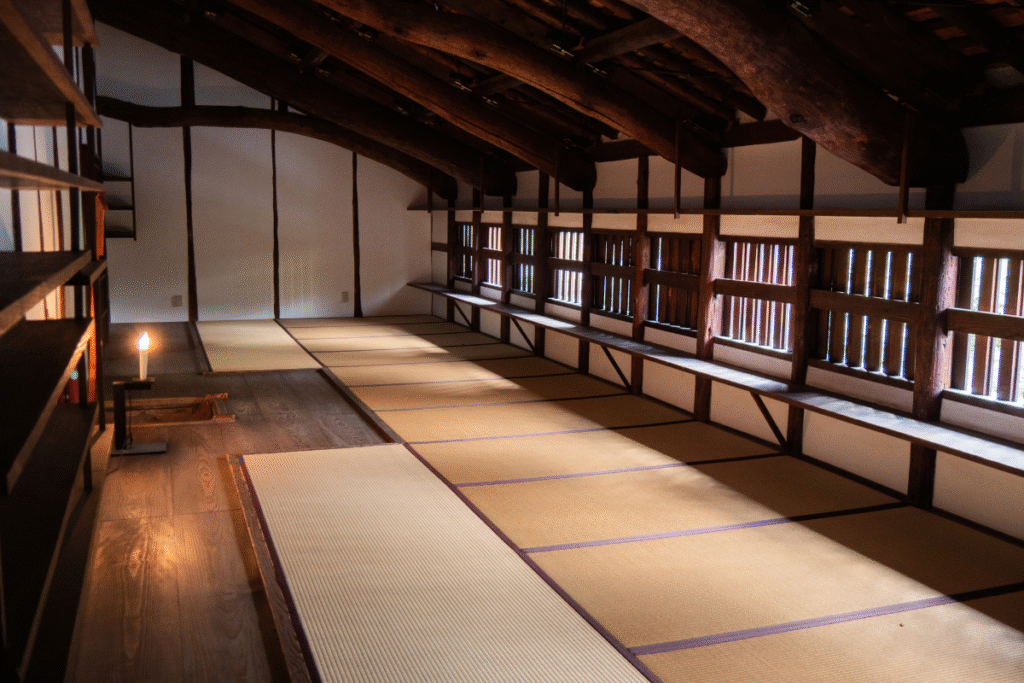
Slip into the back corridors. Rooms are tight and close to the stage. Quick changes happen here. Close your eyes and imagine the rush during show days. Costumes hang on open racks. Wigs rest on simple stands. Makeup tables sit under bright bulbs. There is a small toya waiting room off the hanamichi. Actors pause here before an entrance. Props line the walls so crews can grab and go.
Downstairs
Take the stairs under the stage. This is the engine room. The revolving platform sits on wooden rollers. Crews turn it by hand. The seri lift rises and drops with ropes and levers. Trapdoors connect the floor above to the space below. Everything is wood, joinery, and muscle. During shows, trained staff and local volunteers run the moves. It’s impressive!
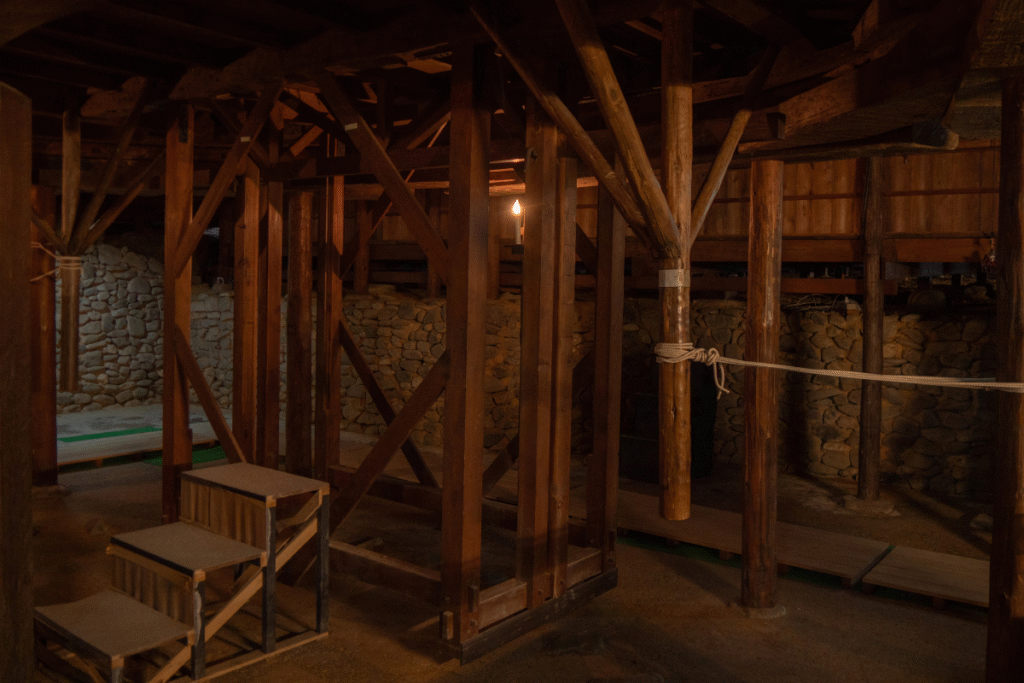
The upper seating area
Go up to the upper seats. From here the design is clear. The hanamichi runs straight to the stage. The kari-hanamichi crosses on the left. The stage feels close even from here, showing the theatre’s intimacy. In the past, the right upper seats were reserved for high ranking guests such as local lords and officials. Today this area is open to visitors.
From here you loop back through the gallery and the entrance hall to the exit. That marks the end of the visit.
April & the Shikoku Konpira Kabuki Oshibai
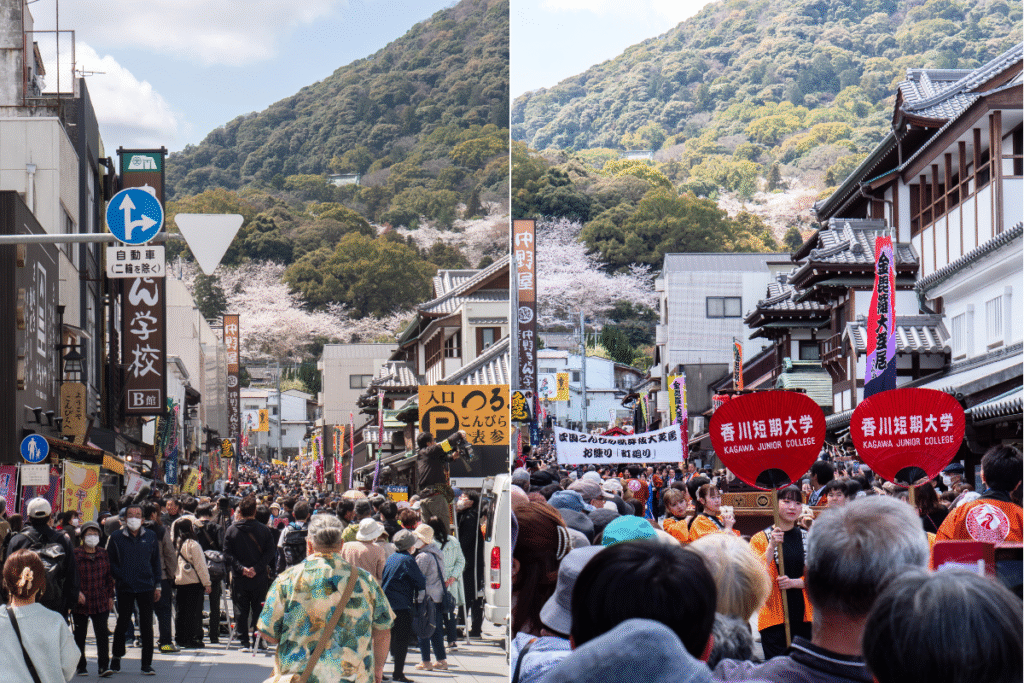
Each April, Kotohira hosts the Shikoku Konpira Kabuki Oshibai and the theatre wakes up. The tradition goes back decades, with leading actors gathering in this small wooden playhouse for a limited spring run. The season usually spans several weeks in April, with performance days often offering two shows, a matinee and an evening program. Seats are limited, and they sell quickly once the schedule is announced.
The whole town shifts into festival mode. Banners go up around the theatre with the year’s cast. Kimono brighten the streets. Cafés fill between shows. The courtyard hums before curtain. On stage and under it, crews and volunteers run the all-manual machinery so scenes turn by hand, just as they did in the Edo period.
Kotohira in festival mode
Opening day brings extra color. A small parade moves through town to celebrate the start of the run, with performers and locals marking the moment before the first performance. It sets the tone for the weeks that follow.
→ Want to discover other festival in Kotohira? Read about Kotohira shrine Grand festival.
What is a Kabuki show?
Kabuki is classic Japanese theatre with story, music, and dance. It is rich, stylized, and sometimes hard to follow. Even for locals. At the door you receive a simple program sheet with some explanations. They might help to understand… but not always! You often get a small paper fan too.
A performance day is usually split in two parts. One program runs at midday. Another in the evening. Each program mixes a long play and a short piece. They are not the same story. The long play is often a period drama or a town story. The short piece is usually a dance work. There is an intermission. People stretch, buy snacks, and chat before the next act.
How to watch if you are new
Follow the faces and the shapes on stage. Voices carry, but the meaning is in the pose. When an actor freezes in a bold stance, that is a mie. It marks a turning point. Red and black lines of makeup often signal power and passion. White faces set off the eyes and the mouth so emotions read across the room. Men play all roles. Onnagata specialize in female characters with light, precise movement.
Listen for live music
You will hear shamisen, drums, and flute. A wooden clapper called tsuke hits the board for big moments. From the hanamichi, actors enter right through the audience for impact. The stage itself keeps the pace. The revolving platform flips a scene. A lift opens and a figure rises from the suppon. Screens slide. A room appears. It is all done by hand, which adds to the thrill.
Popular dramas include Kanjincho, Kanadehon Chushingura, and Yoshitsune Senbon Zakura. Dance pieces might be Renjishi or Sagi Musume. You may not catch every plot turn. That is fine. Watch the movement and the pictures, and let the rhythm carry you.
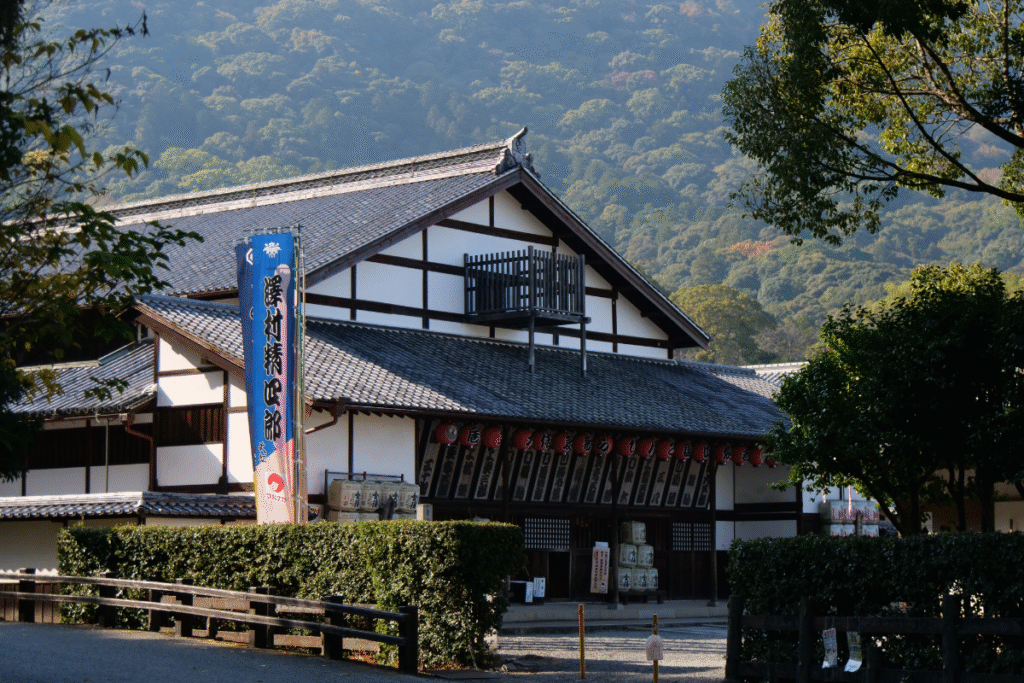
Practical info for your visit of the Kabuki theatre in Kotohira
The theatre opens for visits most of the year. It closes during performance periods and for maintenance.
The Kabuki theatre of Kotohira is open every day from 9am to 5pm. You can visit the Kabuki theatre of Kotohira by yourself with a flyer (english version available) or join a guided tour (Japanese). Plan 45 to 60 minutes for the visit.
You will remove shoes at the entrance. Wear socks. Step carefully on tatami and wood. The under stage area has steep steps and low beams. Accessibility is limited in places. Photography is allowed inside.
For April, tickets sell fast (only 740 seats). Two shows are common on performance days. Book as soon as dates go live.
Conclusion – Kabuki theatre worth the visit
It is a rare chance to enter a place like this. Walking into the Kabuki theatre of Kotohira feels like stepping into the past. You picture emperors, pilgrims, and actors crossing the same floors.
I was in Kotohira in April and joined a show. I do not speak much Japanese, and it did not matter. Kabuki is an experience more than a plot. It is rhythm, color, and presence. Women in kimono around me. Paper fans working to keep the warmth gentle. Everyone seated on tatami or cushions for hours. Mochi in hand during the break. On stage the music throbbed, movement snapped into stillness, faces were intensely expressive. It felt like being part of a living tradition.
Outside the festival, the theatre is still worth your time. You see how the whole system works. You learn the small tricks that help actors transform in seconds. I loved going backstage and under the stage. Even without English support you can follow the displays and grasp a lot. In the heart of Kotohira, this historic house rewards anyone who takes time to linger.
→ Want to explore more of Kotohira & Kagawa Prefecture highlights? Discover the full guide.
Kabuki Theatre – FAQ
Is this really Japan’s oldest working Kabuki theatre?
Yes. Kanamaruza dates to 1835 and still operates with manual stagecraft.
When is it possible to visit?
Most of the year. The theatre opens for self guided visits on non performance days. It closes during festival runs and some maintenance days.
How long should I plan?
About 45 to 60 minutes for a relaxed visit.
How many shows per day during the festival?
Most performance days offer two. A matinee and an evening program.
Where is the Kabuki Theatre from Kotori?
About a 10 minute walk. Leave Kotori and head toward the main street. Follow signs for Konpira-san, then turn for Kanamaruza near the shopping arcade.
How do I buy tickets for the April Kabuki festival in Kotohira?
Book online on the official website when sales open and be quick; seats are limited and popular days go first.
Do people wear kimono to the festival?
Many do. It adds to the atmosphere. You can rent a kimono for the experience but regular clothes are fine..
About the author
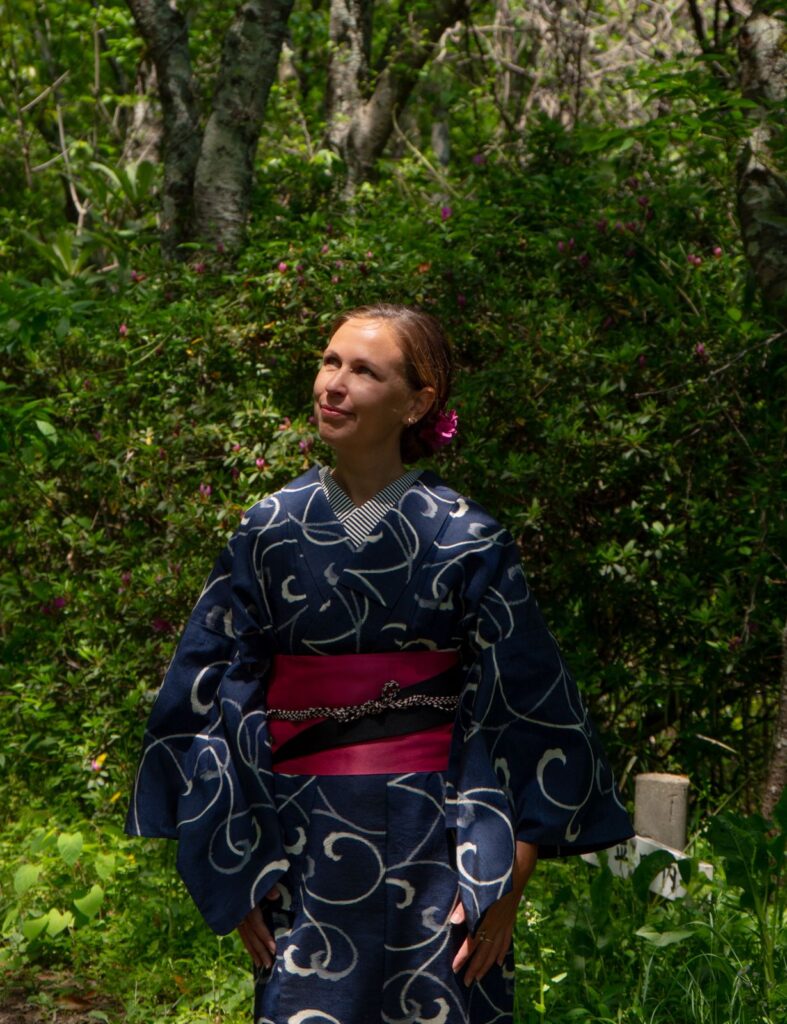
Manon, is a digital nomad and content creator. She lives between time zones, works between getaways, and shares the beauty of this joyful mess.