
If you are looking for a cultural highlight during your stay in Kotohira, set aside a few hours to dress in a traditional kimono with Fujitaya. It is hands-on, welcoming, and ideal for photos around the main street and the path toward Kotohira-gu Shrine. Below you will find context about kimono, a step-by-step of the Fujitaya experience, why Kotohira is a special place to do it, plus practical details to plan your visit.
Table of contents
- About kimono and when to wear it
- The Fujitaya experience
- Why dress up in kimono in Kotohira
- Practical information
- Conclusion
- FAQ
About kimono and this tradition in Japan
Kimono literally means “a thing to wear” and it remains a symbol of Japanese ceremony and celebration. People wear kimono for weddings, coming-of-age day, tea ceremony, shrine visits, kabuki outings, and seasonal festivities. The garment has layers and dedicated accessories that create its iconic silhouette.
Layers and base garments: hadajuban and nagajuban are worn under the kimono to protect the outer fabric and shape the collar.
Ties and belts: koshihimo are soft ties used to set length and keep the robe in place, then datejime smooths and secures everything before the wide obi is wrapped. Decorative cords like obijime and a scarf-like obiage finish the look. A removable collar core, eri-shin, can be placed in the juban collar for crisp lines.
Footwear: tabi are split-toe socks worn with zori sandals for formal outfits. Geta are raised wooden clogs often paired with casual summer yukata.
Seasonality is always important. Kimono reflect the calendar. Lined awase are typical from autumn to spring, unlined hitoe bridge the change of seasons, and gauzy ro or usumono suit high summer. Colors and motifs also track the season.
Fujitaya experience
Fujitaya is a small, well-organized shop with a lovely owner who guides you at each step.
Step 1: Choosing your kimono upstairs
You begin on the second floor to browse a curated rack of kimono in different colors and seasonal fabrics. You select your favorite kimono and a matching obi.
Step 2: Dressing on the first floor
Wearing a kimono properly involves several layers and a specific order. The staff dresses you, adjusts the length, sets the collar line, and ties the obi securely.
Typical elements include: hadajuban and nagajuban, koshihimo, datejime, the kimono itself, obi with pads as needed, plus finishing cords and scarf. This professional kitsuke ensures comfort and good posture for your walk.
Step 3: Hair style options
Fujitaya offers formulas that can include hairstyling and make-up. For an elaborated style, you choose from sample photos and add floral pins or color accents to suit your kimono.
Final step: Footwear and small bag
You complete the look with tabi socks and zori sandals, which are the classic pairing for formal kimono. The split toe of tabi keeps the sandal thong comfortable and secure.
Pick a small handbag for essentials like your phone and a handkerchief, then step out for a stroll toward the shrine.
Why doing a kimono dress up in Kotohira
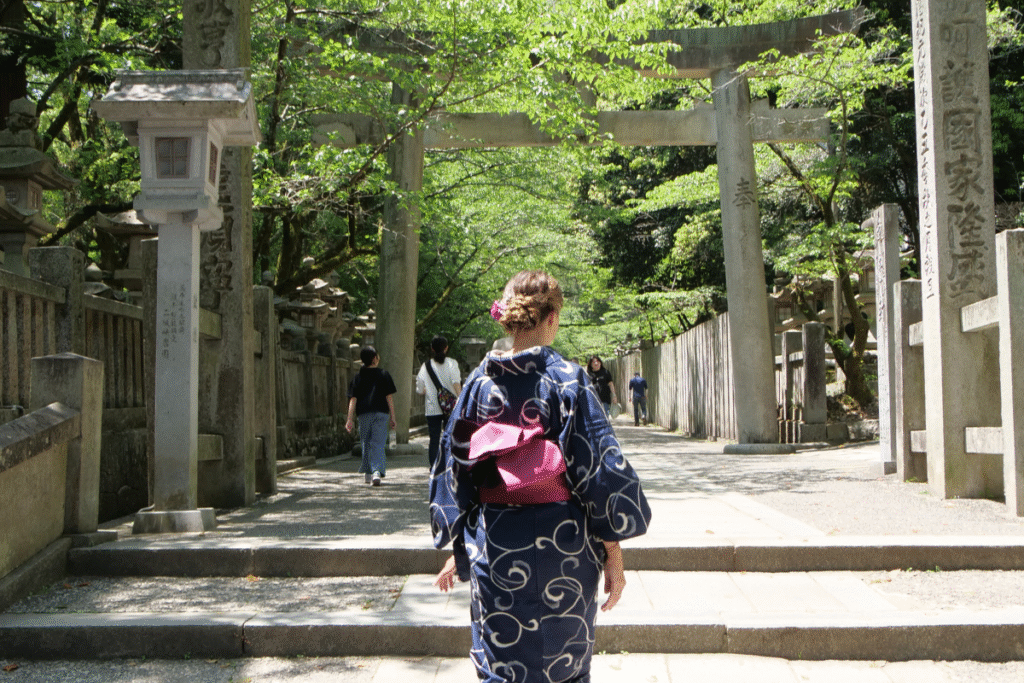
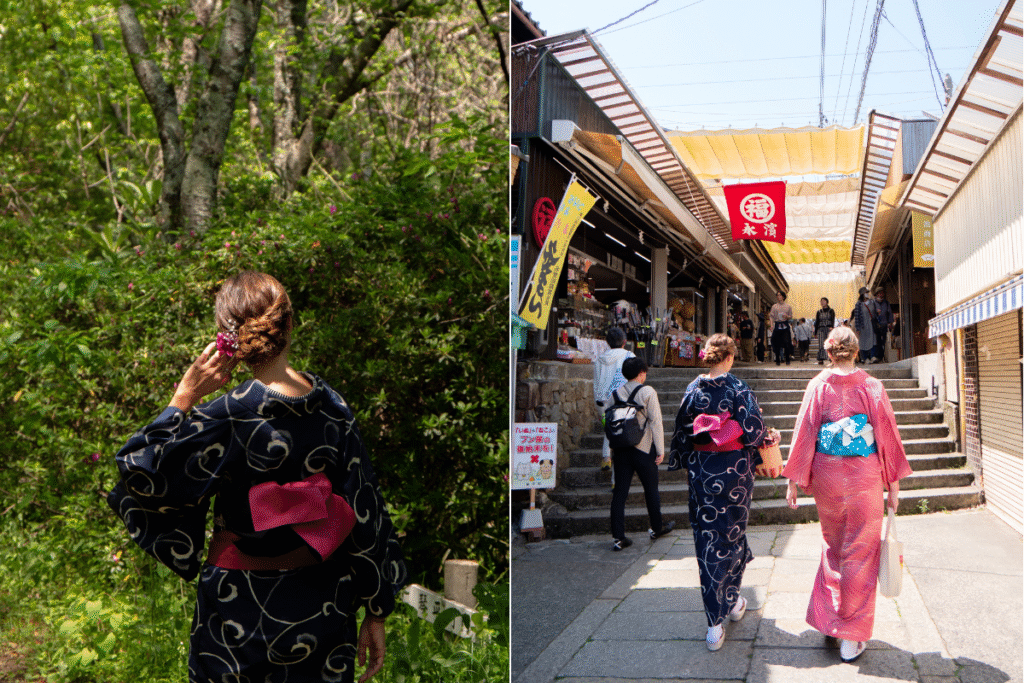
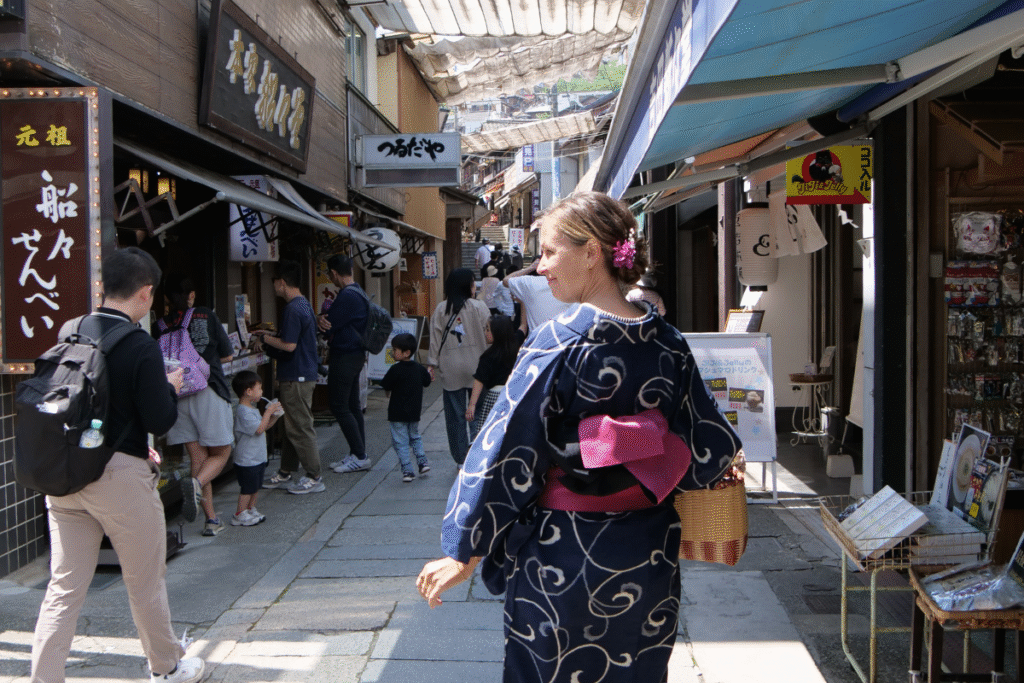
Kimono rental is popular across Japan, especially in Kyoto or under cherry blossoms near famous temples. The difference in Kotohira is the atmosphere. In a small town you are not surrounded by other groups doing exactly the same thing. Walking the main street toward the Torii gate feels personal and unhurried. Shop owners smile, people greet you, and the experience feels welcomed rather than staged. It’s a first and very good reason to experience it while you’re at Kotori Coworking & Hostel as a digital nomad in Kotohira.
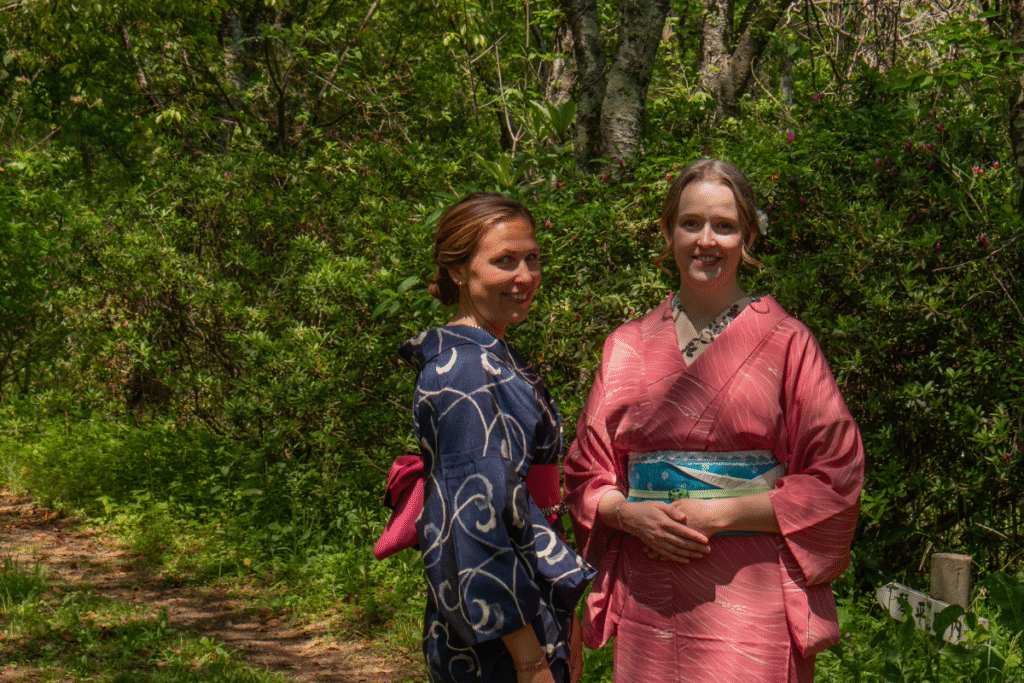
Kotohira is also very photogenic. The historic approach to Kotohira-gu, low wooden storefronts, and seasonal sakura give you varied backdrops within a short walk. You can even decide to go further toward the main shrine or around Kotohira for some photos surrounded by rice fields. You can also pair the Kimono experience with a traditional tea ceremony.
Timing your visit for spring adds a bonus. Each April, the Shikoku Konpira Kabuki Oshibai brings top actors to Kanamaruza, Japan’s oldest surviving playhouse. Many attendees dress in kimono for the occasion, so pairing your Fujitaya outfit with a kabuki matinee becomes a full cultural day.
Practical information
Fujitaya is located in the center of Kotohira on a small side street off Omotesando, and you will spot it by the kimono displayed at the entrance.
Prices:
- 2 hours 4,180 yen including easy hairstyle
- Longer plan with elaborated hairstyle 6,270 yen
Book ahead if you want hairstyle or if you plan to visit during sakura and the kabuki season.
Conclusion
If you want a memory that feels both elegant and local, dress up at Fujitaya and wander Kotohira in kimono. The process is guided, the styling is photogenic, and the town’s warm pace lets you enjoy it without rush. For digital nomads based at Kotori, it is an easy half-day that delivers both human connection and great photos.
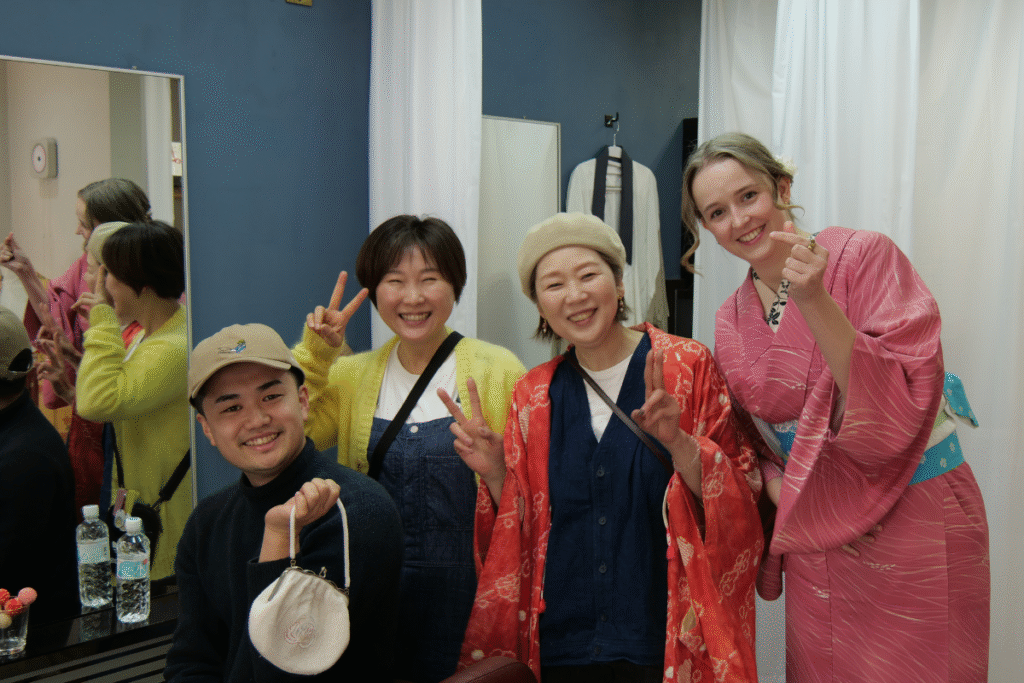
I loved this experience for the kindness of everyone I met, the beauty of the kimono, the special feeling of wearing it while wandering Kotohira’s streets and temple grounds, and the joy of taking photos with locals like Mr. Candy ; it is more than an activity, it is a memory you carry with you.
FAQ – Kimono experience in Kotohira
How long does the entire process take?
Plan 30 to 60 minutes for dressing, plus extra time if you add an elaborated hairstyle. Then you have some times to walk in town.
What should I wear to the shop?
A simple, close-fitting top and leggings or thin tights are easiest under the layers. Avoid bulky sweaters.
Is it comfortable to walk up toward Kotohira-gu?
Yes… and no. Take your time on the steps and be careful. Choose zori that feel secure. Tabi help prevent rubbing between toes.
Can men rent kimono as well?
Yes. Ask about men’s kimono and haori combinations when you book.
Is this suitable in hot weather?
Ask for seasonally appropriate options. Unlined hitoe or summer weaves are lighter and more breathable.
Can I pair this with a kabuki visit?
Yes. Check spring performance dates at Kanamaruza and plan a same-day kimono appointment. Inform the staff how long you gonna wear kimono and at why time you plan to come back.
About the author
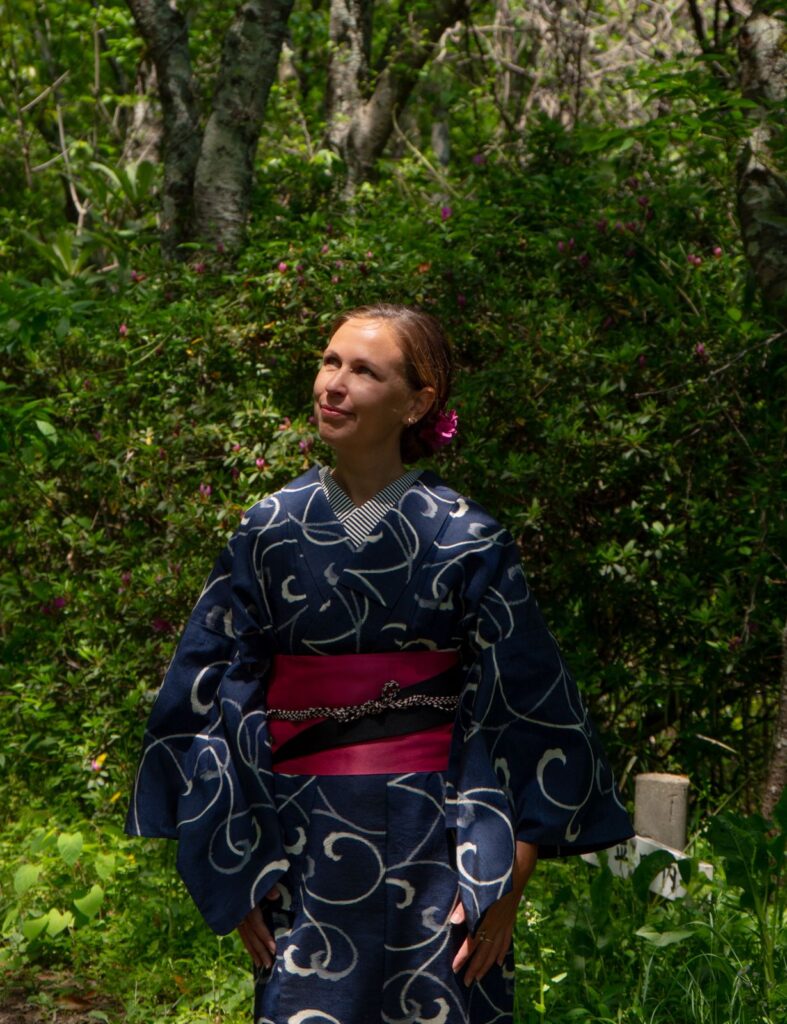
Manon, is a digital nomad and content creator. She lives between time zones, works between getaways, and shares the beauty of this joyful mess.