
Every October 9 to 11, Kotohira changes. The Kotohira Shrine Grand Festival – main event of Kotohira – returns and the town lowers its voice. Lanterns switch on. Electric signs go dark. Neighbors gather. It is the heartbeat of the year.
I arrived in 2025 and stepped into that hush. I followed the glow through streets that suddenly felt older. This is the festival as I met it, with its history in the stones and its meaning carried by the people who keep it.
Discover the Kotohira Shrine Grand Festival history, how it unfolds, and dive into its atmosphere through my eyes.
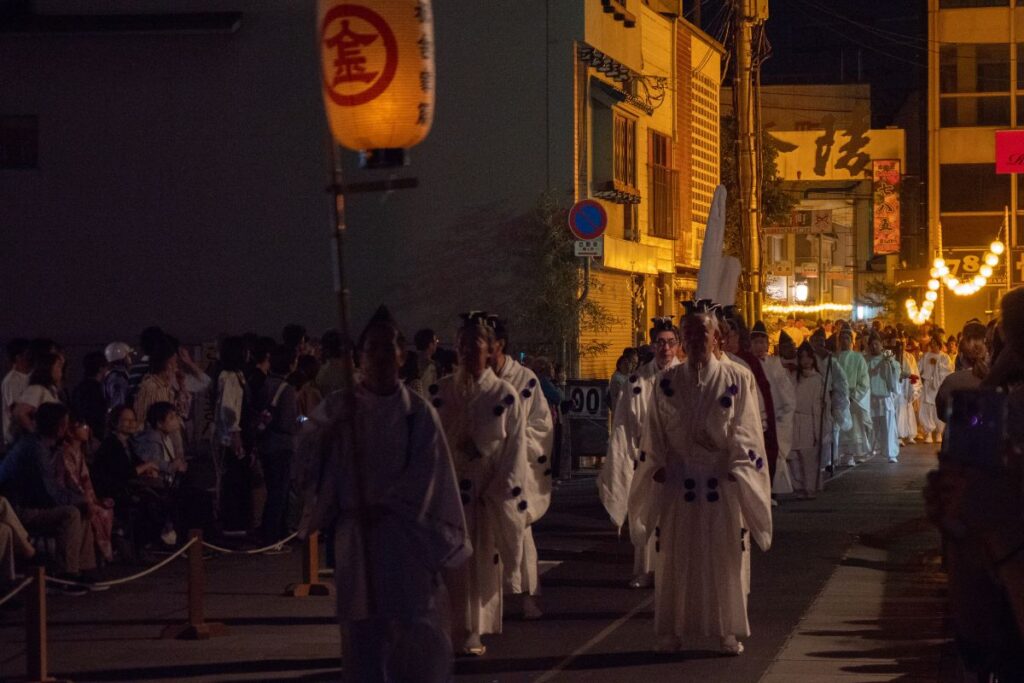
Table of Contents
- What is the Kotohira Shrine Grand Festival
- Since when Kotohira Shrine Grand Festival takes place
- How the festival works each year
- The festival at a glance
- The Grand Konpira-san Matsuri through My Eyes
- Conclusion
- FAQ – Kotohira Shrine Grand Festival
What is the Kotohira Shrine Grand Festival
The Kotohira Shrine Grand Festival is the most important annual rite of Kotohira-gu. It honors the shrine’s deity, long revered as a guardian of the sea and safe journeys. For two nights the deity leaves the mountain shrine in a mikoshi and comes down to town. The goal is simple and kind. Bring blessings close to everyone, including those who cannot climb the long stone steps. The mood is quiet. Lights are low. Lanterns and music guide the way.
Since when Kotohira Shrine Grand Matsuri takes place
The festival has deep roots. Pilgrims were already coming to Kotohira in the Edo period. In Meiji 3, 1870, records show the mikoshi was first carried to a resting place in town. From then the October schedule settled in. Today it is held every year from October 9 to 11. Traditions like shrine dances, parish groups, and child attendants took shape in the early Meiji years and continue.
How the festival works each year
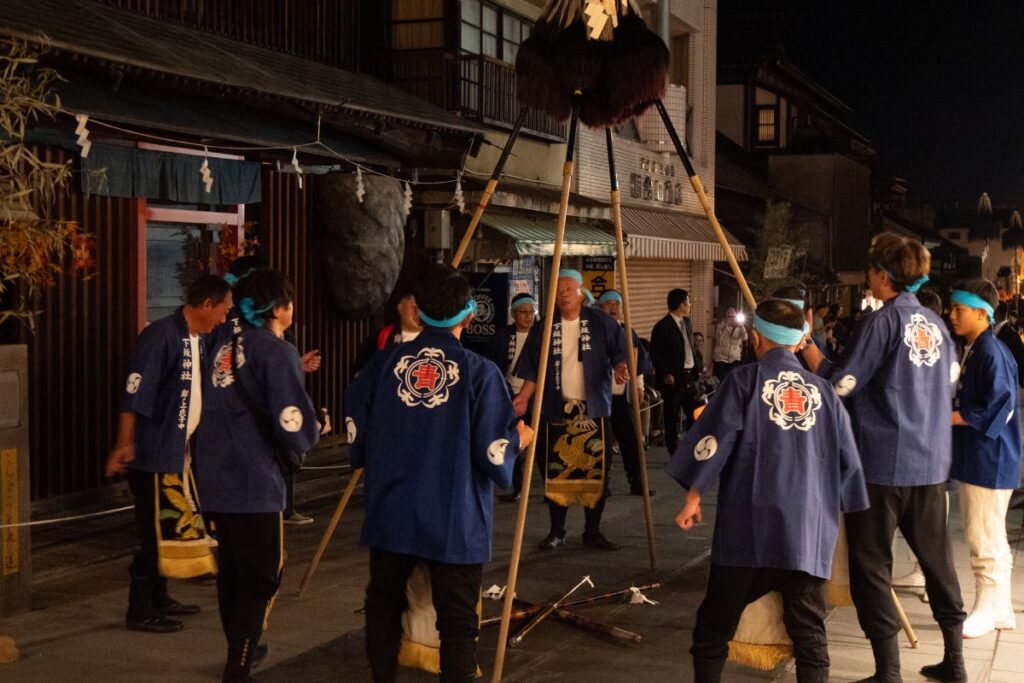
Around 9pm on October 10 the line slips from the shrine toward the Otabisho, returning the next night at the same hour. For about 24 hours people come to pray in the temporary shrine, in the heart of Kotohira. Each year a boy and a girl are chosen as Otounin, a rare honor. The boy rides the shrine horse. The girl sets in a small mikoshi within the procession. The main omikoshi (御神輿) rests on about fifty shoulders, with fifty people on the front rope and fifty on the rear to keep it steady.
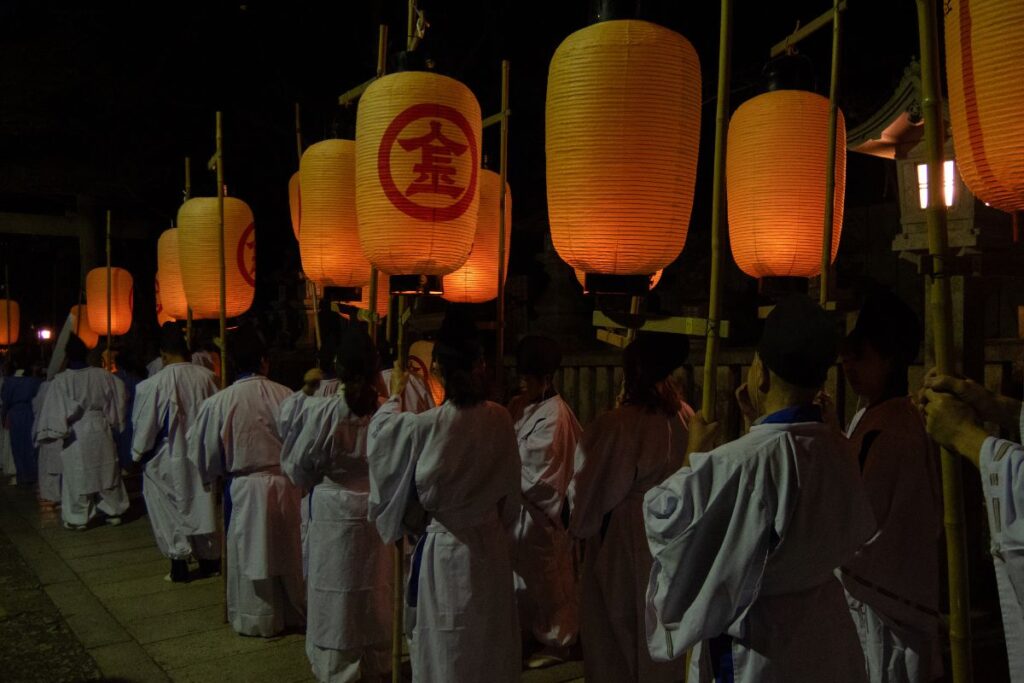
Delegations from branch shrines of Kotohira-gu come from across Japan, and sometimes from communities overseas that share the Konpira faith. They carry lanterns with their town names, easy to spot with matching coats and banners.
Everyone has a role in the procession. Some take the ropes, some lead songs, and others carry items used for rituals at the Otabisho, such as flags, canopies, supporting poles, and musical instruments. All of them add their local voice to the whole.
Spectators keep to the side in silence and calm. They watch respectfully along the main street, walk beside the line on the stairs, or wait for the main omikoshi at the final spot.
The festival at a glance
Dates
October 9 to 11 every year. Night processions on the 10th and 11th from 9pm.
Core meaning
The deity comes down so everyone can pray, especially those who cannot climb the steps.
The god
Kotohira-gu enshrines Ōmononushi-no-Ōkami, widely revered for maritime safety, travel, and well-being. Many also pray for prosperity, health, and study. Before the Meiji era, the shrine’s focus blended Shinto and Buddhism under Konpira Daigongen, linked to the seafaring guardian Kumbhīra. After the Shinto–Buddhist separation, the shrine identified its main kami as Ōmononushi and also honors Emperor Sutoku. This maritime link explains why sailors, travelers, and their families have come here for centuries, and why bringing the deity down to town each October feels so meaningful.
The procession
Main omikoshi with carriers and rope teams. Units of dancers, attendants, and musicians move in sequence.
The bridge
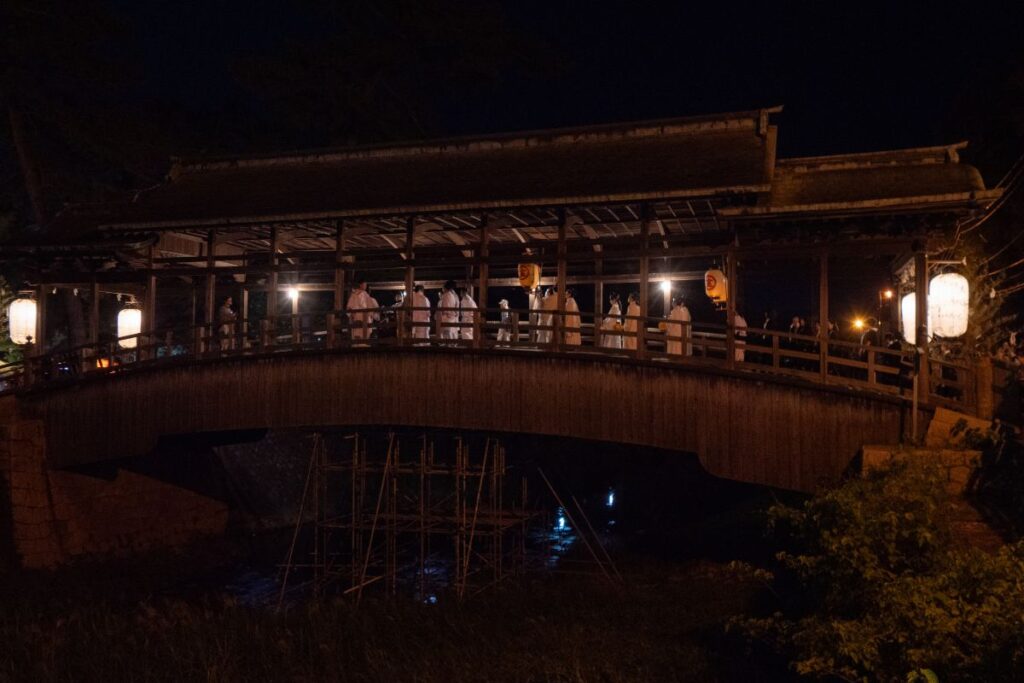
Saya-bashi is a roofed wooden bridge kept closed most of the year and opened for the Kotohira Shrine Grand Festival.
Around Meiji 2, 1869, it stood where today’s First Bridge is. Then around Meiji 3, 1870, the omikoshi crossed it for the first time on the way to the Otabisho. Saya-bashi was moved to Awa-machi and the First Bridge was built, around 1905. From 1870 to 1904 the procession used Saya-bashi both ways through Awa-machi. Later the outward route seems to have kept the crossing, while the return took streets through town before rejoining the main approach. Today the bridge opens only on the first night, which is why the crossing feels so rare and quietly powerful.
The Grand Konpira-san Matsuri through My Eyes
I had the chance to be in Kotohira for the town’s main event: the grand shrine festival of October. It was an incredible experience to share this authentic moment in a countryside town in Kagawa Prefecture.
First night
In a single evening the whole atmosphere changed. Dusk came and the town softened. Lanterns clicked on. Neon went dark. The Kotohira Shrine Grand Festival began to breathe. I climbed part of the steps, watching the first groups move in rhythm. After a few flights there were fewer people and even fewer lights. Shops closed their doors, but some put out chairs to sit and wait, all senses open.
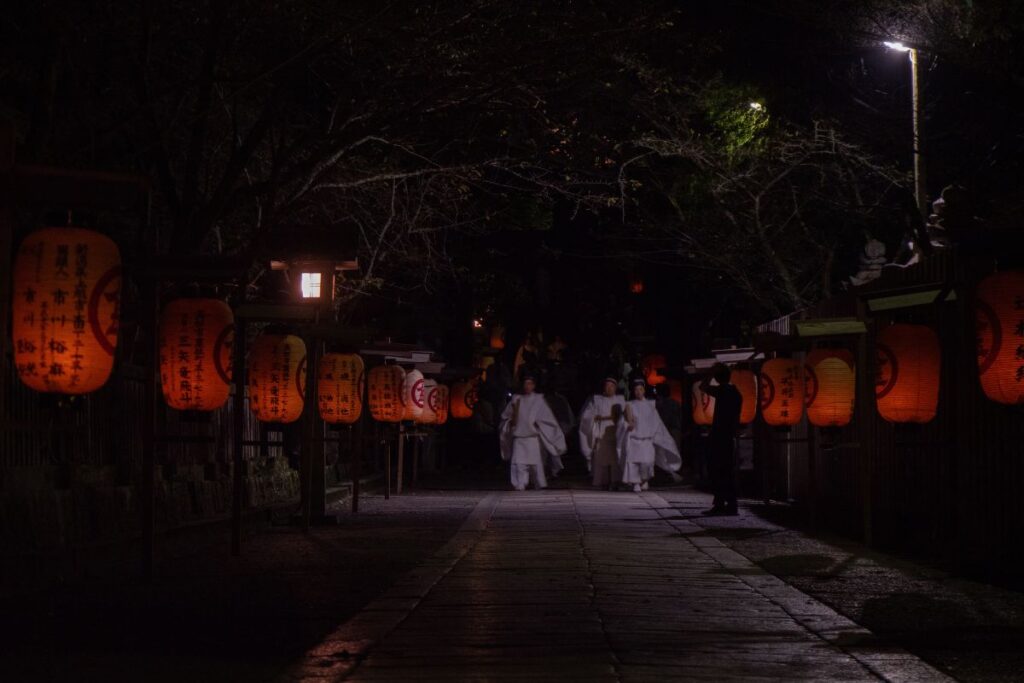
I reached the main gate, the entrance to the shrine, lit by lanterns. I stopped in the long alley, even more beautiful under warm orange light. Between ancestral stones the trees took on a fairy tale look. It was the perfect setting to admire the parade. Porters, musicians, young and old, all marching together. And then the omikoshi with its many bearers. It was moving, almost mystical. I felt transported to the past.
I joined the flow and walked beside them, admiring the clothes and the sacred items. The silence felt reverent. Pauses came and went like breath. They carried without showing the weight, keeping gentle smiles.
I finally reached the bridge and watched the procession cross. The old wood opened and creaked under the march. Shortly before midnight the omikoshi returned to its temporary shrine for the next 24 hours. In the park the atmosphere changed. Food trucks and small stalls appeared. It was not loud, still respectful, but brighter and more colorful. It felt as if we had stepped back into everyday life! Once the omikoshi took its place, people went home and Kotohira fell quiet again.
Last night
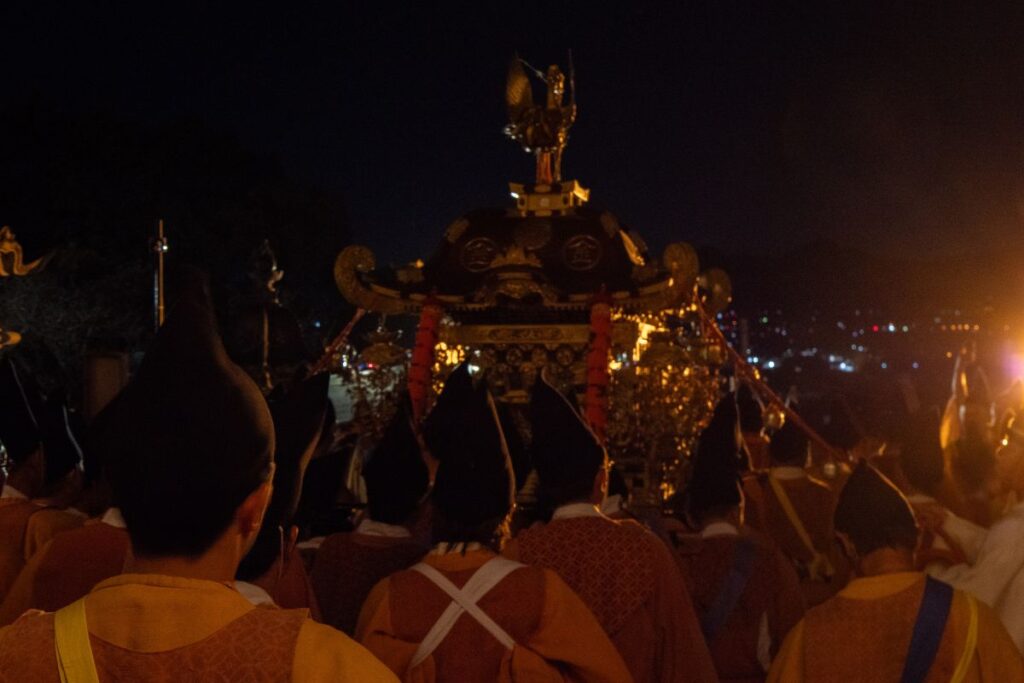
The next night at 9pm, I chose to see the start of the return to Kotohira-gu, from the park. Everyone was there, watching with deep respect. Young and old shared the same belief and tradition. I felt lucky to be part of it, to be accepted with japanese people and sharing something so authentic, important, a tradition that has existed since… ever.
Conclusion
The Kotohira Shrine Grand Festival shows the town at its most true. It is not a festival as we might imagine. It is a mystical, magical procession that wraps the city in calm and gentleness. A unique moment halfway between past and present. Experiencing the Kotohira Shrine Grand Festival is one of those precious moments you encounter on a journey. It is a genuine meeting with another culture, its traditions, and its beliefs. Here’s one more reason to discover Kotohira in autumn, and to keep this city in your heart.
FAQ – Kotohira Shrine Grand Festival
When is the Kotohira Shrine Grand Festival held?
It is held every year from October 9 to 11. The descent begins on October 10 at 9pm, and the return starts on October 11 at 9pm.
What happens during those two nights?
The deity rides in the omikoshi from the shrine to the Otabisho, rests there for about 24 hours, and then returns the next night.
How long does the procession take?
Each leg takes about three hours, with short, regular pauses that keep the pace steady and allow carriers to rest.
What does the festival sound like?
You will hear shinobue flutes, taiko drums, and small gongs, along with low calls from the line and long stretches of respectful quiet.
How should visitors behave?
Keep voices low, avoid bright lights and flash, stay behind the ropes, and follow staff guidance at pauses and crossings. Do not stand above the omikoshi. On stairs or slopes, stay lower than the deity and avoid walls, railings, or higher ground.
Why is the wooden bridge so specific and linked to the festival?
It is Saya-bashi, a historic roofed wooden bridge kept closed in daily life and opened for the procession. Crossing it on the first night marks the passage from the shrine’s world to the town. It is a threshold, not just a shortcut.
What kind of god is it?
The deity of Kotohira-gu is revered as a guardian of the sea and safe voyages. People pray for maritime safety, successful travel, and the well-being of their families and work.
Is the festival free?
Yes. Watching the procession and visiting the Otabisho are free. Offerings are optional. Bring small cash for amulets or food stalls.
Where to stay during the festival?
Stay close so you can move with the night. Kotori Hostel & Coworking is the perfect place, located in the Main Street. It offers coliving and a calm workspace in Kotohira, ideal for digital nomads. You can walk to the route, store luggage before check-in, and slip back quietly after the late return. Book early. October fills fast..