
Jun Omi, known to many as “Mr. Beer,” is one of the people quietly reshaping Kotohira today.Through his project Koto Vegas, he is transforming vacant shops and overlooked streets into places where people stay longer, meet locals, and experience the town beyond the shrine. Rather than focusing on tourism alone, his work is rooted in community, circulation, and long-term presence.
Meet Mr. Beer and discover how his work is shaping everyday life in Kotohira.
Table of Contents
- Who Is Mr. Beer and What Does He Do?
- Koto Vegas in Kotohira: Purpose and Vision
- Koto Vegas : a group of shops in Kotohira
- Why “Koto Vegas”? The Statue and the Story Behind the Name
- How Koto Vegas Is Changing Everyday Life in Kotohira and What Comes Next
- Mr. Beer, Digital Nomads, and Long-Term Visitors
- Conclusion
- FAQ
Who Is Mr. Beer and What Does He Do?
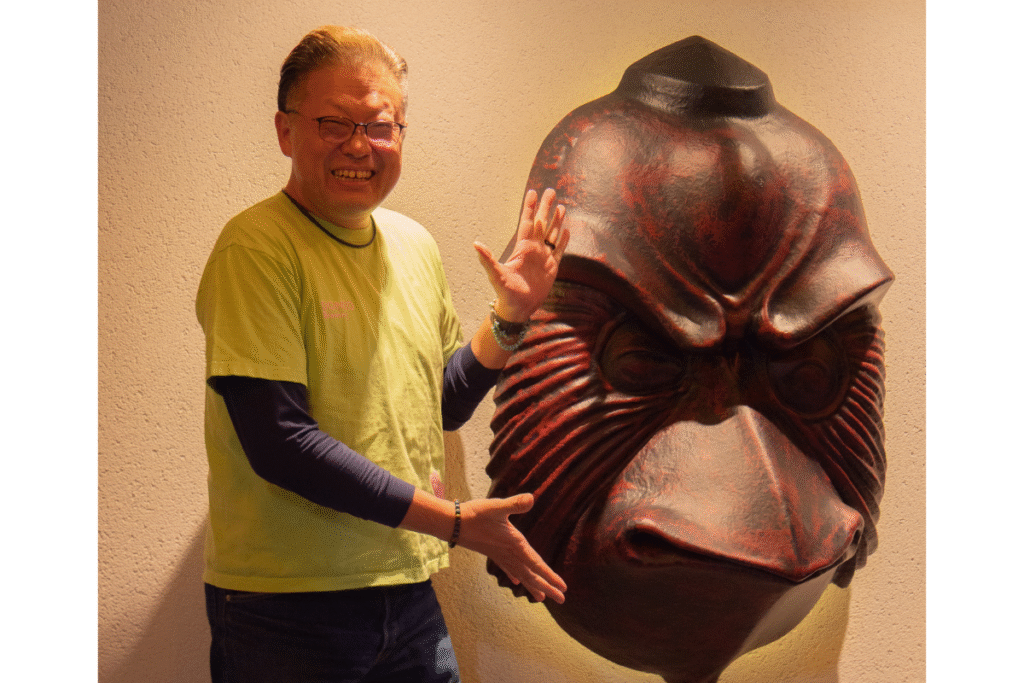
Mr. Beer is a regional revitalization project designer who has spent the past decade working with towns across Japan to help them regain activity, visibility, and long-term vitality.
He founded his company around ten years ago, at a time when Japan began encouraging people to move away from Tokyo and rediscover regional life. His early work focused on PR and promotion for municipalities across the country, helping regions communicate who they are and why they matter.
At the heart of his approach is a simple idea: people don’t move to places they don’t know.
First, they need to discover a place. Then they need to visit it. Only after that can they imagine living there.
Over time, however, Mr. Beer began to feel that promotion alone wasn’t enough. As he traveled across Japan, he kept seeing the same problem: empty houses, closed shops, and shopping streets losing their role in everyday life. Revitalization, he realized, had to be rooted in real places and daily use, not only images or campaigns.
That reflection eventually brought him to Kotohira. He first heard about the town through one of his employees, who mentioned it as an interesting place worth paying attention to. Looking more closely, Mr. Beer recognized a situation he had already seen elsewhere in Japan: Kotohira attracts many visitors, but most of them don’t stay for very long. This observation became the starting point for his new project in Kotohira.
Koto Vegas in Kotohira: Purpose and Vision
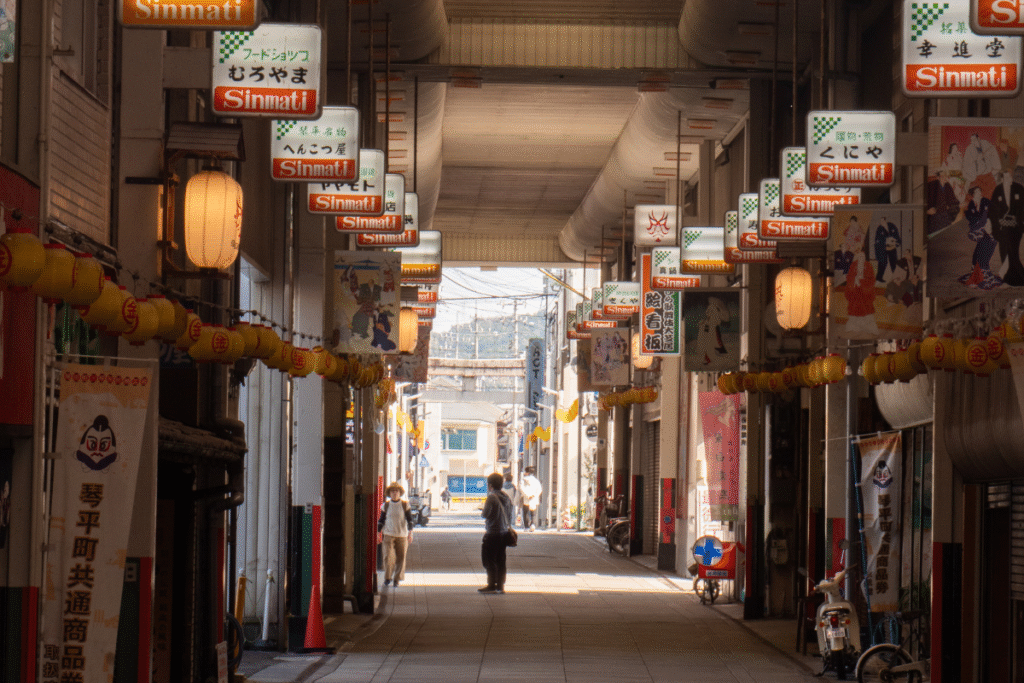
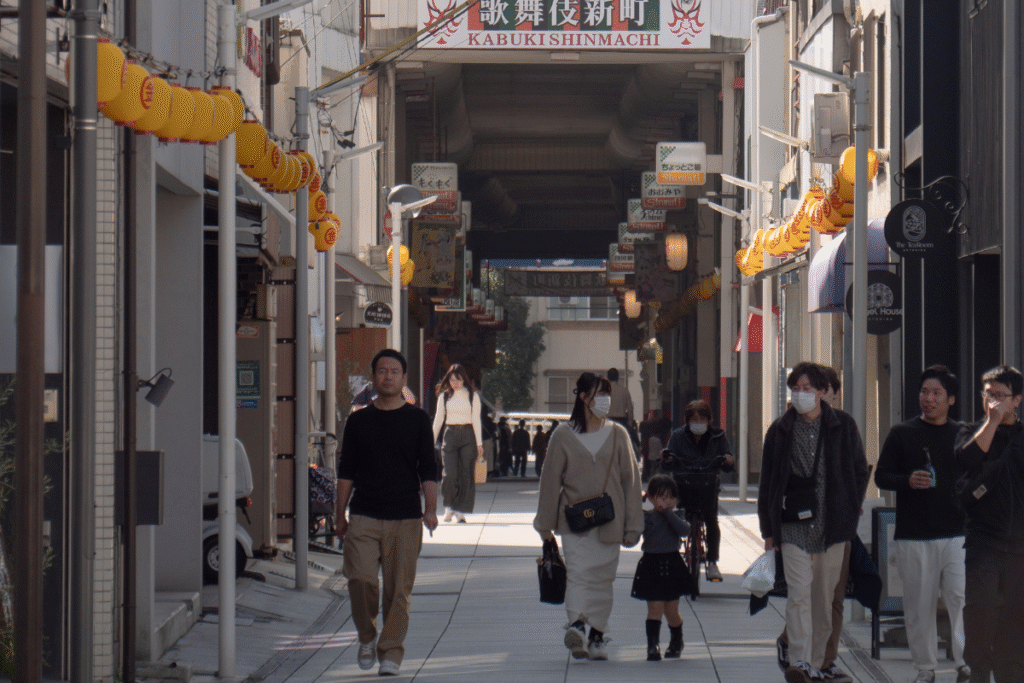
Koto Vegas is located along the street that extends from Omotesando, the main approach to the Kompira Shrine. After crossing the Kanakura River, the street continues as a covered shopping arcade, and then becomes an uncovered street. It is in this final section, beyond the covered arcade, that the Koto Vegas shops are located.
This street was once a lively and attractive area, regularly used by both locals and visitors. Over time, however, activity gradually declined. Shops closed, fewer people passed through, and the street slowly lost its role in everyday life. Today, most tourists in Kotohira remain focused on Omotesando and the direct route to the shrine, rarely continuing beyond the river.
Koto Vegas, a location chosen with purpose
Mr. Beer chose this location deliberately. Rather than opening a shop on the busiest part of Omotesando, his idea was to extend the flow of people further along the street by creating a group of places that could appeal to both locals and tourists. Koto Vegas was designed as a cluster of shops with different functions, including food, drink, accommodation, and social spaces, all working together.
The location is central to this strategy. By placing Koto Vegas at the end of this route, the project encourages people to walk further, pass through the covered arcade, and rediscover the street as a whole. The intention is not only to attract visitors to new places, but also to bring movement back to the area and create conditions that may encourage other shops to reopen or new ones to appear along the way.
In this sense, Koto Vegas is not simply a collection of businesses. It is an attempt to gradually revive an entire part of Kotohira by reconnecting it to the town’s everyday flow.
Koto Vegas : a group of shops in Kotohira
Koto Vegas is not a single venue but a group of complementary places, developed step by step. Each one has a specific role, and together they are designed to appeal to both locals and visitors, while encouraging people to stay longer and move through the area naturally.
A Stationery Shop: the starting point
The first place Mr. Beer opened as part of Koto Vegas was a stationery shop. This initial project marked the beginning of the district’s transformation and set the tone for what would follow.
More than a retail space, the shop reintroduced everyday activity to the street and showed that it was still possible to open a business in an area that had been gradually losing foot traffic. It became the foundation on which the rest of Koto Vegas was built.
Visitors can also craft their own notebook, choosing the paper, cover, colors, and binding. This hands-on aspect reflects the spirit of the place: slowing down, taking time, and creating something personal rather than simply buying an object.
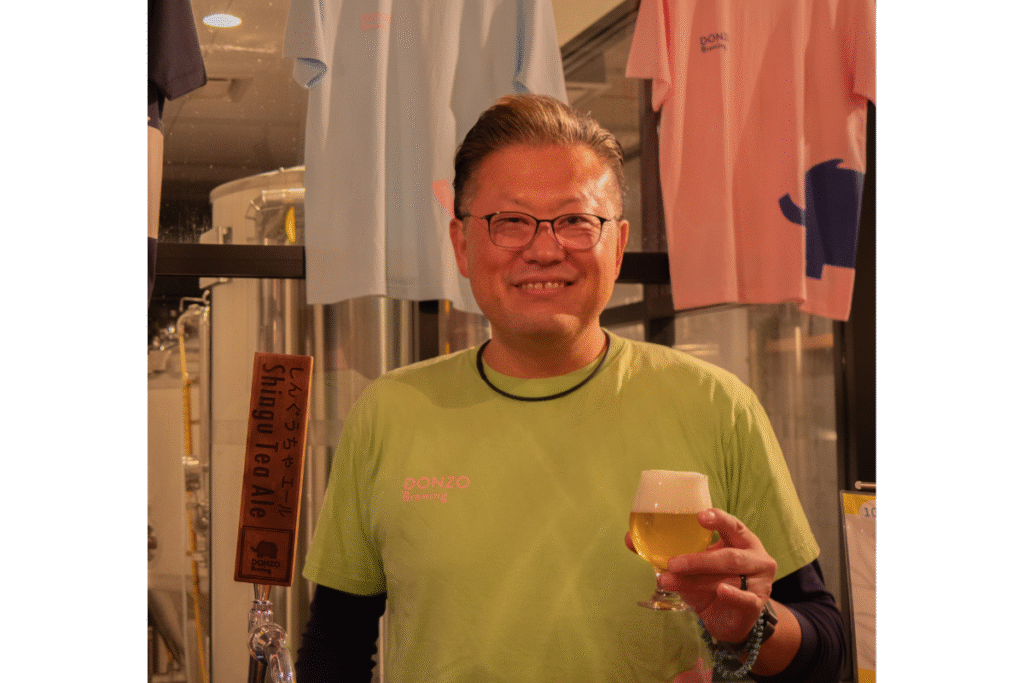
Donzo Beer: the craft brewery
Donzo Beer is a locally made craft brewery and a part of Koto Vegas. From the beginning, Mr. Beer chose to work with a professional brewer, bringing technical expertise to the project to ensure quality and consistency.
The beer produced at Donzo Beer is rooted in the region, using local flavors. The menu changes with the seasons.
Looking ahead, Mr. Beer sees Donzo Beer becoming more than just a brewery. His intention is for it to gradually grow into a social anchor within Koto Vegas, a place where locals and travelers can naturally meet, talk, and spend time together. Not as a concept imposed from the start, but as a space that becomes social through use, familiarity, and shared moments.
Bagel House: the vegan bagel shop
The decision to make the bagels vegan was deliberate. The idea was to offer food that overseas visitors can trust, while remaining appealing to local customers as well. At Bagel House, taste always comes first. They make bagels that locals enjoy and visitors feel comfortable choosing.
The menu is designed to evolve over time. A selection of classic bagels, both sweet and savory, is always available, while new recipes are introduced regularly, following the seasons
The Tea Room: between tradition and modernity
The Tea Room is a tea-focused shop offering a selection of Japanese teas sourced from Shikoku. The menu includes green tea, hojicha, and Japanese black tea, prepared simply to highlight the character of each tea.
In addition to drinks, the shop offers a small selection of sweets designed to pair with tea. Part of the menu changes with the seasons, allowing new flavors and combinations to appear throughout the year, while a few staples remain available.
The space is designed for short breaks as well as quiet moments, making it an easy stop for people walking through the area who want to slow down and enjoy tea without formality.
Gokan Kotohira: accommodation for longer stays
Accommodation was an essential part of the project from the beginning. Gokan Kotohira was designed not for short overnight stays, but for guests who want to stay several nights or longer.
Staying longer changes how people experience Kotohira according to Mr. Beer. Guests begin shopping locally, cooking meals, attending events, and recognizing familiar faces. The accommodation supports this slower, more engaged way of living in the town.
How Koto Vegas Is Changing Everyday Life in Kotohira and What Comes Next
Koto Vegas has only been fully established for a short time, but its presence is already changing how this part of Kotohira is used. Where people once passed through without stopping, there are now reasons to slow down, walk further, and spend time in the area.
The project has also had an effect on the surrounding environment. Existing shop owners have welcomed the renewed activity, and the return of foot traffic has created a more positive atmosphere along the street. The intention is not to replace what already exists, but to support it, making the area attractive again for both customers and potential new businesses.
Looking ahead, Mr. Beer does not describe Koto Vegas as a finished project. His focus is on continuing to strengthen what is already there. Developing local products, working more closely with farmers and producers, and creating opportunities for people to stay longer are part of the next phase. Rather than expanding quickly, the priority is to deepen connections and allow the area to grow at a pace that fits the town.
For Mr. Beer, revitalization is not measured by numbers alone. It is visible in small changes: people staying longer, returning more often, and beginning to see this part of Kotohira as part of their everyday life again.
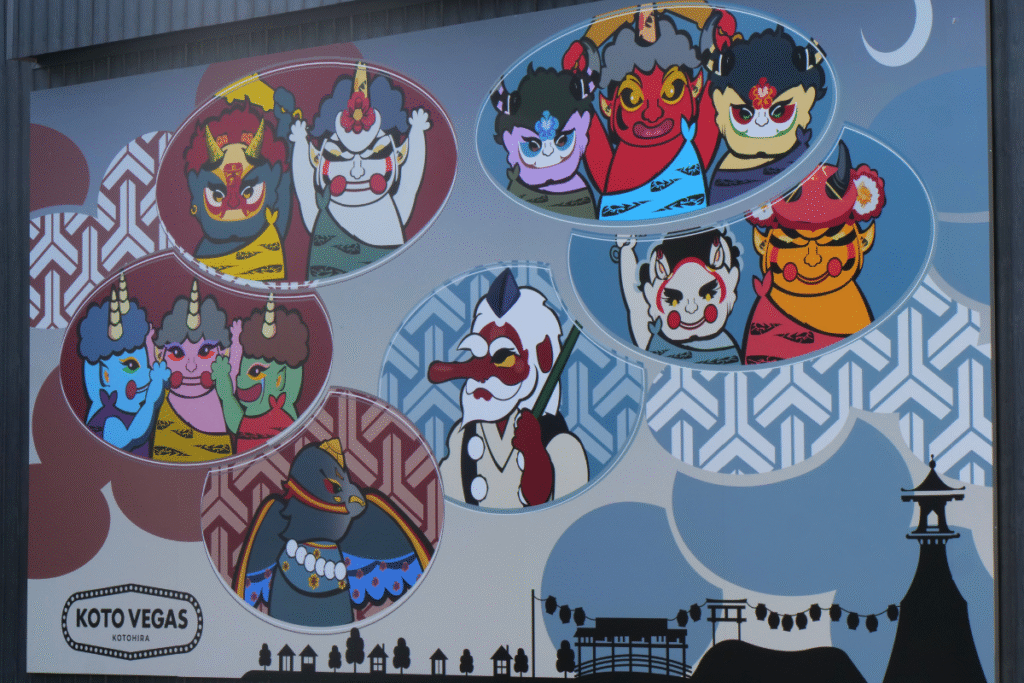
Why “Koto Vegas”? The Statue and the Story Behind the Name
In front of The Tea Room stands a large statue that has become a visual marker of Koto Vegas. More than a decorative object, it represents the ideas behind the project and the way Mr. Beer understands Kotohira.
Oni, part of the culture of Kagawa
The statue is inspired by Sanuki Ittōbori, a traditional wood-carving craft from Kagawa. This technique, carved from a single piece of wood, is often used to create masks and figures sold as local souvenirs. Among them is the Hannya mask, a face that expresses sadness, pain, and anger at the same time.
For Mr. Beer, this figure connects local craftsmanship with a deeper layer of Japanese culture. Stories about oni exist all across Japan. They appear in folklore, festivals, and everyday life. While oni are sometimes feared, they are also familiar and even playful figures for many Japanese people. They are part of the cultural landscape.
At the same time, oni are very specific to Japan. For visitors from abroad, they feel unusual, striking, and immediately recognizable as something local. That contrast made the figure meaningful.
Rather than creating a small object, Mr. Beer chose to make the statue large, over four meters high. The scale was intentional. He wanted something that would stand out, create impact, and signal that something different was happening here.
Koto Vegas and Kotohira history
The story attached to the statue draws on Kotohira’s history. Since the Edo period, Kotohira has been a place people traveled to not only for prayer, but also for enjoyment. Alongside their visits to the shrine, pilgrims enjoyed the town—eating, drinking, singing, and celebrating. In that sense, it was a town people dreamed of visiting.
The idea behind Koto Vegas is that even oni from all over Japan would have heard that Kotohira was a fun place and gathered here. This imagined story gave the project its name. Not as a comparison to a modern city, but as a reference to Kotohira’s long history as a place of gathering, entertainment, and return.
The statue stands as a symbol of that idea. A mix of tradition, storytelling, and imagination, rooted in local culture and looking outward at the same time.
Mr. Beer, Digital Nomads, and Long-Term Visitors
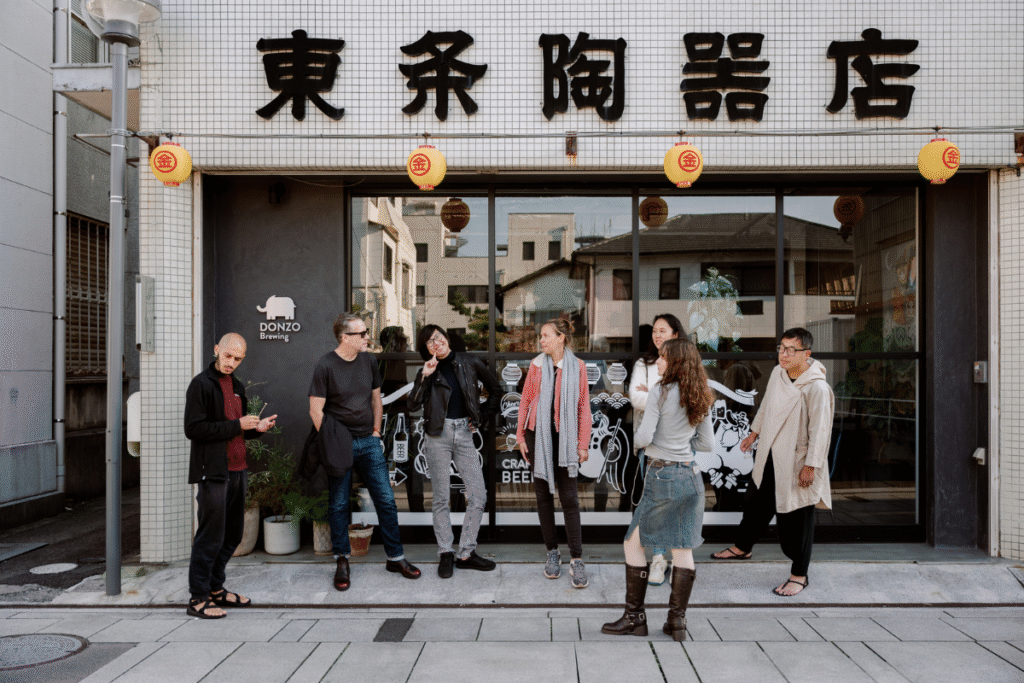
For Mr. Beer, Kotohira’s future depends more on encouraging longer stays than on simply increasing visitor numbers. While the town attracts many tourists, including a growing number of international visitors, most visits remain brief.
Long-term visitors, including digital nomads coming to Kotori Coworking & Hostel, introduce a different dynamic. Staying for weeks or months allows relationships to form, ideas to emerge, and everyday interactions to deepen. What matters is not a specific profile, but a willingness to engage with local life.
By creating places where people can spend time naturally, Mr. Beer hopes visitors leave Kotohira with a stronger connection to the town and a reason to return.
Conclusion
Mr. Beer is not trying to reinvent Kotohira or turn it into something else through Koto Vegas. His approach is grounded in observation, reuse, and continuity. By choosing a street that had gradually lost its role, opening places that respond to real needs, and connecting them through everyday circulation, he is working on a scale that fits the town.
The project is still young. Much remains to be built, adjusted, and tested over time. But Koto Vegas already offers a different way of experiencing Kotohira, one that goes beyond a short visit to the shrine and invites people to stay, walk further, and engage with local life.
Rather than aiming for visibility or growth alone, Mr. Beer focuses on creating conditions. Conditions for shops to coexist, for people to cross paths, and for a part of the town to slowly find its place again in daily use.
FAQ
Who is Mr. Beer?
Mr. Beer is a regional revitalization project designer who works on local development and the reuse of vacant spaces in Japan.
What is Koto Vegas?
Koto Vegas is a group of shops and accommodations developed by Mr. Beer in Kotohira, designed to revive a street that had gradually lost activity.
What places are part of Koto Vegas?
Koto Vegas includes a stationery shop, a local brewery (Donzo Beer), accommodations (Gokan Kotohira), a tea shop (The Tea Room), and a vegan bagel shop (Bagel House).
Why did Mr. Beer choose this location?
Mr. Beer chose this area because it was connected to the main tourist route but no longer actively used, with the aim of bringing people further along the street and encouraging movement through the entire area.
What role do long-term visitors play in the project?
Long-term visitors contribute to deeper interactions and a slower rhythm, helping create connections that go beyond brief visits.
What does the statue in front of The Tea Room represent?
The statue represents the ideas behind Koto Vegas. Inspired by Sanuki Ittōbori, a traditional wood-carving craft from Kagawa, it draws on the figure of the oni, which appears throughout Japanese folklore.
→ Meet the Kotohira community and discover their project or role in Kotori, Kotohira or Kagawa.
About the author
Manon, is a digital nomad and content creator. She lives between time zones, works between getaways, and shares the beauty of this joyful mess.