
In Kotohira and the surrounding towns, innovation does not always come from new projects or new places. Keita Kitayama often starts from the opposite direction: looking differently at what already exists. A local community builder from Banno-cho, he works on creating value from local resources, everyday life, and human connections.
Born and raised in the Sabumi district at the foot of Kotohira, Keita Kitayama is involved in agriculture, local initiatives, and community building. Often called Mr. Bamboo, he focuses on connecting people and resources, while creating opportunities for exchange with long-term visitors such as digital nomads.
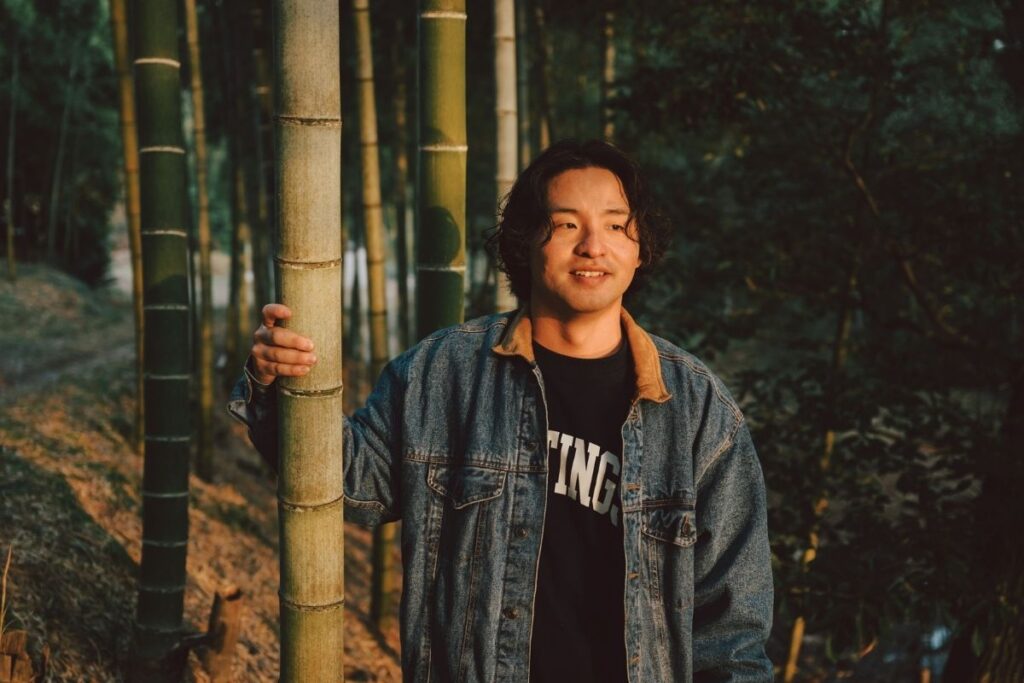
Keita Kitayama : roots in Kagawa
Keita Kitayama left his hometown when he entered university and moved to Osaka. There, he studied innovation and began his professional life. Like many young people, he could have chosen to stay in a big city and build his career there.
Instead, time away brought distance and clarity. Feeling that “there is no real richness built on top of anxiety,” he chose to learn management methods that could help deal with uncertainty and insecurity.
Years later, with new skills and experience, he made a different choice from many of his generation. Rather than settling permanently in the city, he returned home. Aware that his hometown continued to live with the fear that it might one day disappear, he decided to bring back what he had learned and put it to use in his own region, with the aim of helping people rediscover a sense of possibility in Kagawa.
Sabumi Terrace, a family farm and a base for local projects
Sabumi Terrace is a family-run farm managed by Keita Kitayama. Rooted in agriculture, it includes bamboo cultivation as well as the growing of vegetables and flowers, which are sold locally. The farm forms the base of his daily work and anchors his activities in the territory.
From this agricultural base, Keita Kitayama also works on co-creating projects with other local actors and supporting local initiatives. The farm becomes a place where local resources, everyday work, and human connections naturally come together.

Creating Value From Local Resources
At the core of Keita Kitayama’s work is a recurring idea: many local resources remain undervalued simply because they are considered ordinary.
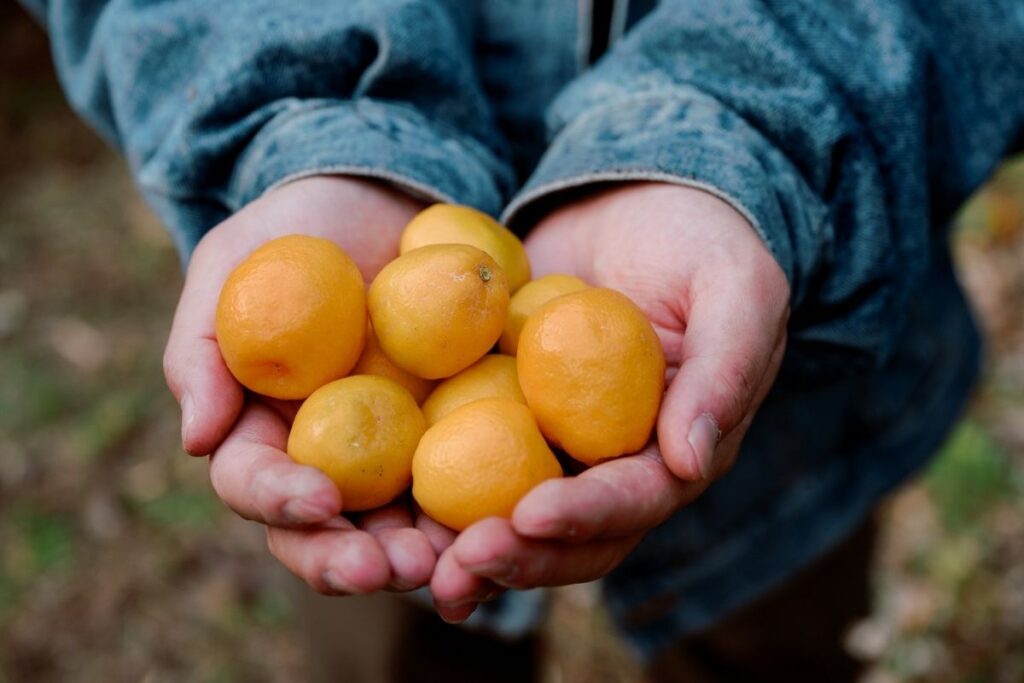
“There are many plants and resources in the region that don’t have market value,” he says. His projects aim to create new forms of value by connecting these resources with people, skills, and ideas.
One example is the bamboo lantern project developed in Kotohira and Banno-cho. Bamboo is cut from nearby mountains and used to create lanterns. Parts of the bamboo that are not used are reused in other ways, supporting craftsmanship and product development.
From a circular economy perspective, he also mentions the possibility of turning bamboo into charcoal for agricultural use, such as soil improvement. “By creating a model where resources circulate, the local economy can grow step by step.”
Community Comes First
For Keita Kitayama, community building comes first. His earliest initiatives focused on everyday life in Banno-cho, bringing together elderly residents and children living in the same area. For him, the goal was simple: “living well together and enriching the time we spend with one another.”
Over time, his approach evolved. He began working more closely with younger residents and people who had been acting on their own. Rather than remaining isolated, they started meeting and thinking collectively. “I wanted people to stop being points and start becoming a surface,” he says.
In these moments of connection, Keita Kitayama sees how everyday situations and local resources, often taken for granted, can begin to create new value when different people come together.
Kotohira, Banno-cho and Digital Nomads
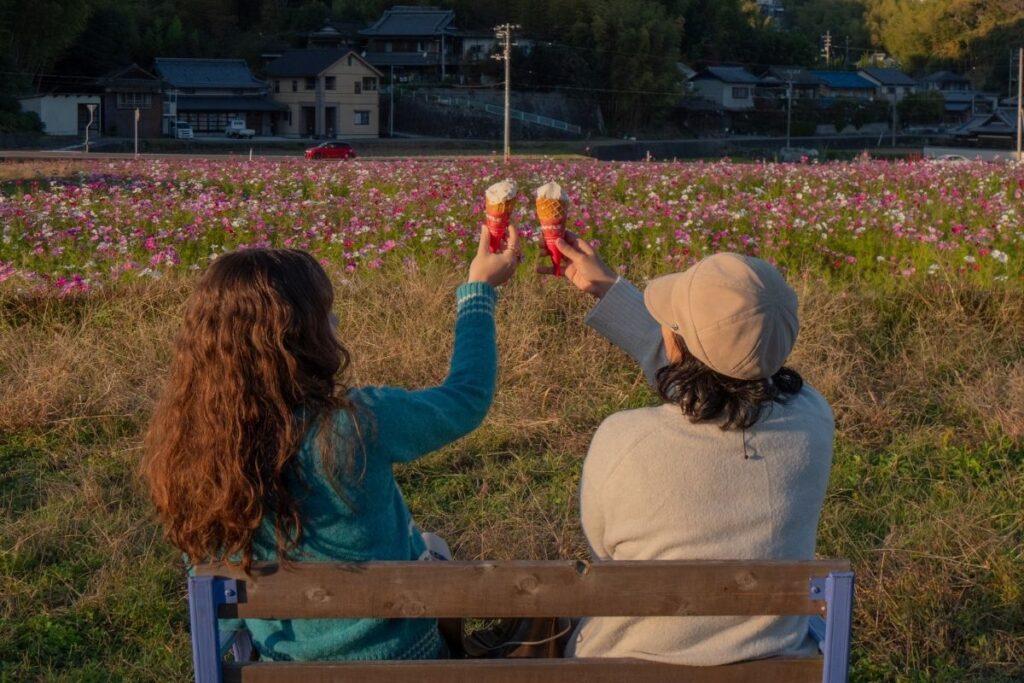
Kotohira faces a clear challenge: encouraging people to stay longer. Digital nomads naturally enter this conversation, as they work while remaining in one place for extended periods. For Keita Kitayama, their presence can benefit not only Kotohira itself, but also nearby areas such as Banno-cho.
He points out that the two places have different strengths. Banno-cho is largely shaped by primary industries like agriculture, while Kotohira is more focused on commerce, transport, and services. “Because these areas have different characteristics, they can complement each other,” he says.
Kotori plays a practical role in creating this connection. Keita Kitayama sometimes works from there, where he meets both locals and long-term visitors. Through collaborations with Kotori, such as organizing a small farmers’ market in front of the hostel, travelers and digital nomads can buy local products directly from nearby farms.
These concrete moments make encounters possible. Conversations begin, relationships form, and some visitors are later invited to discover Sabumi Terrace and its fields, extending their experience beyond Kotohira itself.
A Tea Ceremony in the Bamboo Fields
One encounter illustrates how these connections can naturally turn into shared experiences.
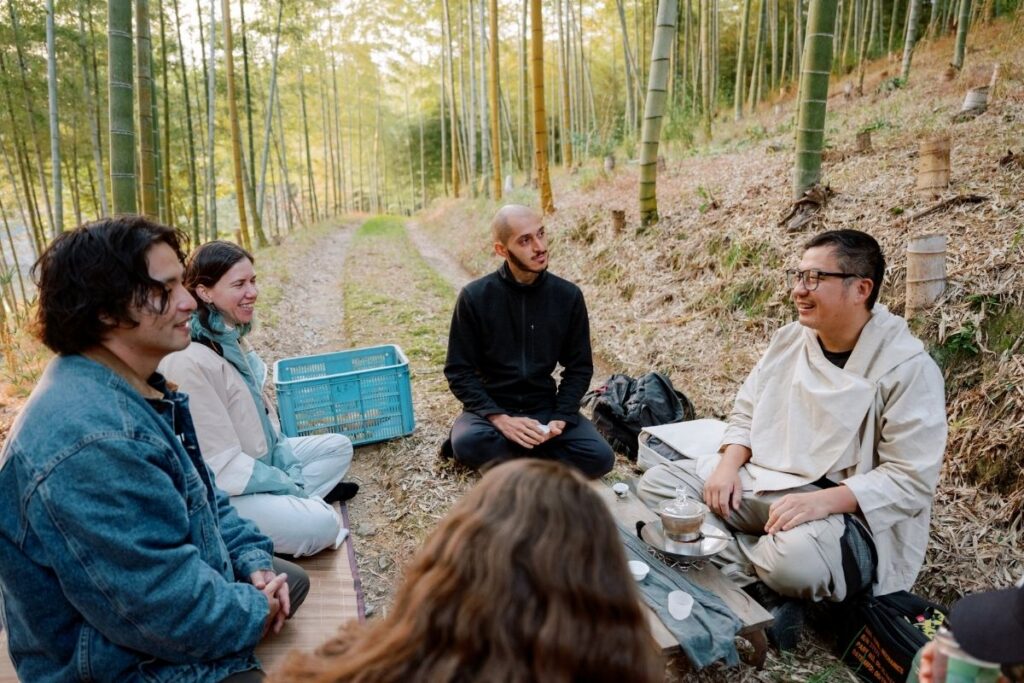
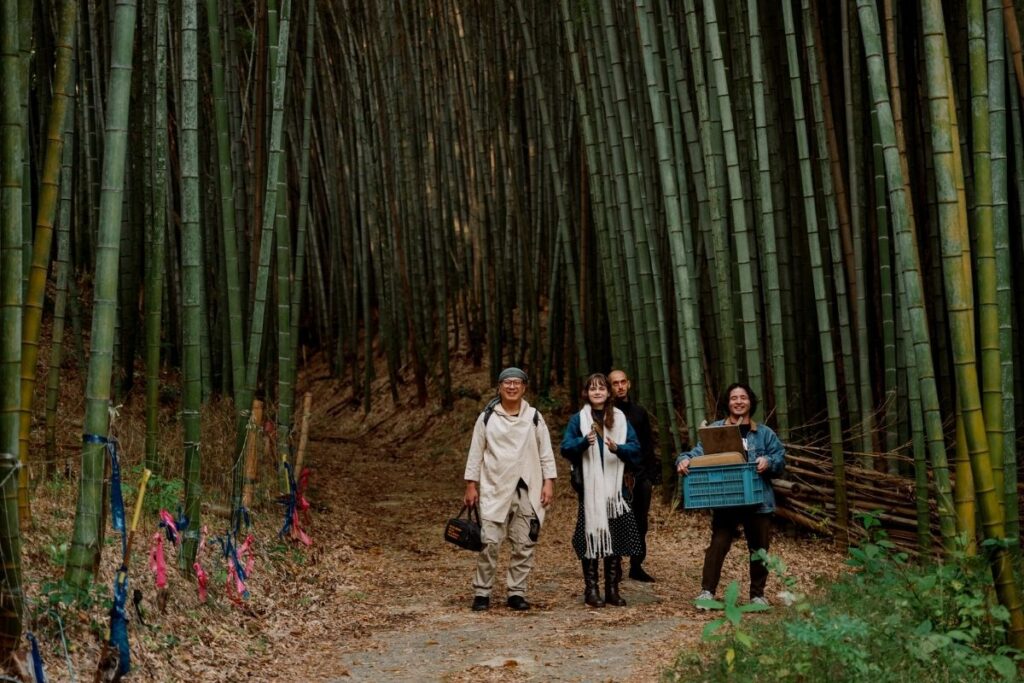
After meeting at Kotori, Keita Kitayama and a digital nomad named Charles, who is also a tea master, decided to do something together. From that simple exchange, a tea ceremony took shape in the bamboo fields. It was not planned in advance or designed as a project, but emerged organically from time spent together in the coworking space.
“People were deeply moved when they walked through the bamboo forest and took part in the tea ceremony,” Keita recalls.
For him, this moment revealed something important. “Realizing that what we consider normal is not normal for others is crucial to increasing the happiness of people living in the region.” Seeing visitors react with curiosity and emotion to familiar landscapes allowed local residents to look at their own environment differently, and to rediscover its value through fresh eyes.
Beyond Language Barriers
Keita Kitayama is also attentive to the limits people face in daily exchanges, especially when it comes to language. In his region, some elderly residents speak only Japanese, while younger generations are curious and open to learning about other cultures and ways of thinking.
For him, this gap does not prevent connection. “Even if there is a language barrier, people can connect through shared experiences that go beyond words,” he says. Moments lived together, rather than conversations alone, become a way to build understanding.
In that sense, he expresses gratitude toward those who bring different cultures into the region and create opportunities for people to learn from one another through direct experience.
Conclusion: Making the Ordinary Visible Again
Keita Kitayama does not speak about growth in terms of numbers or scale. His focus is on connection, participation, and the value that emerges when people spend time together.
By creating opportunities for people to engage with local resources, with one another, and with visitors from different backgrounds, he sees how regions like Kotohira and Banno-cho can build a future rooted in what already exists.
For digital nomads willing to slow down and engage, these encounters offer more than a place to work. They offer shared experiences that go beyond language, and a chance to become part of a local story, even if only for a short time.
→ Meet the Kotohira community and discover their project or role in Kotori, Kotohira or Kagawa.
FAQ
Who is Keita Kitayama?
Keita Kitayama is a community builder and farmer based in Banno-cho, near Kotohira. He works with local resources such as bamboo and agriculture, while supporting community projects and exchanges with visitors.
What is Sabumi Terrace?
Sabumi Terrace is a family-run farm managed by Keita Kitayama in the Sabumi district. The farm includes bamboo, vegetables, and flowers that are grown and sold locally, and it also serves as a base for local collaborations and projects.
What kind of projects does Keita Kitayama work on?
He works on projects related to bamboo use, circular economy ideas, agriculture, community building, and connections between local residents and visitors.
Why is community important in his work?
He sees community as the foundation of local projects. For him, connecting people across generations and backgrounds is essential to creating new value in the region.
How does he view language barriers?
Keita Kitayama believes that even when language is a barrier, people can still connect through shared experiences that go beyond words.
What kind of experience can digital nomads expect?
Rather than organized tourism, digital nomads can expect informal, everyday encounters rooted in local life, such as farming activities, local markets, or shared moments in natural settings.
About the author
Manon, is a digital nomad and content creator. She lives between time zones, works between getaways, and shares the beauty of this joyful mess.