
If you’re working from Kotohira and want a meaningful cultural break that fits between calls, set your sights on Zentsuji temple. The temple complex is the birthplace of Kobo Daishi and the 75th stop on the Shikoku Pilgrimage. It sits in Zentsuji City, just south of the Marugame plain, and makes a relaxed half-day from Kotohira with plenty of quiet corners to reset your head. The grounds are free, the pagoda is striking, and there’s a short, pitch-dark underground passage that’s equal parts fun and reflective for first-timers.
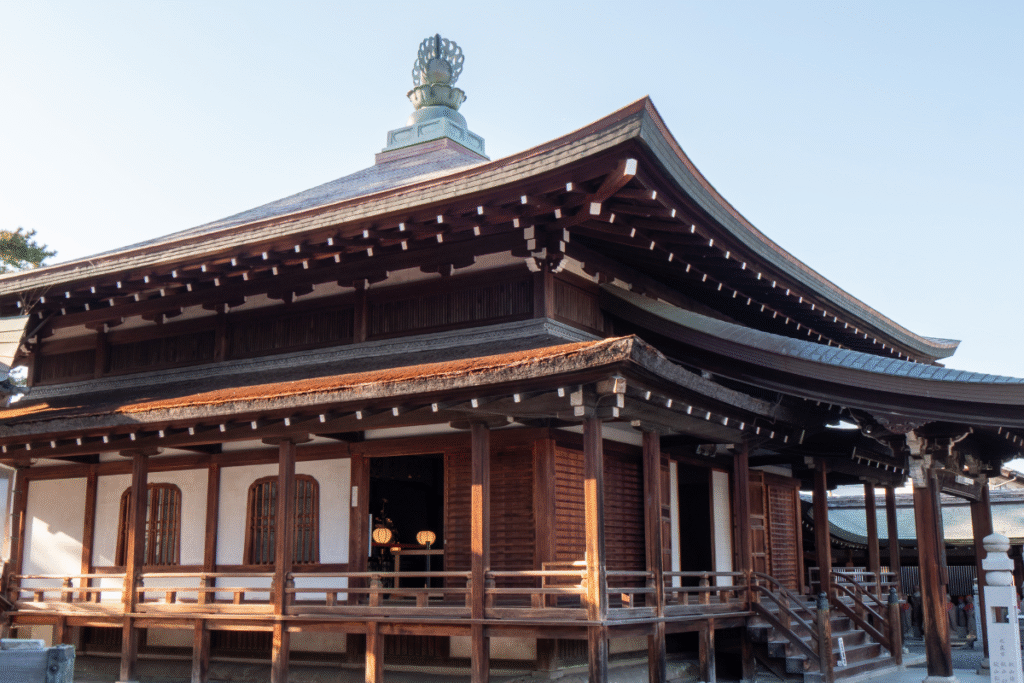
Table of contents
- Presentation of Zentsuji Temple
- What to see in Zentsuji Temple?
- What to do in Zentsuji?
- Practical informations
- Conclusion
- FAQ
Presentation of Zentsuji temple
Zentsuji Temple is a head temple of the Zentsuji school of Shingon Buddhism and number 75 on the Shikoku Pilgrimage. The complex is split into two precincts: the eastern Garan with the main hall, and the western Tanjoin over Kobo Daishi’s birthplace. Grounds are open all day, while facilities like the Treasure Hall have set hours.
Founded to honor the birth site of Kobo Daishi, also known as Kukai, Zentsuji grew as a center for Shingon teaching after he returned from training in Tang China and established esoteric practice in Japan. The Tanjoin area preserves the memory of his family home and early life in Sanuki Province, while the Garan reflects the temple’s later role as a formal monastery complex.
Like many major temples in Shikoku, Zentsuji has been rebuilt more than once after fires and earthquakes, so its current halls combine older layouts with restorations from the Edo and modern periods. Pilgrims visit to connect with the founder of Shingon rather than any single building, and the precinct layout itself tells the story of a birthplace that became a teaching site and, eventually, a key anchor of the 88 temple route.
Zentsuji Temple: what to see and do?
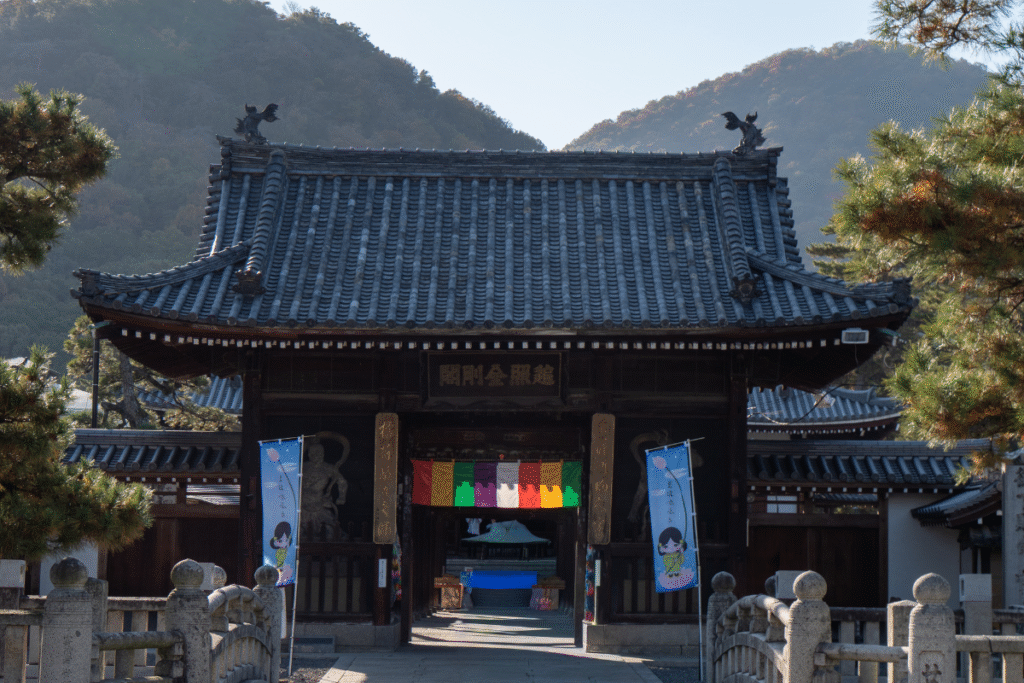
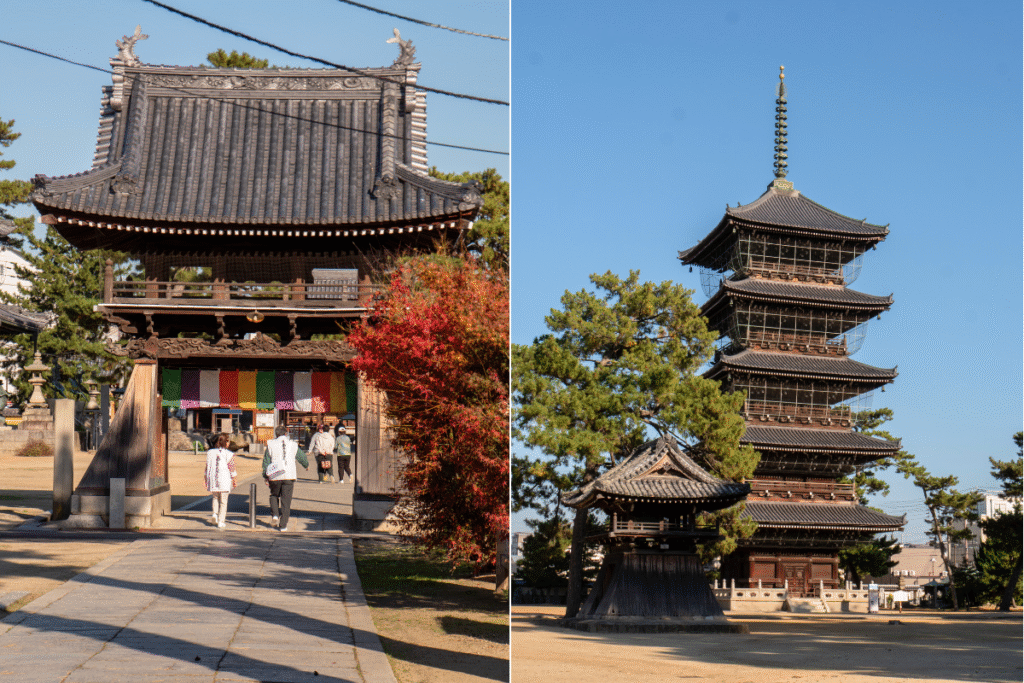
Enter through the Niomon, the main gate guarded by two muscular Nio guardian statues.
The layout is a classic monastery core, with broad gravel courts that frame the five story pagoda. Inside the precinct you can light incense, write an ema wish plaque, and try the osunafumi walk that symbolizes the 88 temple route in a single room.
Main precinct: Garan
Step inside the Kondo, the main worship hall just beyond the Niomon. The focal image is a large seated Yakushi Nyorai, the Medicine Buddha, about three meters tall. The current hall was completed in 1699 after a 1558 fire, and the statue was enshrined in 1700. Worship of Yakushi centers on relief of suffering and healing in this life, which is why you will see many quiet, personal prayers here.
Tanjoin precinct and the dark passage
Cross to the Tanjoin, the birthplace precinct built over the spot where Kobo Daishi, founder of Shingon Buddhism, was born. Its main building is the Founder Hall, a memorial space that honors his life. Beneath this hall is a short underground walk in complete darkness, often called the “dark passage” (kaidan meguri), where visitors move by touch along the wall until they emerge back into the light. The walk is meant to symbolize leaving confusion and returning with clarity. Entry is ticketed at the on-site desk, small bags stay at your side, and staff let people in by small groups so it stays quiet. A must do experience!
Kanchiin
Kanchiin is a small sub-temple connected to Zentsuji that focuses on study and daily practice. It feels quieter than the main precincts and has a compact garden you can view from the veranda. Entry is informal when the front gate is open. If a service is in progress, wait at the edge or follow staff directions.
Old camphor trees
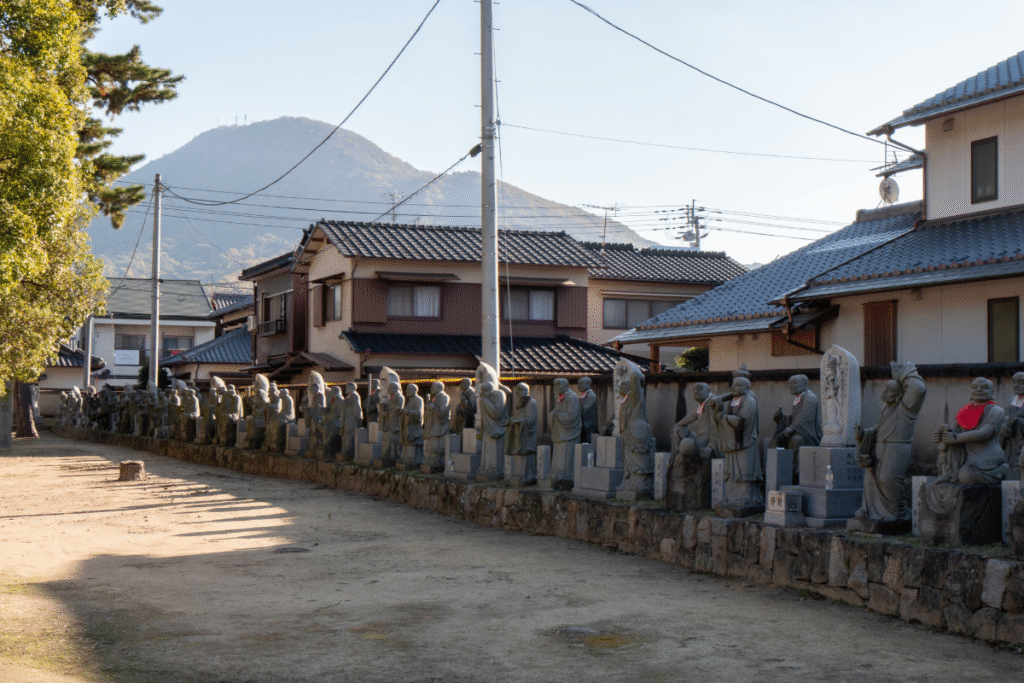
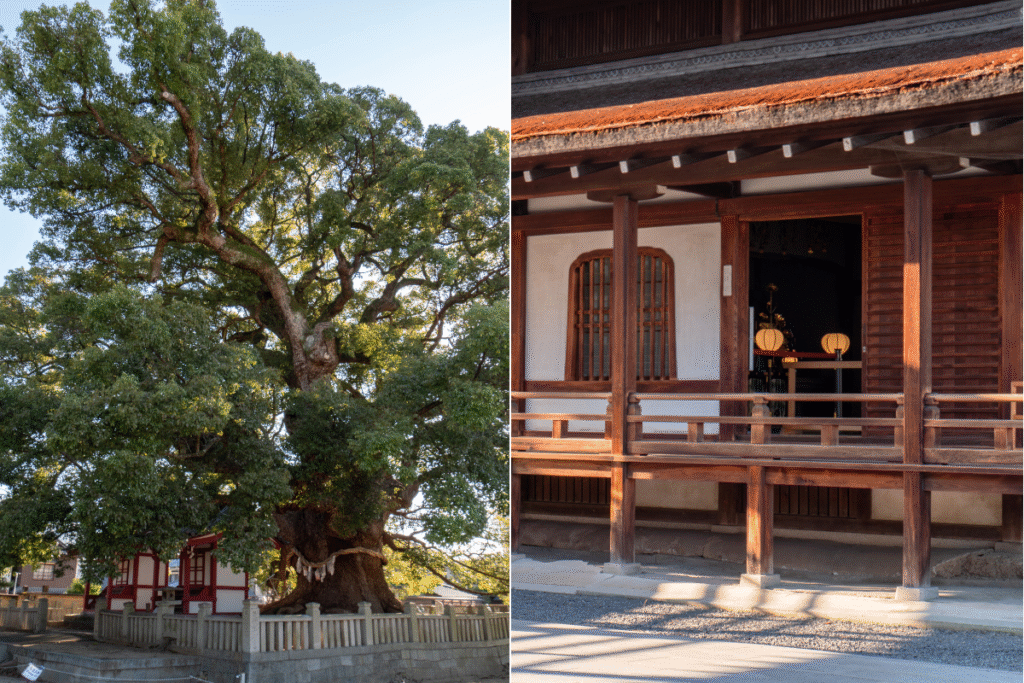
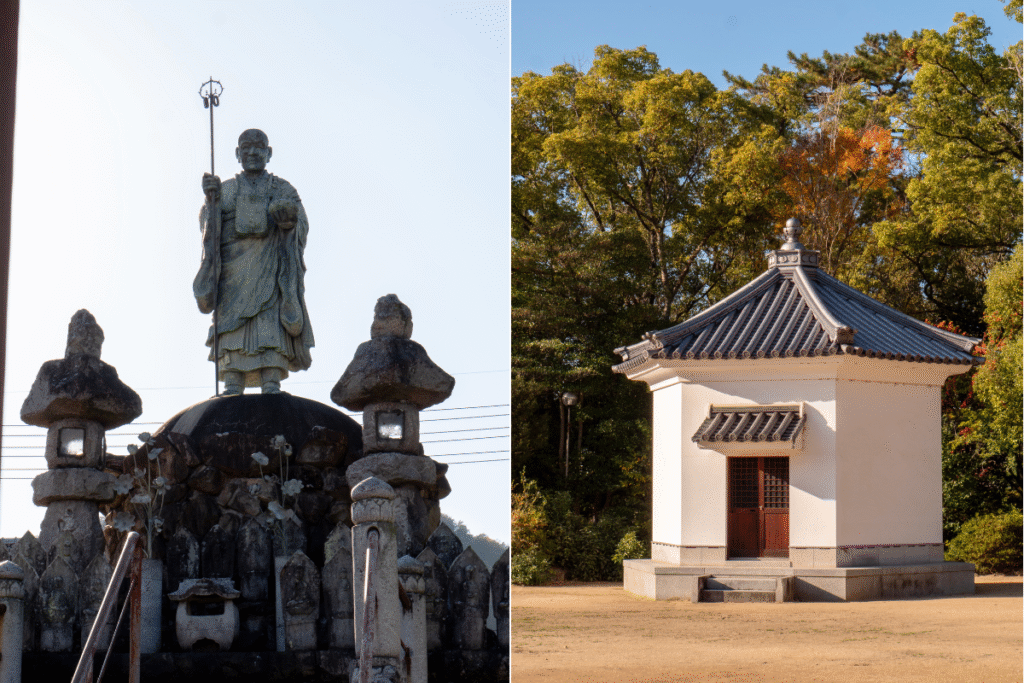
Look for the old camphor trees around the precincts. They are local heritage trees and give shade along the main paths. You will also see statues of Kobo Daishi, the monk who founded Shingon Buddhism, and small guardian figures such as Jizo, a protector of travelers and children.
Treasure Hall and five story pagoda
The Treasure Hall is the small museum inside the temple grounds. It displays paintings, scriptures, and ritual objects that trace the rise of Shingon Buddhism in this part of Kagawa.
Entry is ticketed and hours are separate from the open grounds.
Don’t forgot to have a look on the five story pagoda, the tall wooden tower you see from across the precinct. The current structure was rebuilt floor by floor during the late Edo to Meiji years. On the first floor you will find statues of four of the Five Wisdom Buddhas.
What to do in Zentsuji?
Walk the old approach streets
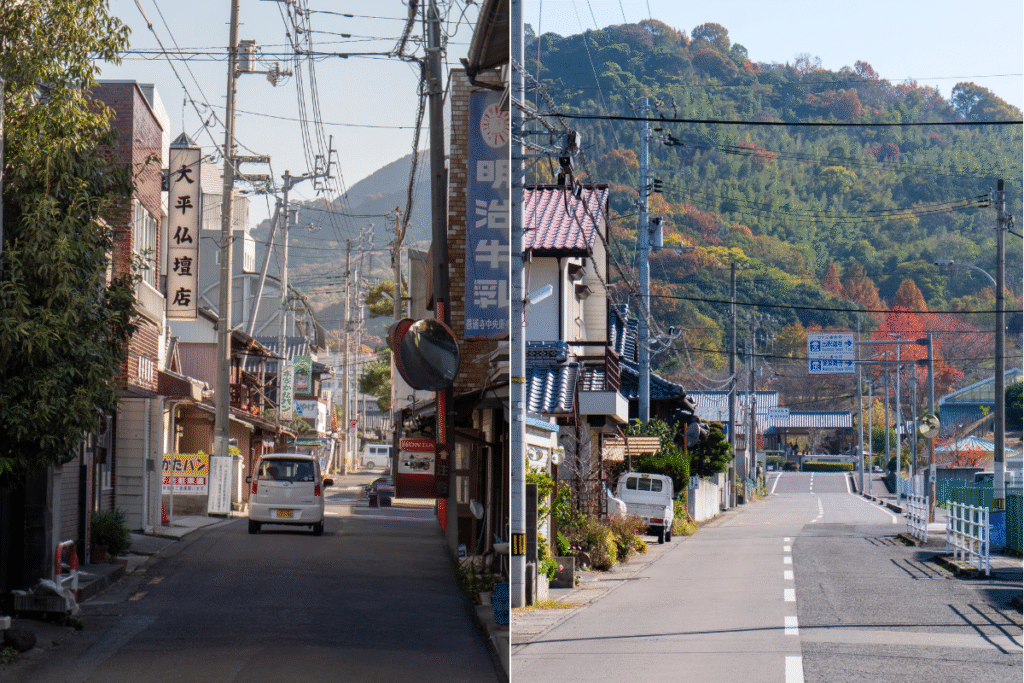
Follow the route between Zentsuji Station and the temple. You will pass small shops, stone markers, and local snack stands that give a feel for the old temple town.
Try Sanuki udon
Refuel at a local udon shop near the precincts. Many places open early and close mid afternoon, so plan lunch rather than dinner.
Add nearby temples
If you have time, include Temple 76 Konzoji. It is close enough for a same day pair and offers a different atmosphere from Zentsuji.
Collect goshuin temple stamps
Bring a stamp book or buy one on site. Zentsuji and nearby temples offer calligraphy and red seals that make a simple, meaningful keepsake.
Browse local sweets
Check small wagashi shops around the approach for manju or mochi. These are good to take back to Kotori Coworking & Hostel for a desk snack.
Explore other nearby places from Kotohira like Sanuki Mano park, Manno Lake or Ritsurin garden.
Practical informations
How to get there from Kotohira?
Train
It takes about 7 minutes on a direct JR local train from JR Kotohira Station to JR Zentsuji Station. Easy and very convenient.
Bike or e-bike
About 10 km each way on mostly flat local roads across the Marugame plain. Allow 45 to 60 minutes at a relaxed pace.
Rent a bike or e-bike from Kotori!
Car
Roughly 20 minutes via Route 319. Paid parking lots sit around both precincts.
Rent a car from Kotori.
Opening time, best moment to visit
Temple grounds are open all day.
Treasure Hall and the underground dark passage typically run from around 8:00 to late afternoon, with final entry near 16:00 to 16:30. Times can vary on event days, so check on-site signs.
Weekday mornings offer softer light and fewer people. Late March to early April brings cherry blossoms, and late November often has the best foliage.
Conclusion
Zentsuji Temple is an easy cultural break from Kotohira that fits a half day without rushing. You get a clear sense of Kobo Daishi’s story, a classic temple layout in the Garan, and a thoughtful experience in the birthplace precinct. It is close, calm, and simple to reach, which makes it very nice choice between work sessions. It’s also a way to know more about the Shikoku Pilgrimage as this temple is part of it. If you don’t have enough time to walk the 88 temple, you can at least explore the closest one from Kotori!
Explore the Kotohira-gu Shrine, a beautiful experience from Kotori.
FAQ – All you need to know to visit Zentsuji temple
How long do I need at Zentsuji Temple?
Plan 60 to 90 minutes for both precincts. Add extra time if you visit the Treasure Hall or join a short event.
Is it free?
Only the Treasure Hall and the underground dark passage require tickets.
Can I collect a temple stamp?
Yes. Bring a goshuin book or purchase one on site.
What pairs well with this trip?
Add nearby Temple 76 Konzoji or a simple udon lunch near Zentsuji Station before heading back to Kotohira.
What’s the easiest way to get there from Kotohira?
Take a direct JR local from JR Kotohira Station to JR Zentsuji Station, about 7 minutes, then walk 15 to 20 minutes to the precincts.
About the author
Manon, is a digital nomad and content creator. She lives between time zones, works between getaways, and shares the beauty of this joyful mess.