
Kotohira history begins with Kotohira-gu, known locally as Konpira-san. For generations, travelers climbed Mount Zōzu to pray for maritime safety and safe journeys. The shrine sits partway up the slope. You reach the main complex after 785 steps, or the inner shrine after 1,368. Lanterns, sub shrines, and the Omotesando shops turn the ascent into the visit itself.
Before heading to Kotohira to explore it yourself, find out a little more about the town: shrine origins, Edo era pilgrimage, living traditions, local legends, and more.
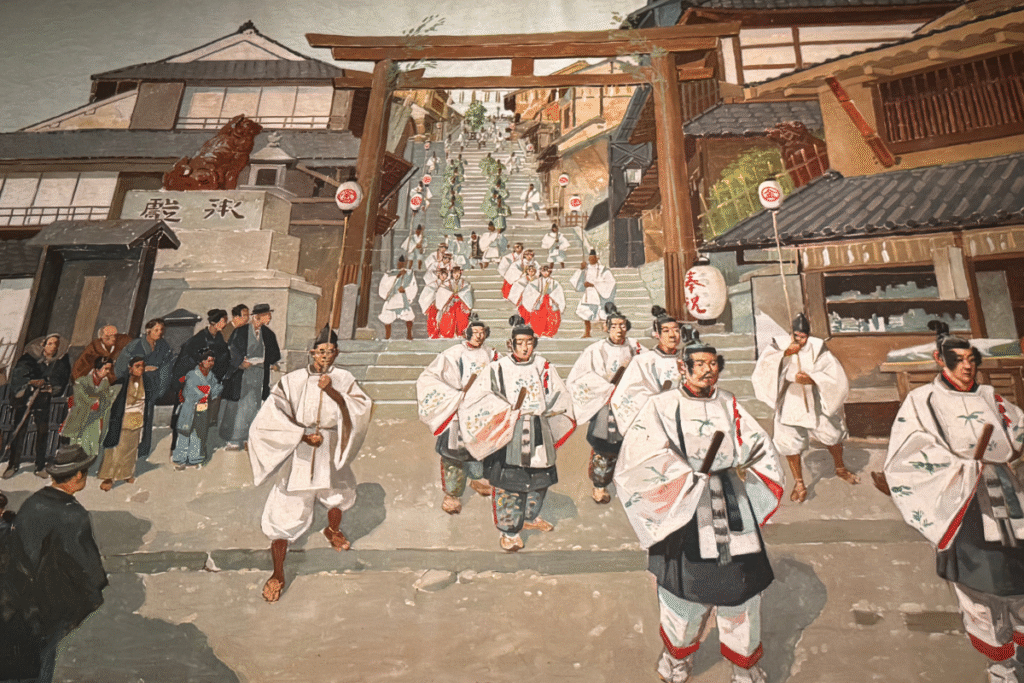
Konpira San and Birth of Kotohira
Kotohira grew where belief met landscape. The mountain’s profile stood out from the Sanuki plain, so the site felt chosen. Kotohira-gu, or Konpira-san, became the focal point. Worship centered on safe travel and the sea, with Omononushi-no-kami revered at the main halls. Pilgrims arrived. Paths became a stepped approach. Teahouses, inns, and bathhouses clustered near the foot. Craftspeople settled along the route and served the flow of travelers. A town formed around the climb. Shrine and settlement shaped each other and created the Kotohira you walk today.
→ Learn more about Kotohira History in The Gallery of Kotohiragu Treasures
Edo period and pilgrimage
During the Edo period, trips were restricted except for pilgrimage. The Konpira route turned that exception into a nationally attractive journey. In Kotohira, travelers found more than a shrine for safe travel: lodging, teahouses, lotteries, and, above all, kabuki shows. Entertainment joined prayer as a reason to come. People set out for both travel and fun. Step by step, donations paved the route and added lanterns, rails, and resting spots. Kotohira’s reputation took root.
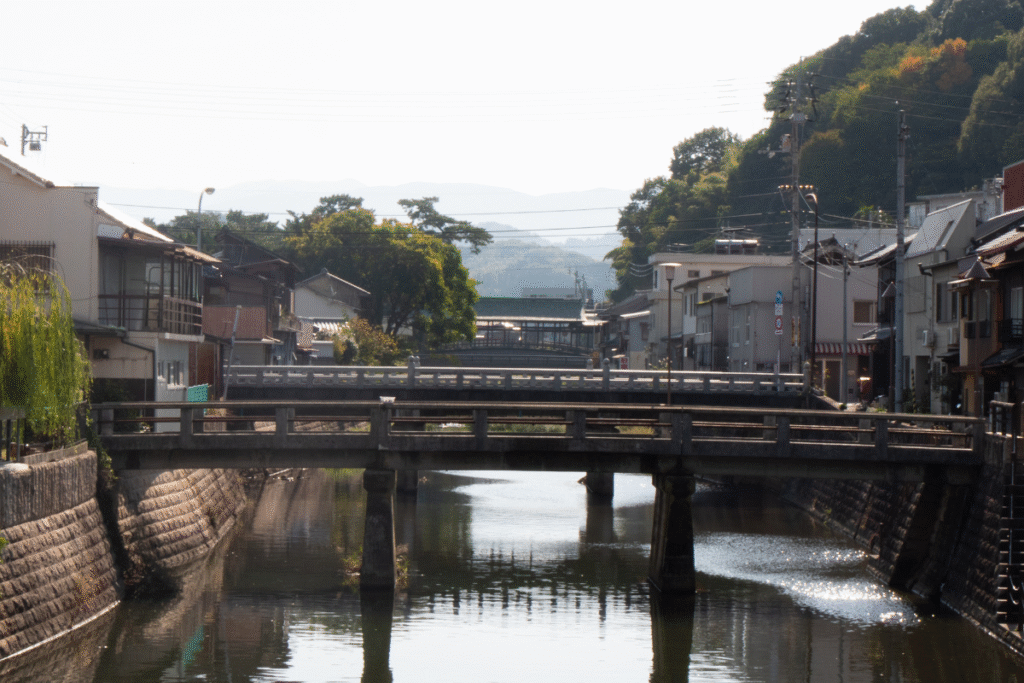
Kamiyo Candy and the Five families
Just past the main gate, vendors sell Kamiyo ame, a simple candy linked with good fortune. Only five families have the right to make and sell it within the shrine area. The privilege comes from historic service to the shrine. You will see blocks of glossy candy, often with a citrus note like yuzu. Pieces are shared as a small treat after the climb. The stalls are part shop and part story. They show how family traditions and shrine customs continue side by side. Ask for Ike Shoten near the 69th step and taste a bit of living history.
→ Discover more about Ike Shoten and Candy San.
Living traditions of Kotohira History
radition here is active. Prayers rise daily at Konpira-san, and so do the footsteps of many travellers. Seasonal rites anchor the calendar. Each spring, performances return to the old kabuki playhouse. On Omotesando you still meet craftsmen, candy sellers, and hosts who welcome travellers. Nothing feels staged. It is culture in use. The rhythm has lasted because the town keeps doing what it was built to do.
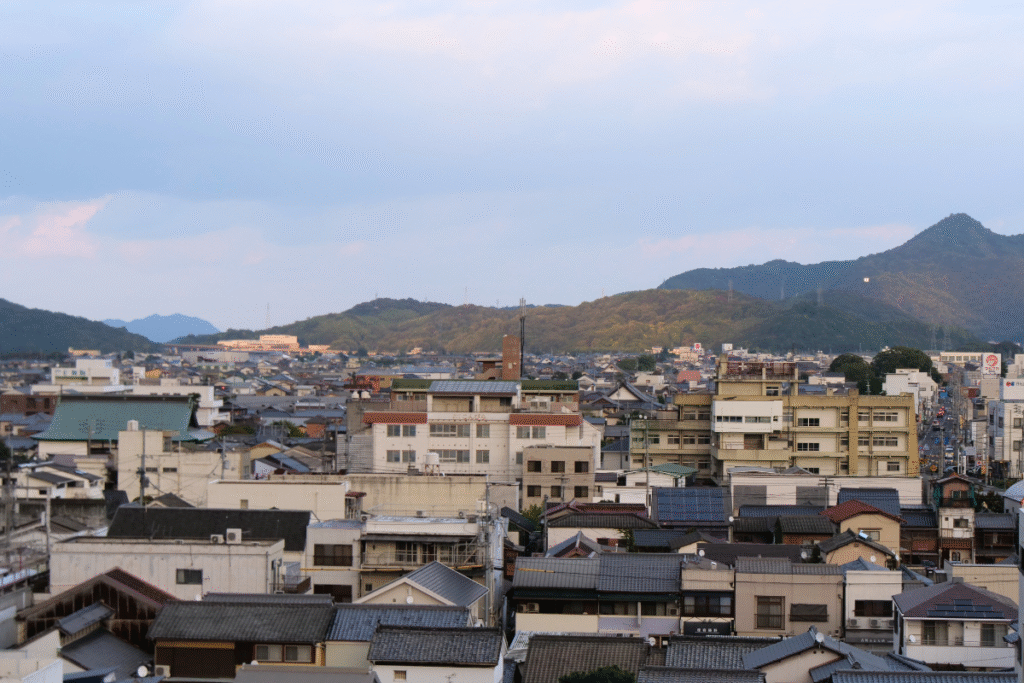
Kanamaruza Kabuki
Kanamaruza, the Konpira Grand Theatre, is known as Japan’s oldest surviving kabuki playhouse. Wood galleries, a hanamichi runway, and traditional stage tricks remain intact. Much of the stagecraft is still done by hand: a human powered revolving stage, lifts operated below the boards, and curtains pulled by stagehands. Each spring, leading actors perform in a special season that draws fans to Kotohira. Many famous names have appeared here. The building is protected as an important cultural site, yet it still works as a theatre. Tour backstage if you can. Catch a show if your dates fit.
Grand shrine festival
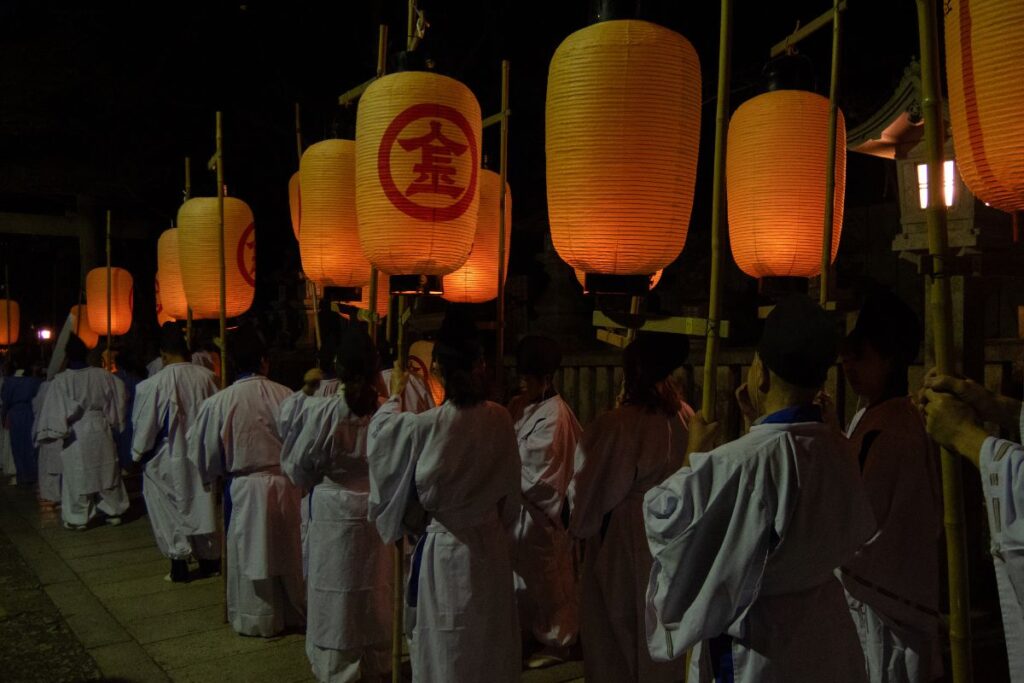
Kotohira-gu’s chief annual rite. Every year from 9 to 11 October, the deity is carried in a mikoshi from the mountain to a temporary shrine in town, then returned the next night. The first evening includes the rare opening of the roofed Saya-bashi bridge. Lanterns guide the line, delegations from branch shrines join, and children serve as chigo. Records trace this form to the early Meiji years, with roots in Edo. It is a living part of Kotohira history, steady and present today.
→ Follow me to the Grand Shrine Festival
Legends are part of Kotohira History
One legend gives the town its warmth. The Konpira-inu was a dog sent when an owner could not travel. A pouch on its collar held a name, a small offering, and travel food. Pilgrims along the road guided and fed the dog, then passed it on. It reached the shrine and returned the same way. On the steps a small statue recalls the tale. Dog charms in shop windows keep it alive. Dogs are still welcome in Kotohira. The story speaks of a pilgrimage built on kindness and shared effort.
Kotohira history, between tradition and modernity
Kotohira balances old paths and new comforts. You can climb historic steps in the morning and work a quiet block at Kotori in the afternoon. Shops and small museums line the approach, while the kabuki stage opens each spring. Candy sellers greet you near the gate. Trains bring you in easily, yet the town still moves at the pace of the climb. That mix of living culture and calm routine is why Kotohira fits both discovery and focused work.
FAQ – Kotohira history
Which deity is venerated at Kotohira-gu?
Ōmononushi is venerated, and the shrine is widely associated with protection for sailors and safe travel.
When is the grand festival?
The Grand Shrine Festival is every year from 9 to 11 October. You can learn more in the Kotohira Grand Shrine Festival blog post.
Is kabuki still performed in Kotohira?
Yes. Kanamaruza hosts a spring season and offers tours outside performance dates.
About the author
Manon, is a digital nomad and content creator. She lives between time zones, works between getaways, and shares the beauty of this joyful mess.